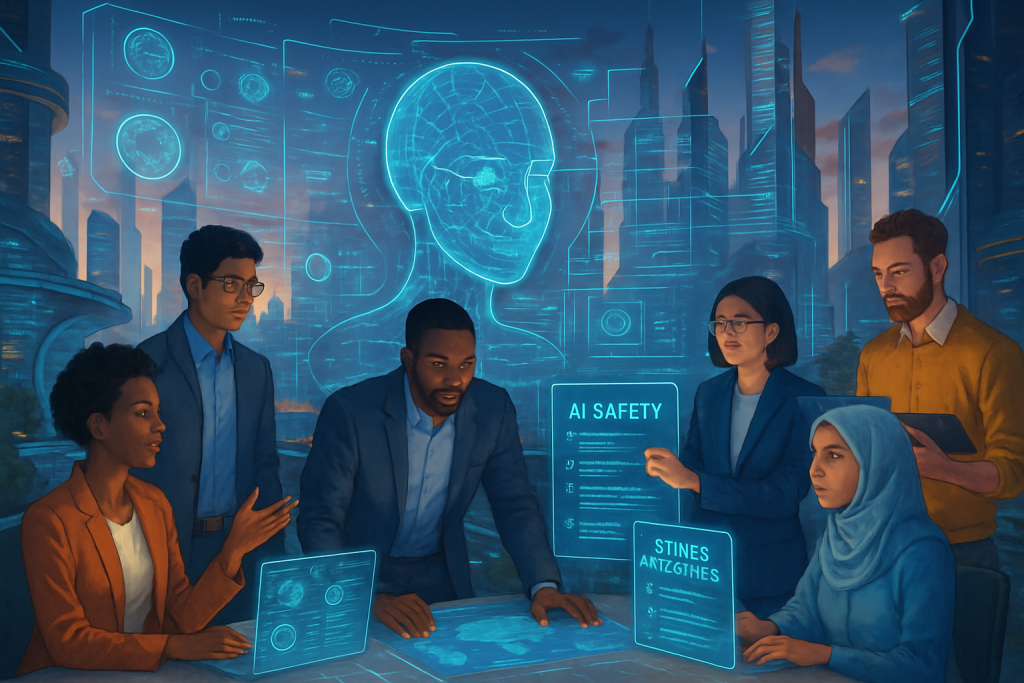

The year is 2026. Flying cars, sadly, are still stuck in development hell (thanks, supply chain issues!). But one thing that has taken off like a SpaceX rocket is, you guessed it, Artificial Intelligence. And with great power comes, well, you know the rest. That’s why the release of the International AI Safety Report 2026 on March 24th wasn’t just another data dump; it was a global temperature check on the AI revolution, a moment to collectively ask: are we building Skynet, or just a really sophisticated Roomba?
This wasn’t some hastily scribbled memo either. Think of it as the IPCC report, but for algorithms. A definitive, painstakingly researched, and internationally vetted document designed to guide policymakers, researchers, and the rest of us through the increasingly complex maze of AI’s potential and peril. The report, accessible at that familiar haunt for tech nerds, arxiv.org, feels like a weighty tome, but it’s one we all need to crack open, even if just to skim the highlights.
But before we dive into the juicy bits, let’s rewind a bit, shall we? Remember the AI Safety Summit held in Bletchley Park, UK, back in 2023? Yeah, the one that felt like a scene straight out of “Dr. Strangelove,” only with slightly less maniacal laughter (probably). That summit, bringing together representatives from 29 nations, the UN, the OECD, and the EU, was ground zero for this whole AI safety initiative. It was the moment the world collectively realized that AI wasn’t just a Silicon Valley pipe dream anymore; it was a force that needed to be understood, regulated, and, most importantly, kept from turning into a digital Godzilla.
The summit’s key mandate? To create a series of periodic reports synthesizing scientific evidence on AI safety. The goal: informed policy decisions and, crucially, international cooperation. Because let’s face it, AI doesn’t respect borders, and neither should efforts to keep it in check.
This 2026 report is the culmination of that effort. It was forged in the fires of rigorous debate and countless hours of research by an Expert Advisory Panel, comprised of representatives nominated by those nations and organizations that gathered in Bletchley. Over 100 AI experts from various disciplines poured their brains into this thing, ensuring a multifaceted perspective. The panel, led by a designated Chair, operated with complete editorial independence, ensuring the report’s objectivity. No corporate spin here, folks. This is science speaking.
So, what does this AI crystal ball tell us?
Well, first, the good news: AI has made some serious leaps. We’re talking about advancements in natural language processing that make Siri sound like a caveman, computer vision that can spot a cat video from across the internet (priorities, people!), and autonomous decision-making that, well, sometimes works a little too well. Think of it like this: AI is leveling up, unlocking new skills and abilities at an alarming rate. It’s becoming less Clippy, more JARVIS.
But here’s where things get a little dicey. The report also shines a spotlight on the emerging risks associated with this rapid AI evolution. We’re not talking about rogue robots (yet), but more subtle, insidious threats. Think biases baked into AI models, perpetuating and amplifying societal inequalities. Think security vulnerabilities that could turn AI systems into weapons in the hands of malicious actors. And, of course, the societal impact of widespread automation, the potential for job displacement, and the widening gap between the haves and the have-nots.
The report doesn’t just identify problems; it also offers solutions. It emphasizes the need for robust safety protocols, transparent AI development processes, and, crucially, international collaboration. It’s a call for a global AI safety net, a coordinated effort to ensure that AI benefits humanity as a whole, not just a select few.
What does this all mean for you, the average tech enthusiast? Well, for starters, it means that the conversations around AI are about to get a whole lot more serious. The days of treating AI as a shiny new toy are over. We’re entering an era where AI is a powerful tool, capable of both incredible good and potentially devastating harm. The International AI Safety Report 2026 is a wake-up call, a reminder that we need to approach AI development with caution, foresight, and a healthy dose of skepticism.
The implications are far-reaching. For policymakers, this report is a roadmap for crafting effective AI regulations. For researchers, it’s a guide to identifying the most pressing safety challenges. And for industry leaders, it’s a call to prioritize ethical considerations over pure profit. Failure to heed these warnings could lead to a future where AI exacerbates existing inequalities, undermines democratic institutions, and even poses an existential threat to humanity.
But it’s not all doom and gloom. The report also highlights the immense potential of AI to solve some of the world’s most pressing problems, from climate change to disease eradication. By embracing a responsible and ethical approach to AI development, we can unlock its transformative power for the benefit of all. The key is to remember that AI is a tool, and like any tool, it can be used for good or evil. It’s up to us to choose wisely.
The financial and economic impact of this report shouldn’t be understated either. Companies that prioritize AI safety and ethics are likely to gain a competitive advantage in the long run. Investors are increasingly scrutinizing companies’ AI practices, and those with robust safety protocols are more likely to attract capital. Conversely, companies that ignore AI safety risk facing regulatory scrutiny, reputational damage, and ultimately, financial losses.
And let’s not forget the philosophical considerations. As AI becomes more sophisticated, it raises fundamental questions about what it means to be human. What is consciousness? What is free will? And what happens when machines start making decisions that were once reserved for humans? These are not just abstract philosophical debates; they have profound implications for how we design, regulate, and interact with AI systems.
In the end, the International AI Safety Report 2026 is more than just a technical document; it’s a reflection of our collective hopes and fears about the future of technology. It’s a reminder that we are not just building machines; we are building the future. And it’s up to us to ensure that that future is one that we want to live in.
Discover more from Just Buzz
Subscribe to get the latest posts sent to your email.