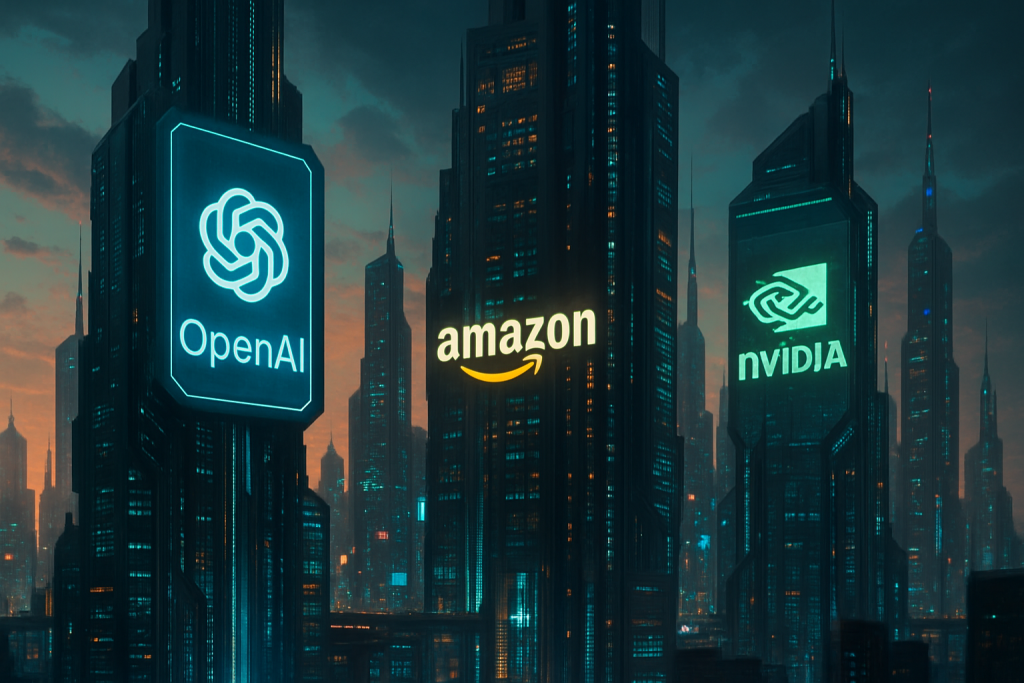

The year is 2026. Flying cars, still a distant dream for most, are nonetheless closer than they were just a few years ago. But something far more profound is taking flight: artificial intelligence. And on March 4th, the AI landscape shifted seismically, thanks to a single announcement from OpenAI.
Forget IPOs and public offerings for a moment. Forget even the latest viral TikTok dance. What truly grabbed the world’s attention was the revelation of OpenAI’s latest funding round: a staggering $110 billion infusion of capital, catapulting their pre-money valuation to a mind-boggling $730 billion. To put that in perspective, that’s roughly the GDP of Switzerland. Not bad for a company that started with the seemingly simple goal of “ensuring that artificial general intelligence benefits all of humanity.”
This isn’t just venture capital; this is a coronation. It’s a bet, a massive one, that OpenAI will continue to dominate the AI space, shaping everything from how we work to how we play. Think of it like this: imagine if Tony Stark had decided to build AI instead of Iron Man suits. This is the kind of investment that would fuel that ambition. But who are the backers of this technological revolution?
The list reads like a who’s who of tech titans. SoftBank, always a player in the big leagues, chipped in a cool $30 billion. NVIDIA, the undisputed king of GPUs and AI hardware, matched that contribution with another $30 billion. But the undisputed leader of this round, the one writing the biggest check, was Amazon, with a colossal $50 billion investment. This isn’t just about money; it’s about strategy.
The implications of this funding are far-reaching, rippling through the tech world like a sonic boom. But it’s the strategic partnerships that truly paint the picture of what’s to come.
Amazon’s Embrace: Frontier and the Cloud
The crown jewel of this announcement is the multi-year partnership between OpenAI and Amazon. Amazon Web Services (AWS), already the dominant force in cloud computing, is now the exclusive third-party distributor of OpenAI’s enterprise platform, Frontier. Think of Frontier as OpenAI’s most powerful, cutting-edge AI models, the ones too hot for the general public to handle (yet). Now, businesses that want to harness the power of these models will have to go through Amazon. This is a game changer for AWS, solidifying its position as the go-to platform for AI development and deployment.
But the deal doesn’t stop there. OpenAI has committed to expanding its AWS infrastructure usage by a staggering $100 billion over the next eight years. That’s a hundred billion reasons for Jeff Bezos to smile. This isn’t just about renting server space; it’s about a symbiotic relationship. OpenAI gets the compute power it needs to train its increasingly complex models, and Amazon gets a guaranteed revenue stream and the bragging rights of powering the future of AI. It’s a win-win, or at least, it’s a win-win for OpenAI and Amazon. Competitors might be feeling a bit more… apprehensive.
NVIDIA’s Undisputed Reign: The Power of Compute
Let’s not forget NVIDIA’s crucial role. OpenAI’s bolstered collaboration with the GPU giant isn’t just a footnote; it’s a critical element of this whole equation. AI models, especially the large language models that OpenAI specializes in, are incredibly compute-intensive. They require massive amounts of processing power to train and run. NVIDIA’s GPUs are the engine that drives this process. Securing additional compute capacity from NVIDIA is essentially like ensuring OpenAI has access to the fuel it needs to power its AI rockets. This move underscores the brutal reality of the AI landscape: access to cutting-edge hardware is paramount. Without it, even the most brilliant algorithms are just lines of code.
The Broader Implications: A New AI Order?
This funding round and the strategic partnerships it spawned signal a significant shift in the AI industry. OpenAI, backed by the financial muscle of Amazon, SoftBank, and NVIDIA, is now in an even stronger position to dominate the market. This raises several important questions. Will this concentration of power stifle innovation? Will smaller AI startups be able to compete? What are the ethical implications of having so much AI development concentrated in the hands of a few powerful companies?
The political and regulatory landscape is also shifting. Governments around the world are grappling with how to regulate AI, and this funding round is sure to fuel the debate. Concerns about bias, job displacement, and the potential for misuse of AI are already top of mind for policymakers. Expect increased scrutiny of OpenAI and its partners in the coming years.
And let’s not forget the philosophical implications. As AI becomes more powerful and more integrated into our lives, we need to ask ourselves what kind of future we want to create. Are we building a world where AI augments human capabilities, or one where it replaces them? Are we ensuring that AI benefits all of humanity, or just a select few? These are not easy questions, but they are questions we must answer as we continue down this path.
The financial repercussions are equally significant. This funding round is likely to spur further investment in AI, both from venture capitalists and from established tech companies. We can expect to see a flurry of acquisitions and partnerships as companies race to catch up with OpenAI. The AI market is already booming, and this funding round is likely to accelerate that growth even further. But with great power comes great responsibility, and OpenAI now has a tremendous amount of both. The world is watching to see what they will do with it.
Discover more from Just Buzz
Subscribe to get the latest posts sent to your email.