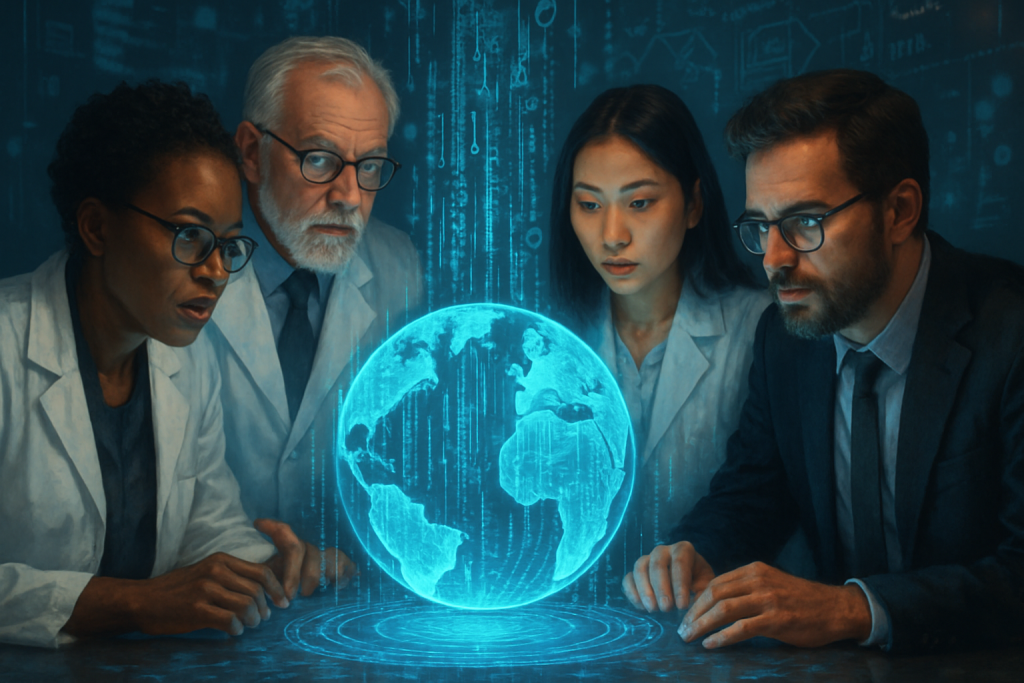

The year is 2026. Flying cars are still a pipe dream (thanks, Elon!), but artificial intelligence is undeniably everywhere. It’s writing our marketing copy, diagnosing diseases with uncanny accuracy, and even composing surprisingly catchy pop songs that make you question everything you thought you knew about artistic expression. But with great power comes great responsibility, and the global community is finally grappling with the full implications of this rapidly evolving technology. Yesterday, the United Nations General Assembly took a significant step in that direction, approving the formation of a 40-member global scientific panel to assess the impacts and risks of AI. Think of it as the Avengers, but instead of fighting Thanos, they’re battling algorithmic bias and existential dread.
The vote, a resounding 117 in favor, with only the United States and Paraguay dissenting, underscores a growing consensus that AI’s influence transcends national borders and demands international cooperation. Tunisia and Ukraine abstained. The panel, a diverse collection of AI experts and interdisciplinary thinkers including Nobel laureate Maria Ressa, aims to provide independent, scientific insights into AI’s effects worldwide. Two American and two Chinese scholars are among the selected members, highlighting the complex geopolitical dimensions of this technological revolution.
But why is this happening now? And what’s the big deal?
Well, the road to AI dominance has been paved with both utopian promises and dystopian nightmares. Remember the early days of AI hype, when we were promised robot butlers and a world free from drudgery? That vision hasn’t quite materialized. Instead, we’re facing issues like AI-powered disinformation campaigns, algorithmic bias perpetuating societal inequalities, and the looming threat of widespread job displacement. It’s a bit like that scene in “Jurassic Park” where Jeff Goldblum warns about the dangers of playing God- only instead of dinosaurs, we’ve unleashed a digital behemoth.
U.N. Secretary-General António Guterres, recognizing the urgent need for a global understanding of AI, initiated this panel. Its primary goal is to bridge the knowledge and access gap, ensuring that all member states, regardless of their technological prowess, can engage on an equal footing. Imagine trying to navigate the complexities of AI policy without a solid understanding of the underlying science- it’s like trying to assemble IKEA furniture without the instructions (a universally relatable nightmare, I think we can all agree).
The U.S. objection, led by counselor Lauren Lovelace, adds another layer of intrigue to this story. The U.S. argues that AI governance should not fall under U.N. jurisdiction, criticizing the panel’s formation process as non-transparent and expressing concerns about potential international control influenced by authoritarian regimes. In essence, they’re worried about ceding control of a technology that’s rapidly becoming a cornerstone of global power. It’s a classic case of “not invented here” syndrome, with a healthy dose of geopolitical anxiety thrown in for good measure.
The selection process for the panel members was overseen by the International Telecommunications Union, UNESCO, and the U.N. Office for Digital and Emerging Technologies. Over 2,600 candidates were reviewed, suggesting that the world is not short on AI expertise, just perhaps on the global consensus of how to manage it.
What are the immediate and long-term consequences of this U.N. initiative? In the short term, we can expect a flurry of reports, studies, and policy recommendations from the panel. These findings will likely inform national and international regulations, ethical guidelines, and investment strategies related to AI. Think of it as a global fact-finding mission, aimed at informing the future of AI governance.
In the long term, the implications are far more profound. The panel’s work could shape the very nature of AI development, influencing everything from research priorities to deployment strategies. It could also pave the way for a more equitable and inclusive AI ecosystem, ensuring that the benefits of this technology are shared by all, not just a select few. Or, if the U.S. concerns prove valid, it could lead to a fragmented and politicized approach to AI governance, with competing blocs vying for control and influence.
The financial implications are equally significant. The AI market is already a multi-billion dollar industry, and it’s projected to grow exponentially in the coming years. The U.N. panel’s recommendations could influence investment decisions, market trends, and the competitive landscape, potentially creating new opportunities for some companies while posing challenges for others. Imagine the impact on companies like Google, Microsoft, and Baidu, who are already heavily invested in AI, if the panel recommends stricter regulations or ethical guidelines. It’s a high-stakes game of chess, with the future of AI at stake.
But beyond the economic and political considerations, there are deeper philosophical and ethical questions at play. What does it mean to be human in an age of artificial intelligence? How do we ensure that AI is used for good, not evil? And who gets to decide what “good” and “evil” even mean in this context? These are the questions that philosophers, ethicists, and policymakers are grappling with, and the U.N. panel’s work could provide valuable insights into these complex issues.
Ultimately, the formation of this U.N. panel represents a critical step toward responsible AI development. It’s a recognition that AI is not just a technological challenge, but a societal one, demanding global cooperation, ethical considerations, and a willingness to confront the complex implications of this transformative technology. Whether it will succeed in taming the AI beast remains to be seen, but one thing is certain: the future of humanity may depend on it.
Discover more from Just Buzz
Subscribe to get the latest posts sent to your email.