
The year is 2026. Flying cars, sadly, are still more of a Jetsons fantasy than a reality. But something far more profound than personal aircraft is reshaping our world: artificial intelligence. And nowhere is this transformation more tangible, more impactful, than within the U.S. Department of Veterans Affairs (VA). On February 11th, the VA dropped a bombshell: over 130 AI use cases are now deployed across its operations, with a laser focus on revolutionizing healthcare for our veterans.
Think about that number: 130. That’s not a pilot program, a toe dipped tentatively into the AI waters. This is a full-on cannonball into the deep end. But to truly understand the significance, we need to rewind a bit.
The VA, as the largest integrated healthcare system in the nation, faces immense challenges. Serving millions of veterans annually, it’s a complex behemoth navigating a sea of data, resource constraints, and the ever-present need to improve patient outcomes. For years, whispers of AI solutions floated around the halls of the VA, promises of efficiency and enhanced care. But promises are cheap. Execution is everything. And now, the VA is delivering.
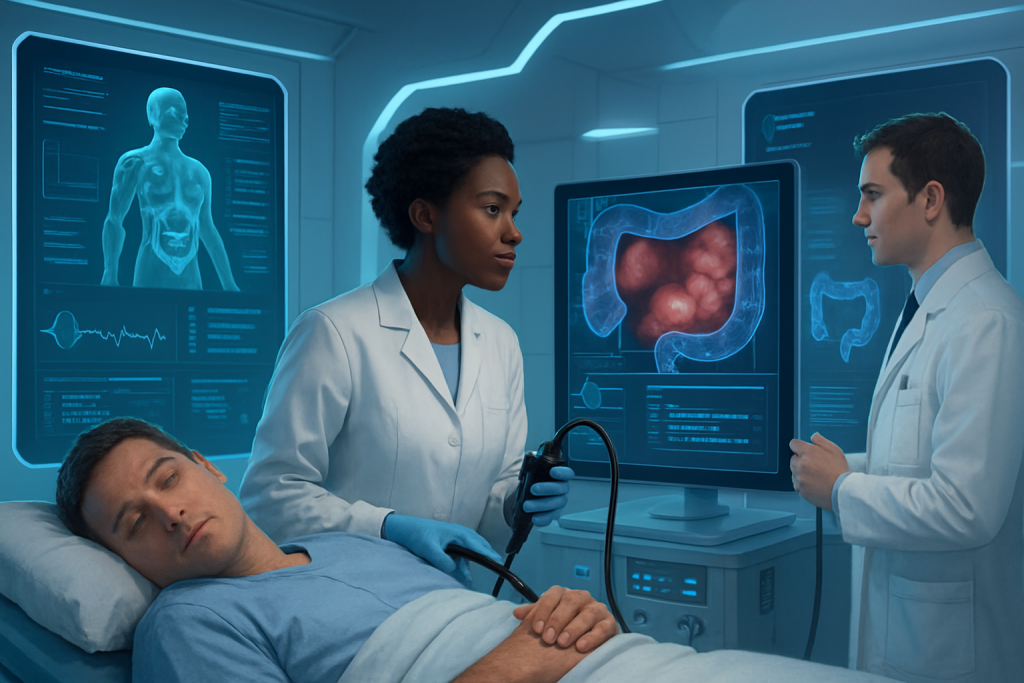
So, what exactly are these AI systems doing? Let’s dive into some specifics. The announcement revealed that more than half of these AI deployments are directly impacting healthcare. Picture this: AI-assisted colonoscopies. It sounds like something straight out of a sci-fi medical drama, but it’s reality. These AI systems are trained to detect tumors with far greater accuracy than the human eye alone, leading to earlier diagnoses and, crucially, better prognoses. It’s like giving doctors a digital magnifying glass, powered by the collective knowledge of millions of past cases.
But the real game-changer, the application that truly tugs at the heartstrings, is the use of AI to mitigate opioid overdose and suicide risk. The opioid crisis continues to ravage communities, and the veteran population is particularly vulnerable. Suicide rates among veterans are tragically high. AI systems are now sifting through mountains of patient data, identifying individuals at heightened risk. They’re not just looking at obvious factors; they’re uncovering subtle patterns, hidden connections that might otherwise be missed. This allows healthcare providers to proactively intervene, offering timely support and resources to those who need it most. It’s like having a digital guardian angel, constantly watching and ready to offer a helping hand.
The technical details are fascinating. These AI systems aren’t just pulling data at random. They’re using sophisticated machine learning algorithms, trained on vast datasets of medical records, patient histories, and even social media activity (within ethical and privacy guidelines, of course). They’re learning to identify correlations and patterns that would be impossible for a human to detect. Think of it like this: a human doctor might be able to remember a few hundred cases. An AI system can analyze millions, identifying subtle nuances that could save a life.
The implications are far-reaching. The immediate impact is clear: improved diagnostic accuracy, personalized patient care, and optimized resource allocation. But the long-term consequences are even more profound. This is a paradigm shift in how healthcare is delivered. It’s moving from a reactive model, where doctors treat illnesses as they arise, to a proactive model, where AI helps to predict and prevent them. It’s like the difference between fixing a leaky faucet and preventing the pipe from bursting in the first place.
But this isn’t just about technology; it’s about people. It’s about the veterans who have served our country and now deserve the best possible care. It’s about the doctors and nurses who are empowered by these AI tools to provide even better treatment. It’s about the families who can rest a little easier knowing that their loved ones are being watched over by a digital guardian angel.
Of course, there are ethical considerations. With great power comes great responsibility, as Uncle Ben famously told Peter Parker. We need to ensure that these AI systems are used ethically and responsibly, that patient privacy is protected, and that human doctors remain in control. AI should augment human capabilities, not replace them entirely. It’s a partnership, not a takeover.
The financial impact is also significant. By streamlining operations and improving patient outcomes, the VA can potentially save billions of dollars. These savings can then be reinvested in other vital programs for veterans. It’s a virtuous cycle of innovation and efficiency.
This initiative also reflects a broader trend within the U.S. government to embrace advanced technologies. From defense to transportation to education, AI is being seen as a key tool for improving public services and enhancing national security. It’s a recognition that the future belongs to those who can harness the power of data and algorithms. It is similar to the space race of the 1960s, but this time the race is to see who can best utilize AI.
The VA’s announcement on February 11, 2026, is more than just a news story; it’s a glimpse into the future of healthcare. It’s a testament to the power of AI to transform lives, to improve outcomes, and to make the world a better place. It’s a reminder that technology, when used wisely, can be a force for good. And it’s a challenge to other institutions to follow suit, to embrace innovation, and to put the needs of their constituents first.
Discover more from Just Buzz
Subscribe to get the latest posts sent to your email.