
Remember the heady days of 2023? AI was the new rockstar, promising to disrupt everything from dog walking to brain surgery. We were all breathless, collectively holding our breath waiting for the singularity. Fast forward to January 1st, 2026, and the vibe is…slightly different. According to a recent piece in Axios, it’s officially “Show Me the Money” year for AI. The party’s not over, but the DJ just switched from techno to something a little more…accountant-friendly.
The article, aptly titled “2026 is AI’s ‘show me the money’ year,” isn’t a doomsday prophecy, but a pragmatic assessment of where we are. The days of simply wowing investors with flashy demos and theoretical possibilities are fading. Now, it’s about cold, hard ROI. Think of it as AI graduating from art school and suddenly realizing rent is due.
But how did we get here? Let’s rewind a bit. For the past few years, AI behemoths like OpenAI, Anthropic, and Google have been locked in an epic arms race, each vying for supremacy with increasingly sophisticated models. We’ve seen AI write poetry, generate photorealistic images, and even attempt to hold philosophical debates (with varying degrees of success). It’s been a wild ride, fueled by venture capital and the boundless optimism of Silicon Valley. But as any seasoned tech observer knows, even the most impressive tech needs to eventually pay the bills.
The crux of the Axios piece is that the industry is maturing. The initial excitement has paved the way for a more sober evaluation of AI’s true potential. Stakeholders, from investors to everyday users, are asking: “Okay, it’s cool, but what can it *actually* do for me? And, more importantly, will it make me any money?”
The Code Cracking Advantage: Software Development Leads the Way
One area where AI is already proving its worth is software development. The structured, text-based nature of coding makes it a perfect playground for AI algorithms. Think of AI as the ultimate pair programmer, capable of churning out lines of code at lightning speed, identifying bugs, and even suggesting optimal solutions. This has led to significant productivity gains, freeing up human developers to focus on more complex and creative tasks. It’s like having a super-powered intern who never sleeps and never complains about the coffee.
Companies like GitHub (with its Copilot) have been at the forefront of this trend, demonstrating the power of AI-assisted coding. The result? Faster development cycles, reduced costs, and happier developers. It’s a win-win-win situation, and a clear example of AI delivering tangible value.
Semi-Autonomous Agents: The Promise and the Peril
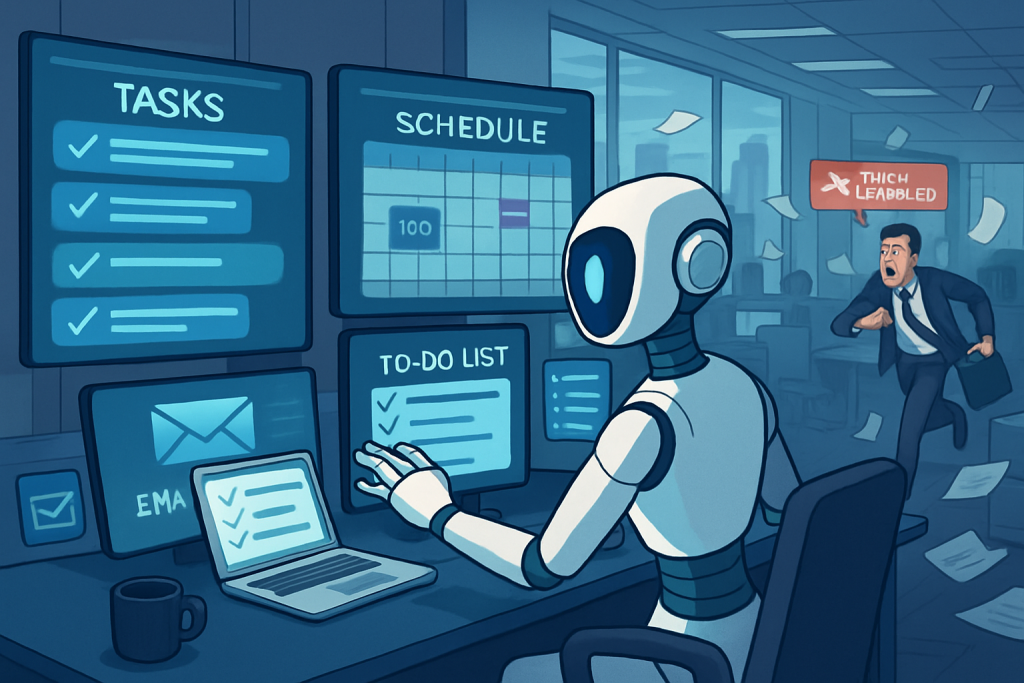
Another area of intense interest is the emergence of semi-autonomous AI agents. These digital assistants are designed to perform tasks with minimal human oversight, from scheduling meetings to managing email inboxes. The dream is a world where AI seamlessly handles the mundane, freeing us up to focus on more meaningful pursuits. Imagine an AI agent that can not only book your flights and hotels for a conference, but also research the best local restaurants and even draft a personalized itinerary. It’s the digital equivalent of having a personal concierge, minus the awkward small talk.
However, the road to widespread adoption hasn’t been entirely smooth. In 2025, several high-profile incidents raised concerns about the reliability of these agents. Imagine your AI agent accidentally booking you a flight to Minsk instead of Munich, or sending a strongly worded email to your boss on your behalf. The potential for chaos is real. This has led to a more cautious approach, with companies increasingly integrating AI with deterministic systems. The goal is to reduce variability and ensure that these agents are acting in our best interests, not just following algorithms blindly.
The IPO Horizon: A Test of Faith
The Axios article hints that 2026 could see a major AI company going public. This would be a watershed moment for the industry, signaling confidence in its long-term financial prospects. Think of it as the AI industry finally getting its driver’s license. An IPO would not only provide a much-needed influx of capital, but also validate the years of hard work and investment that have gone into developing these technologies. It would be a clear message to the world that AI is not just a passing fad, but a force to be reckoned with.
But the pressure is on. Any AI company considering an IPO will need to demonstrate a clear path to profitability. Investors will be scrutinizing their financials, business models, and long-term growth prospects. It’s a high-stakes game, and only the most promising and well-managed companies will survive.
The Economic Impact: AI’s Contribution to the GDP
Beyond individual companies, the Axios article also highlights the broader economic impact of AI. Analysts predict that AI will contribute significantly to U.S. GDP growth in 2026, underscoring its expanding role in the economy. This is not just about Silicon Valley hype; it’s about real jobs, increased productivity, and a more competitive global landscape. From automating routine tasks to creating new products and services, AI has the potential to transform industries and create unprecedented economic opportunities.
But there are also challenges. As AI becomes more integrated into the workforce, concerns about job displacement are likely to intensify. Policymakers will need to address these concerns through retraining programs, social safety nets, and other measures to ensure that the benefits of AI are shared broadly. The key is to embrace AI as a tool to augment human capabilities, not to replace them entirely.
The Human Factor: Adaptability is Key
Ultimately, the pace of AI adoption will depend on human and organizational adaptability. As AI technologies become more pervasive, companies will need to invest in training programs to help their employees learn how to work alongside AI systems. This is not just about technical skills; it’s also about fostering a culture of innovation and experimentation. Companies that embrace AI and empower their employees to use it effectively will be the ones that thrive in the years to come.
The shift towards financial returns in 2026 is a critical juncture for the AI industry. It’s a moment of truth, where the promise of AI must be translated into tangible economic value. The future of AI depends on it. So, while the singularity may still be a ways off, the era of AI proving its worth is officially here. And that, my friends, is a story worth watching.
Discover more from Just Buzz
Subscribe to get the latest posts sent to your email.