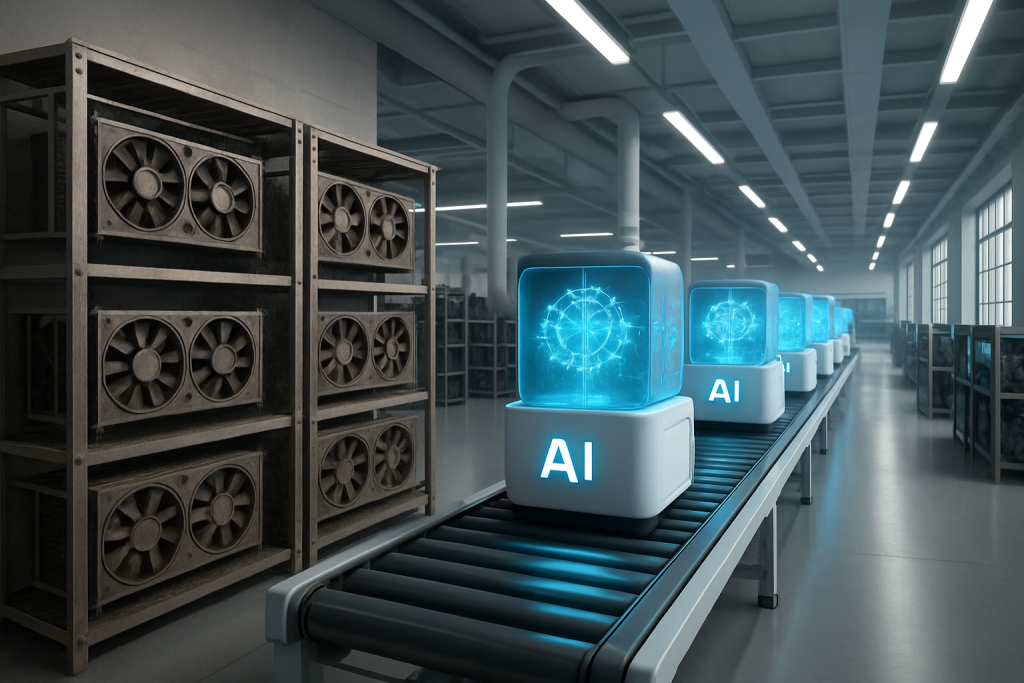

Remember the dot-com boom? All that hype, all that venture capital, all those Pets.com socks? Well, 2026 is shaping up to be the AI equivalent, only this time, instead of fluffy mascots, we’re talking about mountains of expensive, underutilized hardware. Broadcom’s CTO, Chris Wolf, just dropped a truth bomb called “AI Buyer’s Remorse,” and it’s got the whole industry buzzing, or maybe groaning is a better word.
The core of the problem? Companies, blinded by the siren song of AI, went all-in on training hardware. They envisioned these systems seamlessly morphing into lean, mean, inference-running machines, churning out insights and predictions like a digital Nostradamus. But the reality, as Wolf points out, is far less glamorous. Turns out, these AI powerhouses are about as graceful at inference as a rhino on roller skates.
Think back to the early days of computing. Remember when businesses rushed to buy the biggest, fastest mainframe they could find, only to realize it was overkill for running payroll and printing invoices? This feels eerily similar. Except instead of mainframes, we have racks upon racks of GPUs, originally designed to train massive AI models, now struggling to efficiently handle the day-to-day inference tasks.
The Devil is in the Details (or Rather, the Lack Thereof)
What went wrong? According to Wolf, the problem boils down to a fundamental mismatch between training and inference hardware requirements. Training demands raw power, brute-force calculations, and the ability to process massive datasets. Inference, on the other hand, is about speed, efficiency, and real-time responsiveness. It’s like the difference between training for a marathon and sprinting a 100-meter dash. You need different shoes, different muscles, and a different strategy.
The report highlights a laundry list of missing features in these repurposed training systems: lifecycle management (keeping the hardware up-to-date and secure), observability (monitoring performance and identifying bottlenecks), robust security (protecting against attacks), and, crucially, energy efficiency. These are all table stakes for running mission-critical applications in a production environment. Without them, enterprises are facing a costly and frustrating mess.
Utilization Rates: A Tale of Wasted Potential
The numbers don’t lie. Wolf’s analysis reveals that many of these AI systems are operating at a dismal 40% to 60% utilization. That’s like buying a Ferrari and only driving it to the grocery store once a week. In contrast, virtualized environments typically boast utilization rates of 80% or higher. This inefficiency translates directly into higher operational costs, increased energy consumption, and a whole lot of wasted potential.
And it’s not just about the upfront cost of the hardware. Companies are now facing expensive retrofits to try and shoehorn these training systems into production environments. It’s like trying to turn a monster truck into a Formula One race car. You might get it to work, but it’s going to be a bumpy ride.
Who’s Feeling the Burn?
The impact of this “AI Buyer’s Remorse” is widespread. Cloud providers, enterprise IT departments, and AI startups are all feeling the pinch. Companies that rushed into AI adoption without a clear understanding of their long-term needs are now facing the consequences. Even hardware vendors, who initially profited from the AI boom, are now under pressure to deliver more efficient and enterprise-ready solutions.
Industries that rely heavily on AI, such as finance, healthcare, and autonomous vehicles, are particularly vulnerable. Imagine a self-driving car relying on an inefficient AI system that consumes excessive power and struggles to make real-time decisions. The consequences could be catastrophic.
The Virtualization Solution: A Path to Redemption?
Wolf proposes a strategic shift towards virtualized, enterprise-grade AI infrastructures optimized for inference tasks. This approach would allow companies to consolidate their AI workloads, improve utilization rates, and reduce operational costs. It’s like moving from a sprawling, inefficient factory to a streamlined, automated production line.
Virtualization also offers greater flexibility and scalability. Companies can easily scale their AI resources up or down as needed, without having to invest in additional hardware. This is particularly important in a rapidly evolving field like AI, where new models and algorithms are constantly emerging.
The Bigger Picture: AI’s Taming
This “AI Buyer’s Remorse” episode highlights a broader trend: the need to tame AI and integrate it seamlessly into existing enterprise infrastructure. We’re moving beyond the initial hype and experimentation phase and entering a new era of practical AI adoption. This requires a more strategic and disciplined approach to hardware procurement, software development, and deployment.
It also raises important questions about the future of AI hardware. Will we see a convergence of training and inference hardware, or will specialized solutions continue to dominate? Will new architectures emerge that are better suited for both tasks? Only time will tell.
In the meantime, Wolf’s report serves as a valuable wake-up call for the AI industry. It’s a reminder that technology is only as good as the strategy behind it. And that sometimes, the most important thing is to avoid buying the wrong socks.
Discover more from Just Buzz
Subscribe to get the latest posts sent to your email.