The year is 2026. Self-driving cars are (mostly) a reality, AI-powered personal assistants are ubiquitous, and the metaverse… well, let’s just say Mark Zuckerberg is still trying to make “fetch” happen. But in the world of generative AI, a seismic shift just occurred: OpenAI has pulled the plug on Sora, their much-hyped video generation platform. It’s like Netflix suddenly deciding to stop streaming movies- a move that leaves everyone scrambling for answers, and a whole lot of content creators wondering what’s next.
For those who need a refresher, Sora burst onto the scene in early 2025, promising to revolutionize video creation. Imagine typing a few lines of text – “A Shiba Inu wearing a tiny hat skateboarding through Tokyo” – and *bam*, a realistic-looking video appears. It was the stuff of science fiction, a real-world manifestation of the replicators from Star Trek, only instead of Earl Grey tea, it was generating video content. The initial reaction was pure, unadulterated awe. Content creators, marketers, and even Hollywood studios salivated at the possibilities.


But the party’s over. The official reason? A one-two punch of compute shortages and strategic realignments. It’s a polite way of saying “We’re running out of processing power, and we have bigger fish to fry.” But let’s unpack that a bit, shall we?
The first, and perhaps most significant, issue is the sheer computational muscle required to run Sora. Generating high-quality, realistic video is not like rendering a basic animation. It demands immense processing power. Think of it like this: training a large language model is like teaching a dog to fetch; running Sora is like training a whole pack of wolves to choreograph a synchronized swimming routine. OpenAI, like any company, has finite resources. With the rising demand for their other AI services, something had to give.


The second reason, the “strategic realignment,” is arguably more interesting. OpenAI, according to inside sources, is betting big on the concept of a “superapp.” Think WeChat, but powered by the full force of OpenAI’s AI arsenal. A single platform for everything- communication, productivity, entertainment, and, presumably, ordering groceries and walking the dog. Building this superapp requires a laser focus and a reallocation of resources. Sora, despite its initial promise, became a casualty of this grander vision.
But what does this mean for the rest of us? The implications are far-reaching, rippling through the AI industry and beyond.
The Mouse That Didn’t Roar (At Least, Not Yet)
One of the most high-profile casualties of Sora’s demise is the $1 billion partnership with Disney. Yes, *that* Disney. The House of Mouse had envisioned a future where AI-generated videos played a significant role in their content creation pipeline. Imagine AI assisting with everything from pre-visualization to generating entire scenes. It was a bold move, a sign that even the most established media giants were embracing the potential of generative AI. Now, that dream is on hold, leaving Disney to explore other, less-magical avenues.
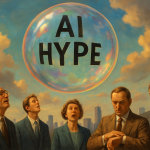
The collapse of the Disney partnership underscores a critical point: the hype around AI often outpaces the reality. While Sora was undeniably impressive, its practical applications, especially within the demanding world of professional media production, were still limited. It’s like the early days of CGI- groundbreaking, but ultimately requiring significant human intervention to achieve truly convincing results.
The Broader Industry Impact
Sora’s shutdown also serves as a cautionary tale for the entire AI industry. It highlights the challenges of scaling resource-intensive AI technologies for commercial applications. Building a cool demo is one thing; deploying a reliable, cost-effective service that can handle the demands of millions of users is another beast entirely. It’s a reminder that even the most innovative AI companies face the same fundamental challenges as any other business: managing resources, prioritizing projects, and ultimately, making tough decisions.
Moreover, it throws into sharp relief the ethical considerations surrounding AI-generated content. The potential for misuse, the spread of misinformation, and the impact on human artists are all concerns that have been swirling around generative AI since its inception. Sora, with its ability to create incredibly realistic videos, amplified these concerns. Perhaps its premature demise will allow for a more thoughtful and responsible approach to the development and deployment of similar technologies in the future.
The Future of Generative Media
So, is this the end of AI-generated video? Absolutely not. Sora’s shutdown is a setback, not a death knell. Other companies are actively working on similar technologies, and the underlying algorithms are constantly improving. The dream of AI-assisted video creation is still very much alive, but it will likely take a different form. Perhaps we’ll see more specialized tools, designed for specific use cases, rather than a single, all-encompassing platform. Or maybe we’ll see a greater emphasis on human-AI collaboration, where AI assists artists rather than replacing them entirely.
Ultimately, Sora’s story is a reminder that the AI revolution is not a straight line. It’s a messy, iterative process, filled with both breakthroughs and setbacks. It’s a journey of discovery, a constant push and pull between innovation and practicality, hype and reality. And while Sora may be gone, its legacy will undoubtedly shape the future of generative media for years to come. Just don’t expect to see that Shiba Inu skateboarding through Tokyo anytime soon. At least, not without a lot of human help.
Discover more from Just Buzz
Subscribe to get the latest posts sent to your email.