$1.5 Billion: The Price Tag for AI’s Appetite for Creativity

$1.5 Billion: The Price Tag for AI’s Appetite for Creativity

The courtroom in San Francisco held its breath, metaphorically speaking of course, on May 14, 2026. Judge Araceli Martinez-Olguin, a figure now as familiar to the tech world as Sundar Pichai or Elon Musk, presided over a hearing that could reshape the very foundations of artificial intelligence and copyright law. The subject? Anthropic’s proposed $1.5 billion settlement with a coalition of authors claiming their work was pilfered to fuel the insatiable appetite of Claude, Anthropic’s flagship AI chatbot. This isn’t just chump change; it’s the largest U.S. copyright settlement we’ve seen to date, a sum that makes even the Napster-era lawsuits look like pocket lint.

But how did we get here? To understand the gravity of this moment, we need to rewind a bit. Imagine a world where robots are learning to write, not by attending some futuristic university, but by devouring every book, article, and blog post they can find. That’s essentially what’s been happening with large language models (LLMs) like Claude. These AI behemoths are trained on massive datasets, gobbling up text like a starving Pac-Man on a power pellet binge. Anthropic, a company founded by former OpenAI researchers, aimed to create an AI that was not just powerful, but also “helpful, harmless, and honest.” A noble goal, but one that apparently required a diet heavily seasoned with copyrighted material.

The problem, as the authors saw it, was that their creative works were being used without their permission, or compensation, to train Claude. Think of it like this: you painstakingly craft a beautiful sculpture, and someone comes along, makes a thousand copies, and sells them for profit without giving you a dime. Not cool, right? The authors argued that Anthropic was essentially doing the same thing, using their copyrighted works to build a commercially successful AI.

In September 2025, a preliminary settlement was reached. Judge William Alsup, now retired, gave it a tentative thumbs-up. The deal: $1.5 billion to be distributed amongst the affected authors. Sounds like a win, right? Well, not so fast. Enter Judge Martinez-Olguin, who, with the sharp eye of a seasoned legal eagle, decided to take a closer look. She wasn’t convinced that all the i’s were dotted and t’s were crossed. Specifically, she wanted more information about the attorneys’ fees and the payments to the lead plaintiffs. In other words, she wanted to make sure the money was being distributed fairly, and that the lawyers weren’t walking away with the lion’s share of the loot.

The Devil is in the Details (and the Legal Fees)

Let’s talk about those attorneys’ fees. In class-action lawsuits like this, it’s common for the lawyers to take a percentage of the settlement as payment for their work. This is perfectly legitimate, but the percentage needs to be reasonable. Judge Martinez-Olguin wanted to ensure that the lawyers weren’t taking an unfairly large cut, leaving the authors with crumbs. It’s a classic David-versus-Goliath scenario, except in this case, David has a team of high-powered lawyers and Goliath is a multi-billion-dollar AI company.

And what about the lead plaintiffs? These are the authors who stepped up to the plate and took the lead in the lawsuit. They often receive additional compensation for their efforts, as they’ve invested more time and energy into the case. Judge Martinez-Olguin wanted to know exactly how much these lead plaintiffs were getting, and why. Was it justified? Was it fair to the other authors?

A Precedent-Setting Case

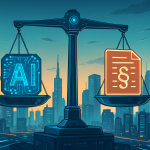
This case is far bigger than just Anthropic and a group of disgruntled authors. It’s a bellwether, a signpost pointing the way forward for the entire AI industry. We’re living in a Wild West era of AI development, where the rules are still being written. Copyright law, designed for a world of paper and ink, is struggling to keep up with the breakneck pace of technological advancement. If Anthropic’s settlement is approved, it could set a precedent for how AI companies handle copyrighted materials in the future. It could mean that AI companies will need to obtain licenses from copyright holders before using their works to train their models. It could mean a new revenue stream for authors and other content creators.


But it could also mean higher costs for AI development, potentially slowing down innovation. Imagine if every time an AI wanted to learn something, it had to pay a fee. It would be like trying to learn calculus while simultaneously paying off a mortgage. The implications are enormous, affecting not just the tech industry, but also the creative community, the legal profession, and society as a whole.


The Ethical Quagmire

Beyond the legal and financial implications, there are deeper ethical questions at play here. Is it morally right to use someone else’s creative work without their permission, even if it’s for the purpose of training an AI? Is there a difference between “fair use” and outright copyright infringement in the age of AI? These are not easy questions to answer, and they’re sparking heated debates in academia, in the media, and around dinner tables across the globe. It’s a debate as old as intellectual property itself, reminiscent of the arguments surrounding sampling in hip-hop music back in the day, only now the stakes are far higher.

Some argue that AI is simply a tool, and that the responsibility lies with the humans who use it. Others argue that AI is becoming increasingly autonomous, and that it needs to be held accountable for its actions. It’s a philosophical minefield, with no easy answers in sight.

The Future of AI and Copyright

As Judge Martinez-Olguin pores over the details of Anthropic’s settlement, the tech world waits with bated breath. Her decision could have far-reaching consequences, shaping the future of AI development and copyright law for years to come. Will she approve the settlement as is? Will she demand changes? Or will she reject it altogether, sending the case back to the drawing board? Only time will tell.

One thing is certain: the debate over AI and copyright is far from over. As AI continues to evolve and become more integrated into our lives, we’ll need to grapple with these complex issues and find a way to balance the interests of innovation and creativity. It’s a challenge worthy of a science fiction novel, a real-world “Blade Runner” scenario where the lines between human and machine, creator and creation, become increasingly blurred. And in this story, Judge Martinez-Olguin is holding the pen, writing the next chapter in the ongoing saga of AI and humanity.


Discover more from Just Buzz

Subscribe to get the latest posts sent to your email.