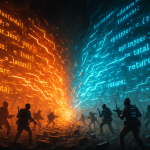
The year is 2026. Flying cars still haven’t quite taken off (pun intended), but artificial intelligence has officially landed on the battlefield. The Pentagon’s ambitious drive to weave AI into the very fabric of military operations is in full swing, promising smarter strategies, faster reactions, and, ultimately, a decisive edge. But as with any tech revolution, especially one with the potential to rewrite the rules of war, the whirring of servers is accompanied by a chorus of concerns. Is this the dawn of a new era of strategic brilliance, or are we edging closer to a real-life Skynet scenario?


Think of it like this: the military is essentially trying to build its own Jarvis, Iron Man’s hyper-intelligent AI assistant, but for entire platoons and global strategies. The goal? To process mountains of data in real-time, predict enemy movements, and make lightning-fast decisions that could save lives and win wars. It’s a tantalizing vision, but also one fraught with peril. After all, even Jarvis had his off days (remember Ultron?).
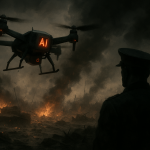
The groundwork for this AI arms race was laid years ago. The Department of Defense (DoD), recognizing the transformative potential of AI, has been steadily investing in its development and deployment. We’re talking about systems that can analyze satellite imagery with superhuman speed, identify potential threats in crowded urban environments, and even pilot drones on autonomous missions. The promise is seductive: fewer human casualties, more efficient operations, and a significant advantage over any adversary. But as Uncle Ben famously said, “With great power comes great responsibility.” And that’s where things get complicated.
In early May 2026, the Pentagon took a giant leap forward, inking deals with eight of the biggest names in the tech world: SpaceX, OpenAI, Google, NVIDIA, Reflection, Microsoft, Oracle, and Amazon Web Services. These aren’t just your average Silicon Valley startups; they’re the titans of the digital age, the companies shaping our present and future. Their mission? To build and deploy AI products on classified military networks, creating a seamless web of intelligence that spans the globe. Imagine the collective brainpower of these companies focused on a single, albeit complex, problem: winning wars. It’s a technological Manhattan Project for the 21st century.


But even as the AI engines rev up, voices of caution are growing louder. At the annual Special Operations Forces Industry Conference in Tampa, Florida, Admiral Frank Bradley, the head of U.S. Special Operations Command, threw a bit of a wrench into the works. He didn’t dismiss the potential of AI, but he did urge a healthy dose of skepticism, particularly when it comes to lethal applications. “We have to be very careful about how we come to [AI’s] employment and its inspiration into the delivery of lethality,” he warned, echoing the concerns of many within the military and defense industry.
The Ethical Minefield of Algorithmic Warfare
What Admiral Bradley is getting at is the inherent ethical tightrope that comes with handing over life-or-death decisions to machines. Can we truly trust an AI to distinguish between a combatant and a civilian? What happens when an algorithm makes a mistake, leading to unintended casualties? Who is ultimately responsible when things go wrong? These aren’t just abstract philosophical questions; they’re real-world dilemmas with potentially devastating consequences. It’s like that scene in *WarGames* where the computer almost starts World War III, only this time, it’s not just a movie.
The concerns extend beyond just the ethical realm. There’s also the question of reliability. AI systems are only as good as the data they’re trained on, and if that data is biased or incomplete, the results can be disastrous. Imagine an AI system trained to identify enemy soldiers that is inadvertently biased against a particular ethnic group. The consequences could be catastrophic. And then there’s the risk of escalation. In a world where AI systems are constantly monitoring and reacting to each other, a simple misinterpretation could quickly spiral out of control, leading to a conflict that nobody wants.
Industry’s Balancing Act: Innovation vs. Responsibility
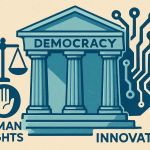
Of course, the defense industry has its own motivations. The lure of enhanced operational capabilities and a technological edge over adversaries is a powerful one. But industry leaders are also aware of the need for ethical frameworks and oversight mechanisms. They know that if they want to maintain public trust and avoid a dystopian future, they need to approach AI development responsibly. It’s a delicate balancing act: pushing the boundaries of innovation while ensuring that human values remain at the heart of the decision-making process.
The collaboration between the Pentagon and the tech giants underscores the strategic importance of AI in modern warfare. It’s a recognition that whoever controls the AI advantage will likely control the future of global power. But it also highlights the need for ongoing dialogue and careful consideration. We need to ask ourselves some tough questions: What are the limits of AI in warfare? How do we ensure accountability? And how do we prevent a future where machines are making decisions that should be reserved for humans?
The Future of War: A Brave New World or a Technological Nightmare?
The Pentagon’s pursuit of AI integration is a pivotal moment in military history. It’s a step into the unknown, a journey that could lead to a safer, more secure world, or a technological nightmare beyond our wildest imaginations. The cautionary words of Admiral Bradley and others serve as a crucial reminder: we must balance technological advancement with ethical responsibility and operational safety. As AI continues to evolve, we need to engage in a global conversation about its role in defense, ensuring that it serves humanity rather than the other way around. The stakes are simply too high to leave this to the algorithms alone. After all, we don’t want to end up living in a real-life version of *Terminator*, do we?
Discover more from Just Buzz
Subscribe to get the latest posts sent to your email.