Forget Flying Cars: The Real Revolution is Here with Prism’s LaTeX Liberation

Forget Flying Cars: The Real Revolution is Here with Prism’s LaTeX Liberation

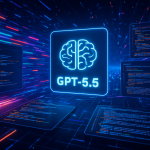
The year is 2026. Flying cars are still just a fever dream, but something almost as revolutionary just dropped: OpenAI has unleashed Prism, a new weapon in the fight for scientific progress. Forget painstaking hours wrestling with LaTeX; Prism, powered by the mighty GPT-5.2, promises to automate the drudgery and let scientists focus on the real science.

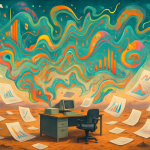
For those unfamiliar, LaTeX isn’t some exotic dairy product. It’s the typesetting system of choice for scientists and mathematicians. Think of it as the Klingon of word processing: powerful, precise, but notoriously difficult to master. It’s like trying to build the Death Star out of Lego bricks – rewarding, but requiring immense patience and a thick instruction manual.

This isn’t OpenAI’s first rodeo, of course. They’ve been busy cooking up AI magic for years. Remember the buzz around GPT-5.2 last December? The one that could not only write like Shakespeare but also crunch numbers like Einstein, design websites like Steve Jobs, and perceive images like Annie Leibovitz? Prism is essentially GPT-5.2 unleashed on the scientific community, a meticulously crafted tool designed to alleviate their documentation woes.
So, what makes Prism so special? Imagine a world where citation management is a breeze, complex equations format themselves, and collaborative editing is smoother than a freshly Zambonied ice rink. That’s the promise of Prism. No more wrestling with bibliographies, no more tearing your hair out over misplaced brackets in equations, no more emailing version after version of a manuscript back and forth. It’s like having a personal research assistant who’s also a LaTeX wizard and a master of collaboration.

But the implications go far beyond just saving time. This could be a game-changer for the entire scientific community. Think about it: enhanced productivity means faster breakthroughs. Simplified LaTeX means more researchers can contribute, regardless of their coding prowess. And standardized formatting could lead to better communication and understanding across disciplines. It’s like finally getting everyone to agree on a universal remote control for the TV of scientific progress.


Of course, with any new technology, there are questions to be asked. Will Prism lead to a homogenization of scientific writing styles? Will it make it too easy to churn out mediocre papers? Will it inadvertently introduce biases into the scientific literature? These are valid concerns, and it’s up to the scientific community to address them thoughtfully. We need to be careful that Prism isn’t just a “shiny object” distracting from the core tenants of scientific integrity and rigorous peer review.

And let’s not forget the financial angle. OpenAI is clearly positioning itself as the go-to provider of AI-powered tools for professionals. Prism is just the latest example of this trend, and it’s likely to be followed by similar tools for other fields. The economic impact could be significant, as companies and organizations increasingly rely on AI to boost productivity and efficiency. This raises questions about job displacement and the need for retraining and reskilling, but also opens up new opportunities for innovation and growth.

From a philosophical standpoint, Prism forces us to confront the question of what it means to be a scientist in the age of AI. Is it still about painstaking attention to detail and meticulous documentation? Or is it about focusing on the big picture, the creative insights, and the groundbreaking discoveries? Perhaps it’s a bit of both. Prism can handle the tedious tasks, freeing up scientists to focus on the aspects of their work that truly require human intelligence and creativity. It’s like giving them a superpower: the ability to focus on what matters most.

In conclusion, OpenAI’s Prism is more than just a new piece of software. It’s a symbol of the changing landscape of scientific research, a testament to the power of AI, and a glimpse into a future where technology and human ingenuity work together to unlock the secrets of the universe. Now, if you’ll excuse me, I need to go update my resume. Apparently, “LaTeX proficiency” is no longer a marketable skill.




Discover more from Just Buzz

Subscribe to get the latest posts sent to your email.