Microsoft’s $400 Billion Wake-Up Call: When AI Dreams Meet Economic Reality

Microsoft’s $400 Billion Wake-Up Call: When AI Dreams Meet Economic Reality

Remember that scene in “Jurassic Park” where John Hammond, beaming with pride, proclaims, “Spared no expense!” only to watch his dinosaur theme park descend into utter chaos? Well, January 29th, 2026, felt a little like that for the enterprise software world. Microsoft, the undisputed king of the digital jungle, just got a very public reality check, and the aftershocks are still being felt.

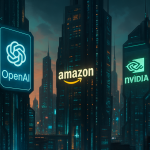
On paper, everything looked rosy. Microsoft’s earnings report was, by most metrics, impressive: $81.3 billion in revenue, non-GAAP earnings per share of $4.14. Numbers that would make Scrooge McDuck blush. But beneath the surface, a tremor was building. The culprit? A one-two punch of slowing Azure growth and a massive surge in capital expenditures, specifically those tied to the insatiable appetite of OpenAI’s AI models. Think of it as feeding a T-Rex – it’s impressive, but the grocery bill is astronomical.

Azure, Microsoft’s cloud computing platform, had been the company’s golden goose, consistently delivering eye-popping growth. This quarter? A still-respectable 39%, but a noticeable deceleration. And the forecast? Even slower growth, down to 37%-38%. That seemingly small dip sent shivers down Wall Street’s spine. But the real kicker was the capital expenditure: a staggering $37.5 billion, up 66% year-over-year. A hefty chunk of that, nearly 45% of Microsoft’s colossal $625 billion backlog, is directly linked to OpenAI. All those GPUs to power the next generation of AI models don’t come cheap. This concentration of investment sparked fears of over-reliance and potential vulnerability. Investors started to wonder if Microsoft was betting the farm on a single, albeit powerful, horse.

The market’s reaction was swift and brutal. Microsoft’s stock plummeted 10%, wiping out a staggering $400 billion in market value. That’s more than the GDP of some countries. Ouch. It was a clear signal that the market’s “AI optimism” was starting to wane, replaced by a more cautious, “show me the money” attitude.


But this wasn’t just a Microsoft problem. The aftershocks rippled across the entire enterprise software landscape. ServiceNow, despite its own recent strong earnings report, saw its stock plunge 12%. Salesforce, another giant in the CRM space, wasn’t spared either, dropping 8%. These companies are like supporting characters in the Microsoft AI drama, and investors clearly saw them as potentially getting caught in the crossfire.

The underlying concern is simple: enterprise IT budgets. Companies are realizing that integrating AI into their workflows isn’t just a matter of buying a few licenses. It requires a massive overhaul of infrastructure, a significant investment in specialized hardware, and a whole lot of expensive talent. And in a high-interest rate environment, those costs become even more daunting. It’s like realizing that renovating your kitchen doesn’t just mean new cabinets; it means rewiring the entire house.

Salesforce, for example, has been aggressively integrating AI into its CRM tools. But are customers willing to pay a premium for those features, especially when they’re already grappling with inflation and economic uncertainty? The market seems to be saying, “Not so fast.” The monetization pace of AI is proving to be slower and more challenging than initially anticipated.

This episode raises a number of critical questions. Is the current AI hype justified, or are we in a bubble? Are companies truly seeing a return on their AI investments, or are they simply chasing the latest shiny object? And what are the long-term implications of concentrating so much power and resources in the hands of a few tech giants?

From a philosophical standpoint, this market correction highlights the tension between technological ambition and economic reality. We’re building incredibly powerful AI systems, but are we thinking critically about the costs, both financial and societal? Are we ensuring that the benefits of AI are shared broadly, or are we creating a future where only a select few reap the rewards?

The financial implications are equally significant. If companies start to scale back their AI investments, it could have a ripple effect throughout the entire tech sector. Hardware manufacturers, AI startups, and even research institutions could feel the pinch. It’s a reminder that even the most transformative technologies are subject to the laws of economics. Just like in “The Matrix,” reality can be a harsh mistress.

The events of January 29th, 2026, serve as a wake-up call for the AI industry. It’s no longer enough to promise groundbreaking innovation; companies need to demonstrate tangible results and sustainable growth. The era of “AI optimism” may be over, but the era of “AI pragmatism” is just beginning. And that, perhaps, is a good thing. After all, even the most revolutionary technologies need to be grounded in reality.


Discover more from Just Buzz

Subscribe to get the latest posts sent to your email.