Nvidia’s CEO Declares 50,000: The Stock Market’s Moon Landing Moment

Nvidia’s CEO Declares 50,000: The Stock Market’s Moon Landing Moment

The year is 2026. Flying cars are still stuck in development hell, but AI? AI is officially having its “I’m ready for my close-up, Mr. DeMille” moment. And nobody knows this better than Jensen Huang, CEO of Nvidia, the company that’s basically selling the shovels in this particular gold rush.

February 6th, 2026, will be a day etched in financial history. It’s the day Huang, during a prime-time interview that felt more like a rock concert than a business update, declared that AI had reached an “inflection point.” The markets, which had been holding their breath, exhaled a collective “finally!” and promptly sent Nvidia’s stock into orbit.

The immediate result? Nvidia shares rocketed up over 8%, adding a cool few hundred billion to its market cap. But the real headline? The Dow Jones Industrial Average, that venerable barometer of American industry, finally punched through the 50,000 barrier. Think of it as Neil Armstrong setting foot on the moon, but for the stock market. It was a symbolic moment, a sign that the future, once a hazy projection, had arrived. And it was paved with Nvidia GPUs.

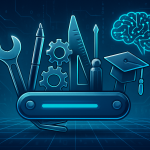
To understand why this is such a big deal, you need to understand Nvidia’s journey. They started as a graphics card company for gamers, the folks who demand the absolute bleeding edge in processing power to frag aliens and build virtual empires. But then, a funny thing happened: scientists and researchers realized that those same GPUs, designed for rendering polygons and textures, were also incredibly good at the kind of parallel processing needed for AI and machine learning. It was like discovering that your Swiss Army knife could also perform open-heart surgery (probably not recommended, though). Suddenly, Nvidia wasn’t just about gaming; it was about the future.

Huang’s statement wasn’t just some empty boast. It was a reflection of a reality that’s been building for years. AI is no longer confined to research labs and science fiction movies. It’s in our smartphones, our cars, our hospitals, even our refrigerators (probably judging our late-night snack choices). And all that AI needs a brain- a very, very powerful brain. That’s where Nvidia comes in, providing the silicon muscle that powers everything from self-driving cars to medical diagnosis algorithms. Demand for AI infrastructure, as Huang pointed out, is indeed “going through the roof.” It’s a veritable Cambrian explosion of artificial intelligence, and Nvidia is supplying the fuel.

So, who are the winners and losers in this AI gold rush? Well, Nvidia is clearly winning, at least for now. Their stock performance is a testament to their dominant position in the AI hardware market. Other hardware manufacturers are scrambling to catch up, but Nvidia has a significant head start and a well-established ecosystem. The industries that rely on AI- healthcare, finance, manufacturing, transportation- are also big winners. AI is helping them to automate tasks, improve efficiency, and develop new products and services. Think about personalized medicine, fraud detection, predictive maintenance, and autonomous logistics- all powered by AI and, often, by Nvidia hardware.

But there are also potential downsides. As AI becomes more pervasive, concerns about job displacement are likely to intensify. While AI will undoubtedly create new jobs, it will also automate many existing ones. The question is whether the new jobs will be enough to offset the losses, and whether workers will have the skills and training needed to transition to the new roles. It’s a societal challenge that requires careful planning and investment.

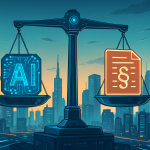
Then there’s the ethical dimension. As AI systems become more sophisticated, they also become more opaque. It can be difficult to understand how an AI system arrived at a particular decision, which raises questions about accountability and fairness. We need to ensure that AI systems are developed and used in a way that is ethical, transparent, and aligned with human values. It’s a debate that’s just beginning, and it’s one that will shape the future of AI.

And let’s not forget the geopolitical implications. AI is quickly becoming a key area of strategic competition between nations. Countries that invest heavily in AI research and development are likely to gain a significant economic and military advantage. This is leading to a global arms race in AI, with countries vying to develop the most powerful and sophisticated AI systems. It’s a scenario straight out of a William Gibson novel, and it’s one that requires careful diplomacy and international cooperation.

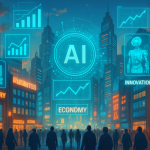
The financial impact of this AI inflection point is enormous. The AI market is projected to grow exponentially in the coming years, creating trillions of dollars in economic value. This growth will fuel innovation, create new industries, and transform the way we live and work. But it will also create winners and losers, and it’s important to ensure that the benefits of AI are shared widely.

Ultimately, Huang’s proclamation is a reminder that we are living through a period of profound technological change. AI is not just another technology; it’s a transformative force that has the potential to reshape our world in fundamental ways. Whether that reshaping is for the better depends on the choices we make today. As Spiderman’s Uncle Ben said, “With great power comes great responsibility.” Let’s hope we’re up to the task.


Discover more from Just Buzz

Subscribe to get the latest posts sent to your email.