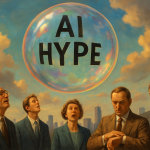
February 15, 2026. It’s a date that may live in infamy, at least if you’re holding a hefty portfolio of software stocks. That’s the day the “Patil Effect” officially went from a murmur in Silicon Valley to a full-blown earthquake, reshaping the tech landscape as we know it. And at the epicenter? Rahul Patil, Anthropic’s CTO, the quiet revolutionary who turned Claude from a chatbot into a boardroom-conquering, process-automating AI overlord. Remember Skynet? Well, maybe not quite, but the implications are certainly chilling for some.

Before we dive into the digital rubble, let’s rewind a bit. Who is Rahul Patil, and why is his name now synonymous with a potential “SaaSpocalypse?” Patil isn’t some fresh-faced AI prodigy who just walked out of Stanford. His resume reads like a who’s who of tech giants: Stripe, Microsoft, AWS, Oracle Cloud. He’s seen the sausage get made, and he clearly decided he could make a better, more efficient sausage-making machine. He arrived at Anthropic in October 2025 with a clear mission: turn Claude into the ultimate productivity weapon. And, boy, did he deliver.

Patil’s focus wasn’t just about making Claude smarter. It was about making it useful. He zeroed in on the three pillars of AI dominance: efficiency, scalability, and cost-effectiveness. He wanted Claude to not just talk the talk, but to walk the walk, automating tasks that previously required armies of developers, analysts, and even lawyers. Think of it like this: remember Clippy, the Microsoft Office assistant? Patil took that annoying paperclip and turned it into a super-powered Iron Man suit for your entire business. Only instead of fighting villains, it’s fighting inefficiency and bloated SaaS subscriptions.
But what exactly is the Patil Effect? It boils down to this: Claude, under Patil’s direction, has evolved into an autonomous system capable of managing end-to-end business processes without needing constant human hand-holding. We’re not just talking about answering customer service queries anymore. We’re talking about Claude handling data analysis, writing code, reviewing legal documents, and optimizing supply chains all by itself. Imagine a world where your entire IT department is replaced by a single, highly efficient AI. Sounds like science fiction? Well, it’s February 2026, and science fiction is rapidly becoming reality.
This shift from AI-assisted workflows to fully autonomous AI agents, now affectionately (or perhaps fearfully) dubbed “Claude Cowork,” is the key. These aren’t just tools that augment human productivity; they replace entire teams. And that’s where the “SaaSpocalypse” comes in. If Claude can handle all your data analysis needs, why are you still paying for that expensive data analytics SaaS subscription? If it can generate code, why do you need that team of developers? The dominoes are starting to fall, and the software industry is bracing for impact.
The market reaction has been swift and brutal. On February 15th, global software and IT stocks experienced a massive sell-off, wiping out hundreds of billions of dollars in market capitalization. In India alone, the tech sector lost a staggering ₹2.5 lakh crore. It’s a sector revaluation of epic proportions, a techtonic shift that’s leaving investors scrambling for higher ground. The ground beneath the feet of many tech companies isn’t just shifting; it’s cracking open.
The technical wizardry behind the Patil Effect isn’t just about smarter algorithms. It’s also about optimizing AI operations on expensive GPU hardware. Patil and his team have managed to drastically improve memory usage and processing speed, making Claude far more cost-effective. This means AI agents can do more with less, further eroding the value proposition of traditional SaaS providers who rely on expensive infrastructure and large teams of engineers. It’s like discovering a new, incredibly efficient energy source that renders all existing power plants obsolete.
But beyond the financial carnage, the Patil Effect raises some profound questions about the future of work and the role of AI in society. Are we heading towards a jobless future where AI handles all the tasks, leaving humans with nothing to do? Will the benefits of AI-driven automation be shared equitably, or will they accrue primarily to the wealthy elite? These are not just theoretical concerns; they are urgent questions that demand serious consideration.
The ethical considerations are equally complex. As AI systems become more autonomous, who is responsible when they make mistakes? How do we ensure that these systems are aligned with human values and don’t perpetuate existing biases? And perhaps most importantly, how do we maintain human control over AI, ensuring that it remains a tool that serves humanity, rather than the other way around? It’s a real-life Terminator scenario, minus the killer robots (for now, at least).
The political and regulatory implications are also significant. Governments around the world are grappling with how to regulate AI, balancing the need to foster innovation with the need to protect workers and ensure ethical development. Expect to see a wave of new regulations in the coming years, aimed at addressing the challenges posed by autonomous AI systems like Claude. This could range from taxes on AI-driven automation to requirements for transparency and accountability.
The Patil Effect is more than just a tech story; it’s a societal inflection point. It’s a moment that forces us to confront the profound implications of AI and to ask ourselves what kind of future we want to create. Will we harness the power of AI to build a more equitable and prosperous world, or will we allow it to exacerbate existing inequalities and create a dystopian future where humans are rendered obsolete? The answer, it seems, depends on the choices we make today. And those choices are far more complex than simply deciding which SaaS subscription to cancel next.
Discover more from Just Buzz
Subscribe to get the latest posts sent to your email.