
The year is 2026. Flying cars, still stubbornly absent from our driveways, remain a broken promise. But artificial intelligence? That’s not just science fiction anymore. It’s the water cooler topic, the boardroom obsession, and increasingly, the source of both anxiety and opportunity across the European Union. Yesterday, March 9th, Brussels became ground zero for a crucial conversation, a macroeconomic dialogue laser-focused on AI’s impact on the EU labor market. The goal? To figure out how to ride the AI wave without getting wiped out.
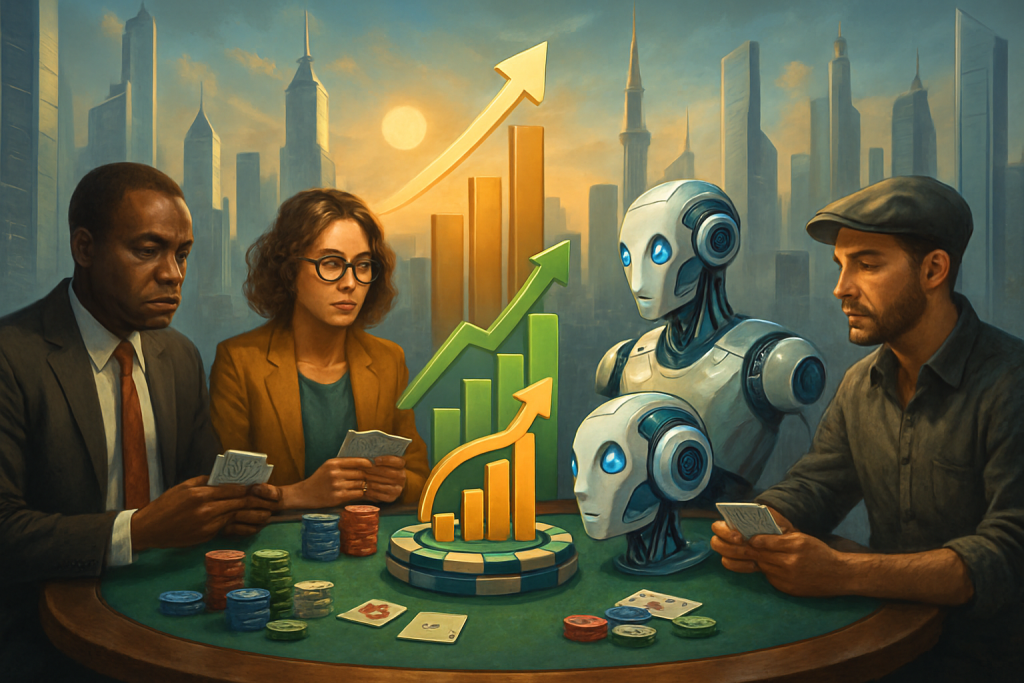
Think of it as the EU’s version of a high-stakes poker game. The players? Heavy hitters like the Council presidency, the European Central Bank, the European Commission, and the President of the Eurogroup, all sitting down with European social partners. The pot? Nothing less than the future of European competitiveness and social cohesion in an age increasingly defined by algorithms and neural networks.
The backdrop to this meeting wasn’t exactly a rosy field of tulips. While the EU’s economic situation has shown signs of improvement, the specter of geopolitical instability looms large. The war in the Middle East continues to cast a long shadow, and Russia’s actions in Ukraine add another layer of uncertainty. It’s a global economic tightrope walk, and AI is both the safety net and the potential banana peel.
The central tension, as articulated by Makis Keravnos, Minister for Finance of Cyprus, is the “dual impact” of AI. On one hand, it promises to turbocharge productivity and boost Europe’s competitive edge. Imagine factories humming with unprecedented efficiency, personalized medicine revolutionizing healthcare, and innovative startups disrupting entire industries. On the other hand, AI threatens to disrupt the labor market on a scale not seen since the Industrial Revolution, potentially widening the gap between the haves and have-nots.
It’s a classic “Terminator” scenario, but instead of killer robots, we’re facing the more subtle (but equally impactful) threat of widespread job displacement. The fear is real: will truck drivers be replaced by self-driving vehicles? Will customer service representatives become obsolete thanks to sophisticated chatbots? Will artists and writers find themselves competing with AI-generated content? These are the questions keeping policymakers up at night.
The solution, according to most participants, isn’t to slam the brakes on AI development. That would be like trying to stop a glacier with a toothpick. Instead, the EU is betting on a strategy of proactive adaptation. The key? Investing heavily in skills development, education, and reskilling initiatives. Think of it as equipping workers with the tools they need to thrive in an AI-powered world. Forget learning COBOL; the new hot skills are AI ethics, data analysis, and human-machine collaboration.
Valdis Dombrovskis, European Commission Vice-President, echoed this sentiment, emphasizing the need to “strengthen Europe’s competitiveness by removing Single Market barriers, reducing business costs, and investing in skills.” He painted a vision of AI not as a job-stealing monster, but as a tool for boosting productivity and improving working conditions. The EU, he assured, is committed to supporting the inclusive and responsible adoption of AI.
But the devil, as always, is in the details. How exactly do you reskill millions of workers facing potential displacement? How do you ensure that these new skills are actually relevant to the changing needs of the labor market? And perhaps most importantly, how do you fund these ambitious programs in an era of tight budgets and competing priorities?
Valeria Ronzitti, SGIEurope Secretary General, pointed to Europe’s demographic challenges and slower potential growth as further reasons to embrace AI as a “productivity booster.” She emphasized the need for lifelong learning, upskilling, and reskilling to unlock AI’s full potential. In other words, education isn’t just for the young anymore; it’s a continuous process that extends throughout one’s career.
Véronique Willems, SMEunited Secretary General, brought a crucial perspective to the table, highlighting the impact of weak competitiveness on small and medium-sized enterprises (SMEs), particularly in the manufacturing sector. She called for EU efforts to enhance productivity through regulatory simplification and improved access to skills and funding. Willems stressed the importance of tailoring AI policies to the specific needs of SMEs, recognizing that a one-size-fits-all approach simply won’t work.
Simon Harris, Tánaiste and Minister of Finance of Ireland, struck a more optimistic note, expressing Ireland’s commitment to harnessing AI’s transformative power to enhance EU competitiveness. He announced plans for an International AI and Digital Summit during Ireland’s upcoming EU presidency, focusing on innovation guided by trust and responsibility. It’s a clear signal that Ireland intends to be a leader in the responsible development and deployment of AI.
Darius Trakelis, EFC Member (representing the future Lithuanian Presidency), injected a dose of realism into the discussion, acknowledging AI’s potential risks to social cohesion in the labor market, despite its productivity benefits. He emphasized the importance of engaging social partners to navigate these risks effectively. In other words, the EU needs to bring everyone to the table-workers, employers, and policymakers-to ensure that the benefits of AI are shared broadly.
The implications of this dialogue are far-reaching. It signals the EU’s commitment to proactively shaping the AI landscape, balancing technological advancement with social responsibility. But it also highlights the immense challenges that lie ahead. The EU must navigate a complex web of economic, social, and ethical considerations to ensure that AI serves the interests of all its citizens, not just a privileged few.
This isn’t just about economics; it’s about the very fabric of society. It’s about ensuring that the AI revolution doesn’t leave anyone behind. It’s about creating a future where humans and machines work together to build a more prosperous and equitable world. It’s a tall order, but the EU seems determined to give it their best shot. The poker game has begun, and the stakes couldn’t be higher.
And speaking of high stakes, let’s not forget the ethical minefield. As AI becomes more sophisticated, questions about bias, transparency, and accountability become increasingly urgent. How do we ensure that AI algorithms are fair and unbiased? How do we prevent AI from being used to manipulate or exploit vulnerable populations? These are the kinds of questions that philosophers and ethicists are grappling with, and they’re just as important as the economic considerations.
The macroeconomic dialogue in Brussels was just one small step in a long and complex journey. But it was a crucial step, one that signals the EU’s determination to navigate the AI revolution with foresight, courage, and a healthy dose of social responsibility. The future is uncertain, but one thing is clear: AI is here to stay, and the EU is determined to shape its trajectory.
Discover more from Just Buzz
Subscribe to get the latest posts sent to your email.