
Jensen Huang, the leather-jacketed, AI-whispering CEO of Nvidia, dropped a truth bomb at Davos this week that’s got everyone from Silicon Valley venture capitalists to your Uncle Jerry (the one who still thinks dial-up is cutting-edge) buzzing: AI isn’t just about robots stealing our jobs. It’s about creating a whole new wave of *really* good ones, and they’re not what you think.
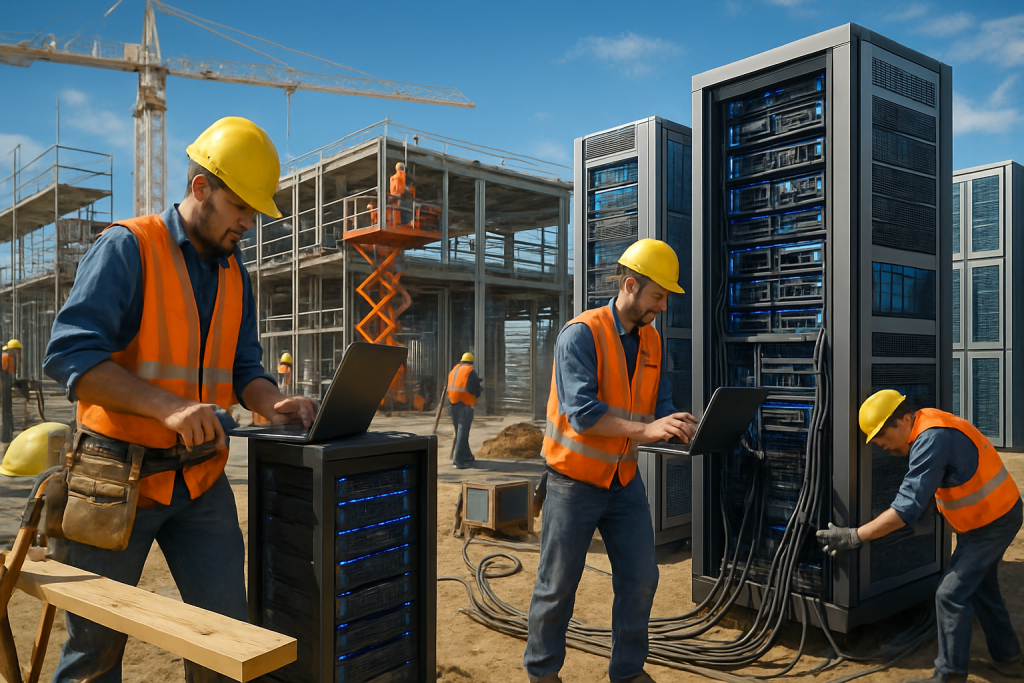
Forget coding all day. Huang declared that the AI boom is fueling “the biggest infrastructure build in human history,” and that means one thing: we need builders. Not just any builders, but skilled tradespeople- plumbers, electricians, construction workers, ironworkers, the unsung heroes who turn blueprints into reality. And these aren’t your grandpa’s construction jobs; they’re high-tech, high-paying gigs building the very backbone of the AI revolution.
Think about it: AI doesn’t just magically exist in the cloud. It needs data centers- colossal, humming temples of servers that require massive amounts of power, cooling, and constant maintenance. It needs semiconductor fabrication plants, or “fabs,” where the silicon chips that power these AI algorithms are born. These aren’t your average warehouses or factories; they’re incredibly complex, hyper-specialized facilities, and they need an army of skilled hands to bring them to life.
Remember the gold rush? This is the digital equivalent, but instead of panning for nuggets, we’re laying down fiber optic cables and installing super-efficient cooling systems. It’s less “Klondike” and more “Silicon Valley meets This Old House.”
The implications are huge. For years, we’ve been bombarded with dystopian visions of AI replacing human workers. Terminator scenarios and anxieties about algorithms automating everything. While those concerns are valid and deserve careful consideration, Huang’s perspective offers a powerful counter-narrative: AI isn’t just about replacing jobs; it’s about creating new ones, often in sectors that have been overlooked or undervalued in the tech-obsessed world.
Imagine a scenario where skilled tradespeople are suddenly in incredibly high demand, commanding salaries that rival those of software engineers. It could revitalize vocational training programs, encourage young people to pursue careers in the trades, and address the growing skills gap that’s been plaguing many industries. It’s like that scene in “Flashdance” but instead of welding metal, you’re assembling the next generation of AI servers. Take your passion and make it happen!
Of course, there are challenges. Building these AI-powering behemoths isn’t cheap. The cost of constructing and maintaining these facilities is astronomical, requiring massive investments from both the public and private sectors. And finding enough skilled workers to meet the demand will be a major hurdle. We’ll need to invest in training programs and apprenticeships to ensure that we have the workforce needed to build the AI future.
The Ethical Considerations
Beyond the economic implications, there are ethical considerations to ponder. As AI infrastructure expands, so does its environmental impact. Data centers consume vast amounts of energy, contributing to carbon emissions and straining our planet’s resources. We need to ensure that these facilities are built and operated sustainably, utilizing renewable energy sources and implementing energy-efficient technologies. We need to ask ourselves if the juice is worth the squeeze.
Furthermore, the concentration of AI infrastructure in certain geographic areas could exacerbate existing inequalities. We need to ensure that the benefits of the AI revolution are shared equitably, with opportunities for workers and communities across the country. It would be a shame to create a new digital divide while trying to bridge the old ones.
Who Benefits (and Who Doesn’t)
Nvidia, naturally, stands to benefit immensely from this infrastructure boom. As a leading provider of AI hardware and software, the company is poised to play a central role in building the AI future. But the benefits extend far beyond Nvidia. Construction companies, equipment manufacturers, and skilled tradespeople will all see increased demand for their services. Even the local economies surrounding these data centers and fabs will experience a boost.
The industries that might not benefit as directly are those that are more vulnerable to automation. While AI is creating new jobs in some sectors, it’s also displacing workers in others. It’s crucial that we provide support and retraining for those who are affected by automation, ensuring that they have the skills and resources needed to transition to new careers.
In conclusion, Jensen Huang’s remarks offer a glimpse into the surprisingly blue-collar future of AI. It’s a future where the physical world and the digital world are inextricably linked, where skilled tradespeople are just as important as software engineers, and where the AI revolution is not just about algorithms and data, but also about concrete, steel, and human ingenuity. So, maybe it’s time to ditch the coding bootcamp and pick up a wrench. After all, the future is being built, one server at a time.
Discover more from Just Buzz
Subscribe to get the latest posts sent to your email.