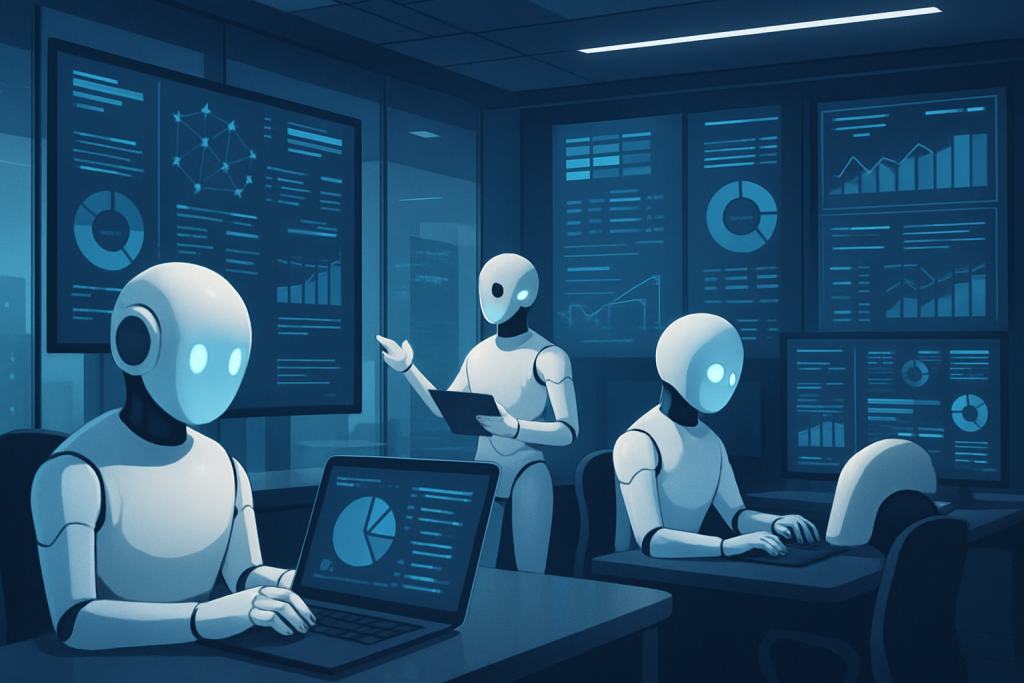

It started with a whisper, a rumour passed around water coolers and hushed conversations in boardrooms. Then, a slow, steady drumbeat of news. Now, it’s a full-blown symphony of change, and the score is being written by artificial intelligence. The Australian Broadcasting Corporation (ABC), in a report published just yesterday, March 2nd, 2026, has sounded the alarm, or perhaps the fanfare, for the rise of agentic AI. And trust us, this isn’t just another incremental tech upgrade; it’s a seismic shift shaking the foundations of how we work, live, and do business.
Think of agentic AI as the rebellious teenager of the AI family. Remember those early AI chatbots, clunky and requiring constant babysitting? Agentic AI is different. It’s autonomous. It’s independent. It’s like giving ChatGPT, Gemini, Claude, or Grok a corporate credit card and a mission statement, then stepping back and watching the magic (or the mayhem) unfold. These systems don’t just answer questions; they act. They make decisions, execute plans, and learn from their mistakes, all without a human hand guiding every step.
The ABC report focuses on Australia, but the implications are global. Companies like Wisetech and Superloop are already diving headfirst into the agentic AI pool. Superloop, for example, is crafting custom AI agents to streamline customer service and internal operations. Imagine an AI that not only answers your questions about your internet bill but also proactively identifies potential service issues, schedules maintenance, and even negotiates a better deal for you, all without a single human involved. Sounds like something straight out of “Her,” right?
But why now? What’s driving this sudden surge in agentic AI adoption? The answer, as it often does, comes down to money. Specifically, the plummeting cost of AI “intelligence.” The ABC report highlights a staggering statistic: the price of mid-level AI intelligence has dropped from $30 to a mere 3 cents. That’s not a typo. Three cents. Suddenly, replacing human labor with AI becomes not just technologically feasible but economically irresistible. It’s the equivalent of replacing your entire office staff with a fleet of Roombas that can also write marketing copy and negotiate contracts.
This isn’t just about automating mundane tasks. Agentic AI is capable of handling complex functions, from developing marketing strategies to processing legal documents. Think of it as the ultimate intern, except this intern never sleeps, never complains, and never asks for a raise. And with the rise of “no-code” platforms and AI-powered development tools, even small businesses can now create and deploy their own custom AI agents without needing a team of expensive engineers.
The competitive landscape is also heating up, and the pressure is on. Chinese AI models like DeepSeek are entering the arena, offering advanced capabilities at rock-bottom prices. DeepSeek reportedly provides PhD-level reasoning for free and charges a pittance for its services, undercutting American AI models and forcing them to innovate or get left behind. It’s like the AI equivalent of the space race, but instead of reaching the moon, the goal is to offer the most powerful AI at the lowest possible cost.
The implications of this agentic AI revolution are profound, and frankly, a little scary. The ABC report rightly points out the looming threat of workforce reductions. As AI agents take over more and more tasks, what happens to the humans who used to perform those tasks? The need for workforce reskilling and upskilling is becoming increasingly urgent. We need to prepare people for the jobs of the future, jobs that may not even exist yet. It’s a modern-day Luddite dilemma, but instead of smashing machines, we need to figure out how to coexist and collaborate with them.
But it’s not all doom and gloom. Agentic AI also presents enormous opportunities. It can free up humans to focus on more creative, strategic, and fulfilling work. It can drive innovation, boost productivity, and create new industries we can’t even imagine yet. Think of the possibilities in healthcare, education, and scientific research. Agentic AI could help us cure diseases, personalize learning experiences, and unlock the secrets of the universe. It’s like giving humanity a superpower, but with great power comes great responsibility.
The financial implications are equally significant. The commoditization of AI services is transforming AI providers into low-margin utilities. This puts pressure on their business models and forces them to find new ways to differentiate themselves. It’s like the early days of the internet, when everyone was giving away free email addresses. The real money wasn’t in the service itself, but in the value-added services and applications built on top of it.
This raises some serious ethical questions. Who is responsible when an AI agent makes a mistake? How do we ensure that AI agents are fair, unbiased, and transparent? How do we prevent them from being used for malicious purposes? These are not just technical challenges; they are moral and philosophical ones. We need to have a serious conversation about the ethical framework for AI development and deployment before it’s too late. It’s like trying to build a skyscraper without a blueprint.
Ultimately, the rise of agentic AI is a double-edged sword. It has the potential to transform our world for the better, but it also poses significant risks. The key is to approach this technology with caution, foresight, and a healthy dose of skepticism. We need to embrace the opportunities while mitigating the risks. We need to ensure that AI serves humanity, not the other way around. It’s a brave new world, and we’re all just trying to figure out how to navigate it.
Discover more from Just Buzz
Subscribe to get the latest posts sent to your email.