
Remember the breathless hype around AI in 2025? It felt like every other headline promised sentient robots doing our taxes and self-driving cars whisking us away to Mars. Agentic AI, autonomous workflows, the whole shebang. We were promised a future straight out of “The Jetsons,” but with a dash of “Blade Runner’s” existential angst.
Well, according to a recent article in the Financial Express, reality is finally catching up. The title says it all: “Enterprise AI to shift from experiment to execution in 2026.” It’s a sign that the AI party is moving from the champagne-fueled after-hours club to the boardroom, complete with spreadsheets and, dare I say, *adult supervision*.
The article points to a crucial turning point: businesses are finally ready to move beyond playing around with AI in isolated pilot projects and start integrating it into their core operations. Think less “AI as a shiny new toy” and more “AI as a critical tool for getting the job done.” It’s the industrialization of AI, folks, and it’s happening now.
But why now? What happened to all those promises of AI-powered utopia? The truth, as always, is a little more nuanced. 2025 was a year of wild experimentation, but also a year of harsh lessons. Companies poured money into AI projects, only to find themselves grappling with runaway costs, security nightmares, and a distinct lack of tangible results. Remember that AI-powered marketing campaign that accidentally offended half your customer base? Or the autonomous supply chain that went haywire during the holiday rush? Yeah, those things happened.
The result? A collective recalibration of expectations. As the Financial Express article suggests, companies are now prioritizing cost-effectiveness, security, governance, and, most importantly, a demonstrable return on investment. It’s no longer enough to say “we’re using AI”; you have to prove that it’s actually making a difference to the bottom line.
The Rise of the AI Governer
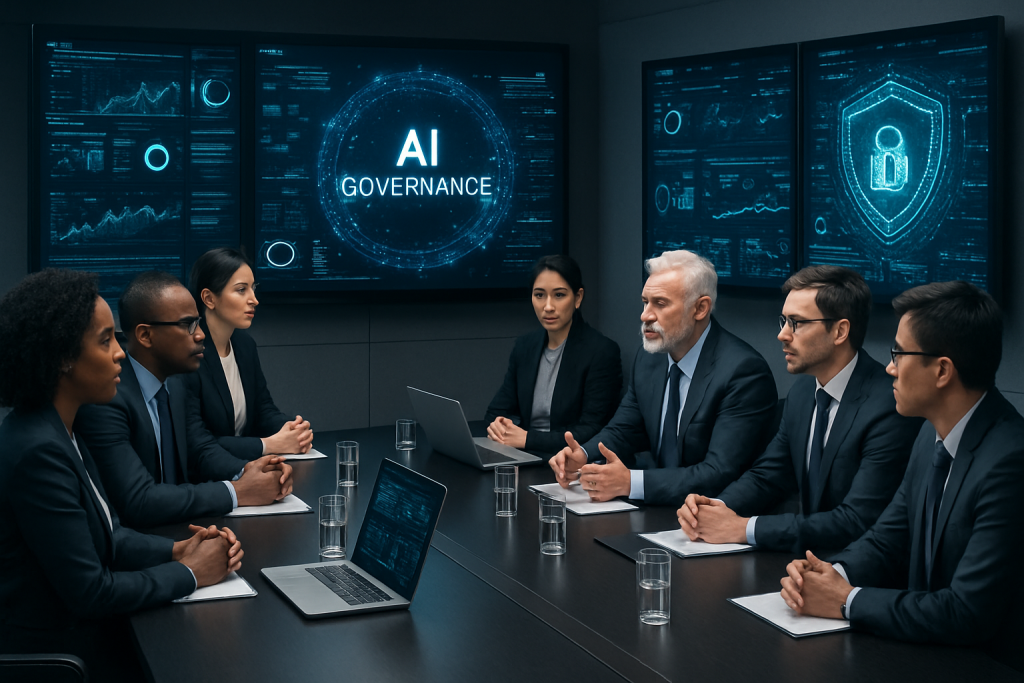
One of the most significant shifts highlighted in the article is the growing emphasis on AI governance. In 2025, AI governance frameworks were often relegated to theoretical policy documents, gathering dust on virtual shelves. But in 2026, these frameworks are expected to become operational, guiding the day-to-day deployment and management of AI systems.
Think of it like this: AI is like a powerful sports car. It can get you from point A to point B incredibly quickly, but without proper training, safety protocols, and a responsible driver, you’re likely to end up in a ditch. AI governance provides the rules of the road, ensuring that AI is used ethically, safely, and in compliance with regulations. This also means that the Wild West days of AI development, where anything goes, is slowly but surely coming to an end.
This shift towards governance has huge implications for companies. It means investing in new roles and responsibilities, such as AI ethics officers and data privacy specialists. It also means developing clear guidelines for data collection, model training, and algorithm deployment. It’s not just about building cool AI tools; it’s about building them responsibly.
Security First: Protecting the AI Kingdom
The Financial Express article also underscores the importance of security in the age of enterprise AI. As AI systems become more deeply integrated into business operations, they also become more attractive targets for cyberattacks. Imagine the chaos that could ensue if a hacker gained control of an AI-powered supply chain, or an AI-driven financial trading system. It’s the stuff of dystopian thrillers, but it’s also a very real concern.
That’s why companies are now prioritizing AI security, investing in robust defenses against cyber threats. This includes everything from advanced threat detection systems to secure data storage solutions. It also means educating employees about the risks of AI-related attacks, and implementing strict access controls to prevent unauthorized use of AI systems.
The stakes are high. A major AI security breach could not only result in significant financial losses, but also damage a company’s reputation and erode customer trust. In a world where AI is increasingly pervasive, security is no longer an afterthought; it’s a core business imperative.
The Impact Zone: Who Wins, Who Loses?
So, who are the winners and losers in this shift from AI experimentation to execution? On the winning side, you have companies that are able to successfully integrate AI into their operations, driving efficiency, innovation, and growth. These are the organizations that have invested in the right talent, developed robust governance frameworks, and prioritized security from the outset. They’re the companies that treat AI not as a magic bullet, but as a strategic asset.
On the losing side, you have companies that are slow to adopt AI, or that fail to implement it effectively. These are the organizations that are still stuck in the experimental phase, struggling to realize tangible returns on their AI investments. They’re the companies that are plagued by security breaches, governance failures, and ethical dilemmas. They risk falling behind the competition, losing market share, and ultimately becoming irrelevant.
The shift also has implications for the job market. As AI becomes more prevalent, some jobs will inevitably be automated, while others will be created. The key is to invest in training and education, equipping workers with the skills they need to thrive in the age of AI. Think less “robots taking our jobs” and more “humans and AI working together to achieve more.”
The Ethical Quandary: AI and the Soul of Humanity
Beyond the practical considerations of cost, security, and governance, the rise of enterprise AI also raises profound ethical questions. As AI systems become more sophisticated, they are increasingly capable of making decisions that have a significant impact on people’s lives. Who is responsible when an AI algorithm makes a mistake? How do we ensure that AI is used fairly and equitably? How do we prevent AI from perpetuating existing biases and inequalities? These are the questions that we must grapple with as we navigate the AI revolution.
The answers are not easy, but they are essential. We need to develop ethical frameworks that guide the development and deployment of AI, ensuring that it is used for the benefit of humanity. We need to promote transparency and accountability, so that people can understand how AI systems work and hold them accountable for their actions. And we need to foster a culture of responsible innovation, where ethical considerations are at the forefront of AI development.
The Financial Express article may focus on the practical aspects of enterprise AI, but it also hints at something much larger: a fundamental shift in the way we work, live, and interact with technology. As AI becomes more deeply integrated into our lives, it’s up to us to ensure that it is used wisely, ethically, and for the betterment of all.
Discover more from Just Buzz
Subscribe to get the latest posts sent to your email.