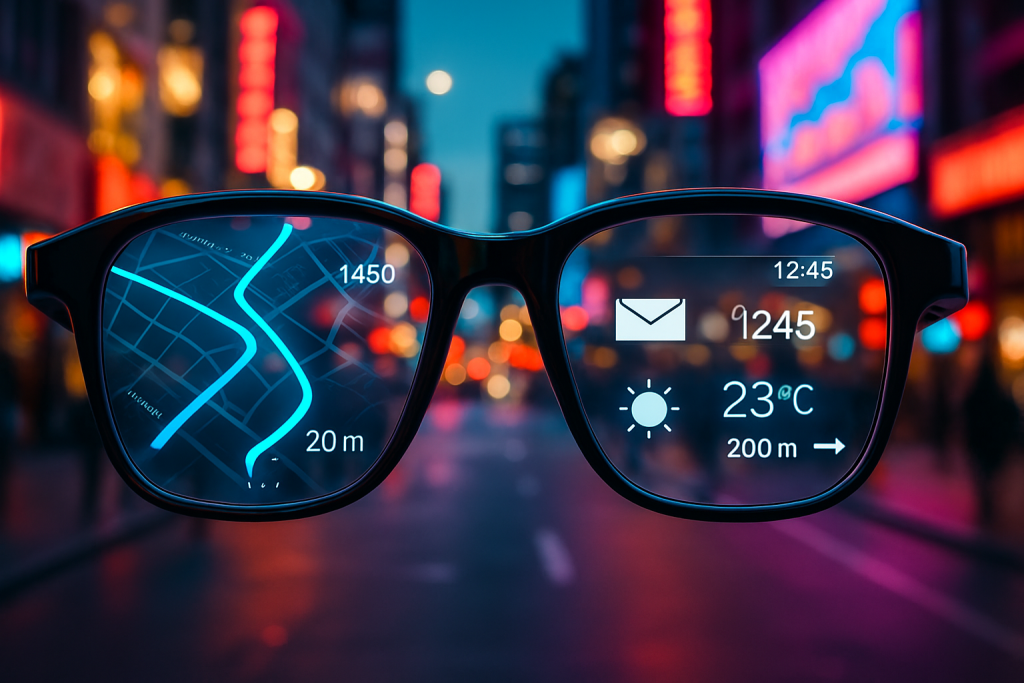

Remember those clunky Google Glass spectacles from way back when? The ones that promised to usher in a brave new world of augmented reality but instead mostly ushered in ridicule and privacy concerns? Well, dust off your memories of those futuristic face computers, because Google is giving wearable AI another shot. And this time, they’re bringing friends.
Yesterday, December 14th, 2025, Google dropped a bombshell: AI glasses are coming in 2026. Not just one model, but two. One focused on audio, the other boasting a built-in display. Think of it as the “Her” meets “Minority Report” upgrade we’ve all (secretly) been waiting for. But this isn’t just a Google solo act; they’re teaming up with some serious players to make sure these aren’t just technologically impressive, but also, you know, actually wearable in public.
Imagine Tony Stark ditching his HUD for something a little more… Warby Parker. That’s the kind of vibe Google seems to be aiming for. They’re partnering with Samsung for the hardware heavy lifting, ensuring top-notch components power these ocular companions. But the real stroke of genius? Enlisting the design expertise of Warby Parker and Gentle Monster. Because let’s face it, no matter how smart your glasses are, if they make you look like a rejected Borg extra, no one’s going to wear them.
The Ghost of Glass Past
Before we get too excited about the future of face-based AI, it’s worth remembering Google’s previous foray into this territory. Google Glass, released in 2013, was supposed to be revolutionary. Instead, it became a cautionary tale. The design was… unfortunate. The price tag was exorbitant. And the constant recording capabilities sparked widespread privacy anxieties, earning wearers the less-than-flattering nickname “Glassholes.”
So why try again? Because the tech has finally caught up with the vision. AI is light years ahead of where it was a decade ago. Miniaturization has made powerful components small enough to fit into stylish frames. And the public, perhaps desensitized by years of smartphones and smart speakers, is arguably more receptive to the idea of wearable tech. Plus, let’s be honest, Meta’s Ray-Ban glasses have shown there’s a market for stylish eyewear with integrated tech, even if their primary appeal isn’t cutting-edge AI. Google clearly wants a bigger piece of that pie.
Two Flavors of Future
Let’s break down what we know about the two models Google is planning:
First, the audio-focused version. This is where things get really interesting. Imagine walking down the street, having a natural language conversation with your AI assistant, getting real-time translations of conversations in another language, or even having personalized music curated to your mood and surroundings. This model could be a game-changer for accessibility, productivity, and even just making everyday life a little more seamless.
Then there’s the display-integrated model. This is the one that’s likely to draw the most comparisons to Google Glass, but with a crucial difference: the technology is vastly improved. We’re talking about augmented reality (AR) experiences that are actually useful and immersive, not just clunky overlays that drain your battery and make you look like you’re living in a low-budget sci-fi movie. Think heads-up navigation, instant access to information about your surroundings, and even collaborative work environments where digital objects are seamlessly integrated into the real world. The possibilities are, frankly, a little mind-blowing.
The Implications: Beyond the Specs
Google’s AI glasses aren’t just about cool gadgets; they represent a significant shift in how we interact with technology. We’re moving away from a world where we have to constantly pull out our phones to access information and towards a world where that information is readily available, seamlessly integrated into our everyday lives. This has profound implications for everything from productivity to entertainment to social interaction.
Consider the impact on industries like tourism. Imagine walking through a foreign city, having your glasses translate street signs, provide historical context for landmarks, and even offer real-time reviews of nearby restaurants. Or think about the potential for remote collaboration. Surgeons could use AR glasses to consult with specialists across the globe, sharing a real-time view of the operating room and collaborating on complex procedures. The possibilities are virtually limitless.
Of course, with great power comes great responsibility (thanks, Uncle Ben!). Privacy concerns are once again at the forefront. How will Google ensure that these glasses aren’t used to record and monitor people without their consent? How will they protect user data from being hacked or misused? These are crucial questions that Google needs to answer if they want to avoid a repeat of the Google Glass debacle.
The Ethical Lenses
Beyond privacy, there are deeper ethical questions to consider. What happens when our reality is constantly augmented by digital information? Will we become overly reliant on technology, losing our ability to think critically and make decisions for ourselves? Will these glasses exacerbate existing social inequalities, creating a divide between those who can afford them and those who can’t?
These aren’t just abstract philosophical questions; they’re real-world challenges that we need to address as AI technology becomes increasingly integrated into our lives. We need to have a serious conversation about the ethics of augmented reality, and we need to ensure that these technologies are developed and used in a way that benefits all of humanity, not just a select few.
The Bottom Line: A Spec-tacular Future?
Google’s AI glasses are a bold move, a calculated risk, and a potential game-changer. They represent a significant step forward in the evolution of wearable technology, and they have the potential to revolutionize how we interact with the world around us. Whether they become the next must-have gadget or another cautionary tale remains to be seen. But one thing is certain: the future of wearable AI is looking increasingly clear.
Discover more from Just Buzz
Subscribe to get the latest posts sent to your email.