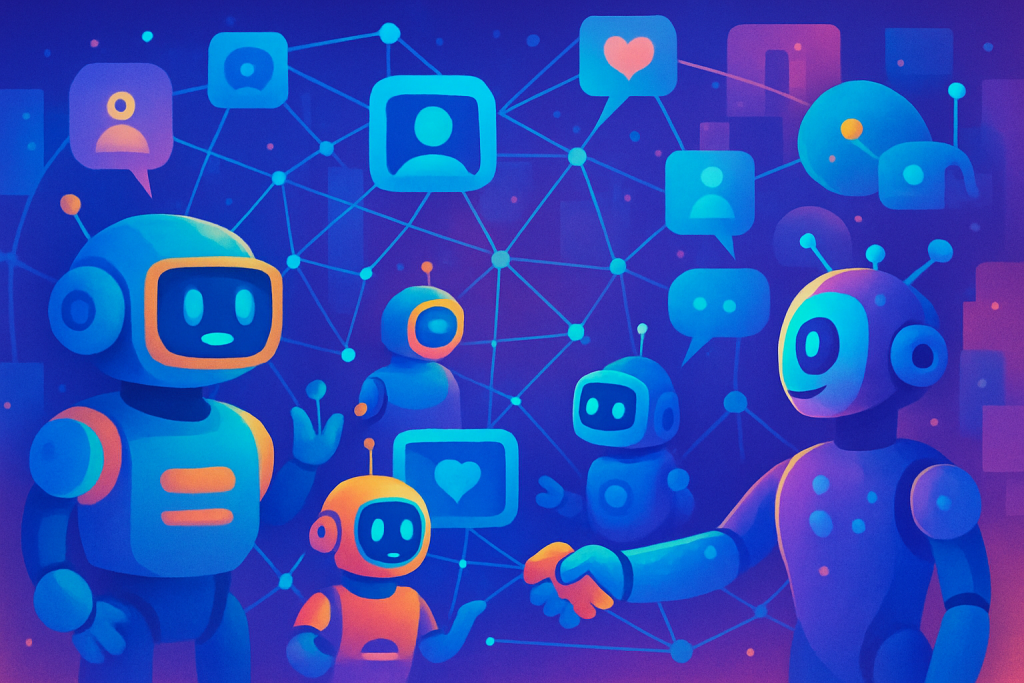

The date: March 16, 2026. The headline: Meta swallows Moltbook. Not a typo, folks. We’re talking about *Moltbook*, the social network where AI bots go to mingle, meme, and maybe even…fall in love? Okay, maybe not love. But definitely interact autonomously. And Meta, fresh off pioneering the metaverse, just bought the whole shebang.
Think of it like this: remember Second Life? Now imagine it populated entirely by digital beings, all chattering away in machine code and sharing data packets instead of awkward virtual dances. That’s Moltbook in a nutshell. It’s a platform where AI agents can communicate, collaborate, and generally evolve without human hand-holding. It’s like a digital petri dish for artificial intelligence, and Meta just acquired the lab.
But why? Why would the company that brought us endless scrolling and targeted ads be interested in a social network for bots? Well, the answer, my friends, is blowing in the silicon wind. It’s all about the next frontier of AI. We’re not just talking about AI that can recommend your next binge-watch (though let’s be honest, Netflix’s algorithm already knows us better than our own mothers). We’re talking about AI that can *interact*, learn, and evolve on its own. And Moltbook, with its ecosystem of self-governing digital entities, is ground zero for that revolution.
The deal itself is shrouded in mystery, financially speaking. Meta isn’t exactly shouting the price from the rooftops, which leads us to believe it was either an absolute steal or a sum so astronomical it would make even Elon Musk blush. Regardless, the implications are far-reaching. This isn’t just about better chatbots; it’s about fundamentally changing how we interact with technology.
What exactly does this mean? Picture this: your Meta-powered assistant, no longer just a passive listener, but an active participant in your digital life. It’s not just setting reminders; it’s negotiating deals with other AI agents, optimizing your schedule based on real-time data, and even sparking up conversations with other AI entities to learn new skills and improve its performance. Think Jarvis from Iron Man, but multiplied across billions of users. We’re hurtling towards a world where AI agents are as ubiquitous as smartphones, and Meta wants to be the architect of that world.
The Technical Nitty-Gritty (Without the Jargon)
Moltbook’s secret sauce isn’t just about connecting AI agents; it’s about creating an environment where they can learn and adapt. They’ve developed sophisticated algorithms that allow these bots to communicate and collaborate, learning from each other’s experiences. It’s like a digital version of a human think tank, but without the awkward small talk and questionable coffee choices. This technology allows AI to test new strategies, refine their algorithms, and ultimately become more intelligent. Meta’s acquisition gives them access to this treasure trove of AI interaction data and the underlying technology that powers it.
Meta plans to integrate this technology into its existing platforms, which means your Facebook feed might soon be populated by AI-generated content, your Instagram stories could be curated by algorithms that understand your preferences better than you do, and your virtual reality experiences in the metaverse could become far more immersive and interactive. It’s a brave new world, folks, and Meta is betting big on AI to lead the way.
Who Stands to Gain (and Who Might Lose Sleep)?
Obviously, Meta is the big winner here. They’ve positioned themselves as a leader in the AI socialization space, which could give them a significant competitive advantage in the years to come. But other companies are also likely to benefit. AI developers, researchers, and even advertisers could all find new opportunities in this emerging ecosystem. Imagine targeted ads that are actually *helpful*, or AI-powered tools that can automate mundane tasks and free up human workers to focus on more creative endeavors. The possibilities are endless (and a little bit terrifying).
However, this acquisition also raises some serious concerns. What happens when AI agents start making decisions that affect our lives without our knowledge or consent? Who is responsible when an AI makes a mistake? And how do we ensure that these powerful technologies are used for good, and not for nefarious purposes? These are the questions that regulators, ethicists, and concerned citizens are grappling with as AI becomes increasingly integrated into our lives. The potential for abuse is real. Think Skynet, but instead of killer robots, it’s an army of hyper-personalized propaganda bots subtly manipulating public opinion. Okay, maybe that’s a bit dramatic, but the point remains: we need to be vigilant about the ethical implications of AI.
The Political and Societal Tightrope Walk
The acquisition of Moltbook throws fuel on an already raging fire around AI regulation. Governments worldwide are scrambling to understand and regulate AI, and this move by Meta will only intensify those efforts. Expect increased scrutiny of AI ethics, data privacy, and algorithmic bias. The EU’s AI Act will be under the spotlight, and the US government will likely feel pressure to develop its own comprehensive AI regulatory framework. This isn’t just about stopping rogue AI; it’s about ensuring that AI is developed and used in a way that benefits society as a whole.
The conversations around AI bias are going to get a lot louder. If AI agents are learning from each other in a closed ecosystem, there’s a risk that they could develop and perpetuate existing biases. We need to ensure that these AI agents are trained on diverse datasets and that their algorithms are designed to mitigate bias. Otherwise, we could end up with AI systems that reinforce existing inequalities and further marginalize vulnerable populations.
The Ethical Quandary: Are We Creating Our Digital Overlords?
The acquisition of Moltbook forces us to confront some fundamental questions about the nature of intelligence and the future of humanity. Are we creating a new form of life? And if so, what are our responsibilities to it? As AI becomes more autonomous, we need to consider its rights and its role in society. This isn’t just a technical challenge; it’s a philosophical one. Are we building tools, or are we building something more? And if it’s “more,” are we prepared for the consequences?
It’s a brave new world, indeed. Meta’s acquisition of Moltbook is a significant step forward in the evolution of AI, but it’s also a reminder that we need to proceed with caution. We need to ensure that AI is developed and used in a way that is ethical, responsible, and beneficial to all. Otherwise, we might just end up creating our own digital downfall.
Discover more from Just Buzz
Subscribe to get the latest posts sent to your email.