
The year is 2026. Self-driving cars are (mostly) keeping us alive on the highways, AI-powered doctors are diagnosing rare diseases with uncanny accuracy, and your smart fridge is judging your late-night snack choices. But behind all this futuristic wizardry lies a dirty little secret: artificial intelligence, for all its brainpower, is a major energy hog. Training these massive neural networks requires a truly monstrous amount of electricity, often guzzled from sources that make Mother Earth weep. Until now, that is.
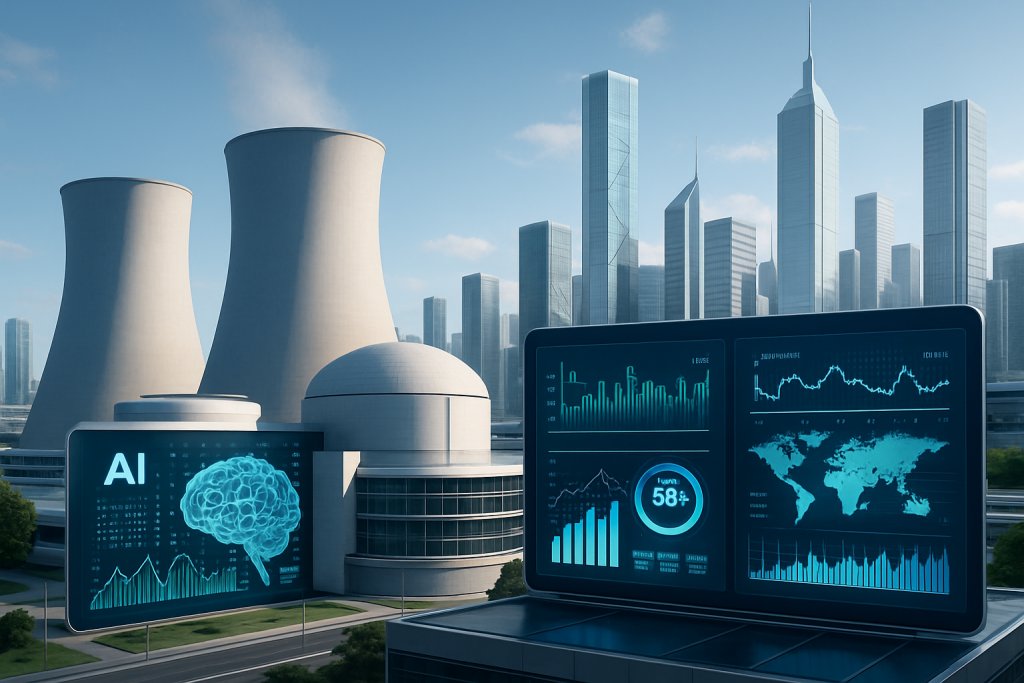
Yesterday, January 9th, Meta Platforms dropped a bombshell that could reshape the entire landscape of AI development. Forget solar panels and wind farms (though they’re still important!), Meta is going nuclear. Yes, you read that right. The social media behemoth, now a major player in the AI game, has inked 20-year deals with three nuclear power providers- Oklo, TerraPower, and Vistra- to fuel its ever-expanding AI data centers. Think of it as Meta going full Oppenheimer, but instead of building the atomic bomb, they’re building the next generation of cat videos (presumably with even more sophisticated AI-powered filters).
But why nuclear? And why now?
The answer, as always, is complex, a tangled web of technological advancement, environmental concerns, and good old-fashioned economic realities. The insatiable appetite of modern AI is the driving force. Training these leviathan models, the kind that power everything from facial recognition to natural language processing, is akin to running a small country. The energy consumption is staggering, and relying solely on fossil fuels would not only be environmentally disastrous but also strategically shortsighted. Imagine trying to build a sustainable future on a foundation of coal-fired power plants. It’s like trying to build a house of cards during an earthquake. Not gonna happen.
Meta’s move is a calculated gamble, a bet on the future of nuclear energy as a clean, reliable, and scalable solution for the power-hungry AI revolution. But it’s more than just a business decision; it’s a statement. A statement that says, “We’re serious about AI, and we’re serious about doing it responsibly.”
The Nuclear Renaissance is Upon Us (Maybe)
This isn’t your grandfather’s nuclear power. We’re not talking about massive, cooling-tower-laden behemoths that evoke images of Homer Simpson and imminent meltdowns. Oklo, TerraPower (backed by Bill Gates, the man who seemingly has a finger in every tech pie), and Vistra are all pioneers in advanced nuclear technology. They’re developing smaller, safer, and more efficient reactors that promise to revolutionize the energy landscape. TerraPower, for example, is working on sodium-cooled fast reactors, which are designed to be safer and more efficient than traditional reactors. Oklo is focused on microreactors, small modular units that can be deployed in remote locations and provide a reliable source of power.
These aren’t just theoretical concepts; they’re real projects, backed by serious investment and driven by the urgent need for clean energy solutions. Meta’s commitment provides these companies with a massive vote of confidence, a signal to the market that nuclear energy is back in the game.
Who Wins, Who Loses?
The immediate winners are, of course, Meta, Oklo, TerraPower, and Vistra. Meta secures a long-term, stable supply of carbon-free energy for its AI operations, giving it a competitive edge in the rapidly evolving AI landscape. The nuclear companies get a massive influx of capital and a high-profile endorsement that could attract even more investment. But the ripple effects extend far beyond these immediate beneficiaries.
The entire tech industry is watching closely. If Meta’s experiment proves successful, other tech giants will undoubtedly follow suit. This could lead to a surge in demand for advanced nuclear technology, accelerating its development and deployment. It could also put pressure on governments to streamline the regulatory process for nuclear power, making it easier to build and operate these facilities. However, expect major pushback from environmental groups who still see nuclear power as an unacceptable risk. We can imagine the protests and the social media storms already.
On the other hand, traditional energy companies, particularly those reliant on fossil fuels, could face increasing pressure to adapt. The rise of AI and the growing demand for clean energy are creating a perfect storm that could disrupt the entire energy sector. Companies that fail to embrace the shift towards sustainable energy sources risk being left behind.
The Ethical Quandaries of the AI Age
Meta’s nuclear gambit raises some profound ethical questions about the role of technology in society. As AI becomes more powerful and more pervasive, its energy demands will only continue to grow. How do we balance the benefits of AI with its environmental costs? Is it ethical to consume vast amounts of energy to train algorithms that recommend cat videos or personalize our news feeds? What if that energy could be used to power hospitals or schools?
These are not easy questions, and there are no easy answers. But they are questions that we must grapple with as we navigate the AI age. Meta’s decision to embrace nuclear energy is a step in the right direction, but it’s just one step. We need a broader conversation about the ethical implications of AI and the responsibility of tech companies to minimize their environmental impact.
The Financial Fallout
The financial implications of Meta’s move are significant. The 20-year agreements with the nuclear power providers represent a massive investment, a clear indication of Meta’s long-term commitment to AI and sustainable energy. This investment could spur further innovation in the nuclear energy sector, attracting more capital and driving down costs. A nuclear renaissance, fueled by the demands of AI, could reshape the energy markets and create new investment opportunities.
However, there are also risks. Nuclear energy is still a controversial topic, and public perception could impact the success of Meta’s initiative. Any accidents or safety concerns could damage Meta’s reputation and undermine its efforts to promote sustainable AI development. The upfront costs of nuclear power are also substantial, and Meta’s investment could face scrutiny from shareholders who prioritize short-term profits over long-term sustainability.
Ultimately, Meta’s nuclear gamble is a bold move, a high-stakes bet on the future of AI and the future of energy. It’s a decision that could have far-reaching consequences, shaping the tech industry, the energy sector, and the very fabric of our society. Whether it pays off remains to be seen, but one thing is certain: the AI revolution is forcing us to rethink everything, from the way we consume energy to the way we define progress.
Discover more from Just Buzz
Subscribe to get the latest posts sent to your email.