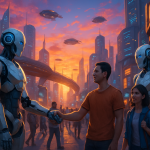

Remember HAL 9000? Or maybe the helpful robots of “The Jetsons?” For decades, science fiction has teased us with the promise of artificial intelligence not just crunching numbers in some server farm, but actually doing things in the real world. Well, friends, grab your hoverboards, because that future just got a whole lot closer. On January 22nd, 2026, Microsoft dropped a bombshell: a major strategic pivot towards what they’re calling “physical AI.” And trust me, this is bigger than Clippy learning a new trick.
For the last couple of years, the AI world has been utterly dominated by large language models. We’ve seen them write poetry, debug code, and even argue with us on Twitter (sometimes indistinguishably from actual humans, sadly). Multimodal systems, capable of understanding and generating both text and images, have only amplified the buzz. But all this wizardry has largely remained trapped inside our screens. It’s been amazing, sure, but also… a little detached from the tangible world around us. Think of it like mastering the art of cooking solely by watching YouTube videos; you might know the theory, but you haven’t actually felt the heat of the stove or tasted the ingredients.
Microsoft’s move signals a profound shift. They’re not just improving algorithms; they’re aiming to give AI a body, a sense of touch, and the ability to navigate the messy, unpredictable reality we all inhabit. They want AI to *do* things, not just *think* about them.
The core of this initiative rests on three pillars, each representing a significant leap forward in AI capabilities.
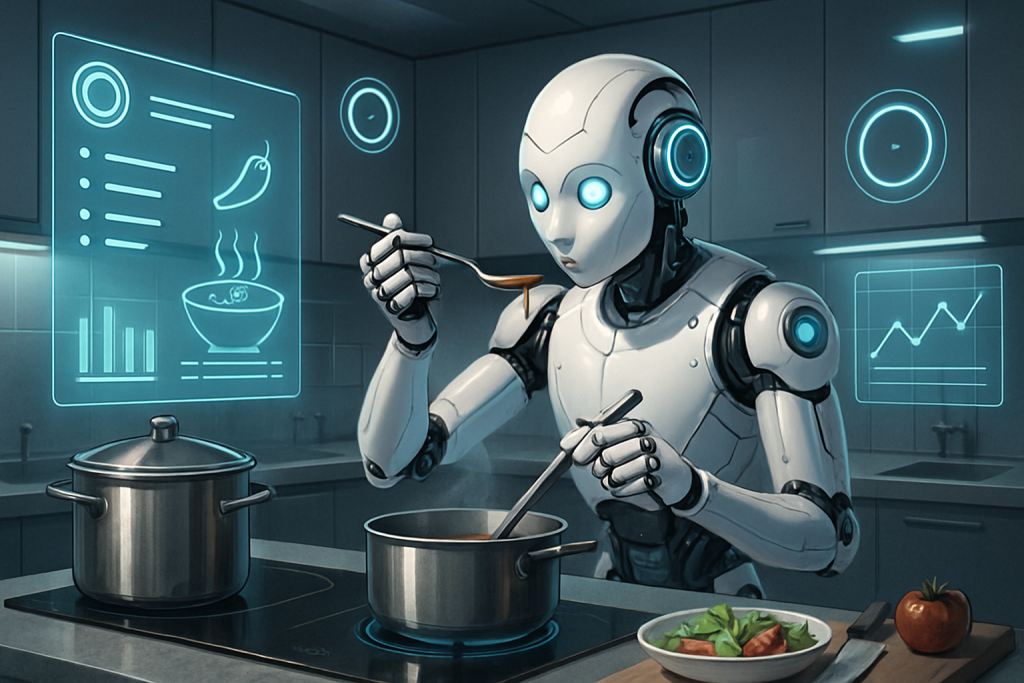
First, there’s Perception. This isn’t just about recognizing cats in photos anymore. It’s about enabling AI to truly understand the world through its senses. Think sophisticated sensors feeding AI systems a constant stream of data: visual information, audio cues, tactile feedback, even smell and taste in specialized applications. Imagine a robot chef not just following a recipe, but actually tasting the sauce and adjusting the seasoning based on its own assessment. It’s about bridging the gap between raw data and meaningful understanding.
Then there’s Simulation. Remember Neo learning Kung Fu in “The Matrix?” That’s the idea, but instead of a direct neural upload, we’re talking about incredibly detailed and realistic virtual environments where AI can train and hone its skills without the risk of breaking things (or hurting people) in the real world. These simulations allow AI to experiment, learn from its mistakes, and develop robust strategies for dealing with unexpected situations. Before a robot delivery driver hits the streets, it can spend countless hours navigating virtual cities, dodging virtual pedestrians, and perfecting its parking skills in simulated traffic jams.
Finally, there’s Large-Scale Learning. This builds on the foundation laid by large language models, but expands the scope to encompass the vast and complex datasets generated by the physical world. Think of the sheer amount of data generated by self-driving cars, robotic warehouses, and automated factories. By feeding AI systems with this torrent of information, they can learn to adapt to new situations, anticipate problems, and make better decisions in real-time. It’s about turning the world itself into a giant, ever-evolving AI training ground.
So, why is Microsoft making this move? What’s the grand strategy at play?
The immediate implications are pretty clear. We’re facing significant labor shortages in many industries, from manufacturing to agriculture to healthcare. Physical AI offers a way to fill those gaps by automating tasks that are currently too difficult or dangerous for humans to perform. Imagine AI-powered robots working alongside construction crews, assembling buildings with superhuman precision and efficiency. Or AI-driven agricultural systems that can monitor crops, detect diseases, and optimize irrigation with minimal human intervention.
Then there are the potential cost reductions. Automation, when done right, can dramatically lower operational expenses by reducing waste, improving efficiency, and minimizing downtime. Think about the potential savings in logistics, where AI-powered robots can optimize warehouse operations, streamline delivery routes, and reduce the risk of human error. Or in manufacturing, where AI-driven systems can monitor production lines, detect defects, and optimize processes in real-time.
And of course, there’s the simple matter of efficiency. AI can analyze data, identify patterns, and make decisions far faster and more accurately than humans. This translates to increased productivity, improved quality, and faster turnaround times across a wide range of industries. Imagine AI-powered systems managing supply chains, optimizing energy consumption, and predicting equipment failures before they happen. The possibilities are truly endless.
But the implications go far beyond just filling labor gaps and cutting costs. This is about fundamentally changing the way we interact with the physical world. It’s about creating a future where AI is not just a tool, but a partner, working alongside us to solve some of the world’s most pressing challenges.
Of course, this shift also raises some profound ethical and societal questions. As AI becomes more integrated into our lives, we need to think carefully about issues like bias, accountability, and job displacement. How do we ensure that AI systems are fair and equitable? Who is responsible when an AI makes a mistake? And how do we prepare for a future where many of the jobs we know today may no longer exist?
There are also significant financial and economic implications. Microsoft’s move is likely to spur a wave of investment in physical AI, creating new markets, new companies, and new job opportunities. But it also raises questions about the distribution of wealth and power. Will the benefits of physical AI be shared broadly, or will they accrue primarily to a small elite? How do we ensure that this technology benefits all of humanity, not just a select few?
Ultimately, Microsoft’s foray into physical AI represents a bold and ambitious vision for the future. It’s a vision where AI is not just a digital assistant, but an active participant in the physical world, helping us to build a more efficient, sustainable, and equitable future. Whether that future turns out to be a utopia or a dystopia remains to be seen, but one thing is certain: the game has changed. And the robots are coming.
Discover more from Just Buzz
Subscribe to get the latest posts sent to your email.