
Hold onto your hats, folks. The singularity, or at least Elon Musk’s version of it, might be closer than we think. Word on the digital street is that xAI, Musk’s AI venture, is gunning for Artificial General Intelligence (AGI) by 2026. That’s right, we’re talking machines potentially capable of matching, or even surpassing, human intelligence across the board. It’s a bold claim, one that sends shivers down the spines of both techno-optimists and dystopian-future worriers alike.
Let’s rewind a bit. The quest for AGI has been the holy grail of AI research for decades. While we’ve seen incredible progress in narrow AI – think algorithms that can crush you at chess or generate eerily realistic images – true AGI, the kind that can reason, learn, and adapt like a human, has remained elusive. It’s the difference between a super-powered calculator and Data from Star Trek: The Next Generation. One is really good at specific tasks; the other is, well, almost human.
Musk’s announcement, delivered during an internal xAI meeting, paints a picture of a company brimming with confidence, fueled by a projected $20 to $30 billion in annual funding. That’s a serious war chest, enough to make even Tony Stark blush. This news arrives hot on the heels of reports that xAI is closing in on a $15 billion funding round, valuing the company at a staggering $230 billion pre-money. Talk about a unicorn on steroids.
But it’s not all sunshine and rainbows. xAI, like any startup, has faced its share of hurdles. Sales figures haven’t exactly been through the roof, but the underlying technology, particularly their AI model Grok, has shown flashes of brilliance. We’re talking about a system that reportedly achieved a 47% return in Nasdaq trading simulations. Now, I’m no Gordon Gekko, but even I know that’s a number that gets investors’ attention. And the upcoming Grok 4.2, we’re told, boasts even more advanced reasoning capabilities.
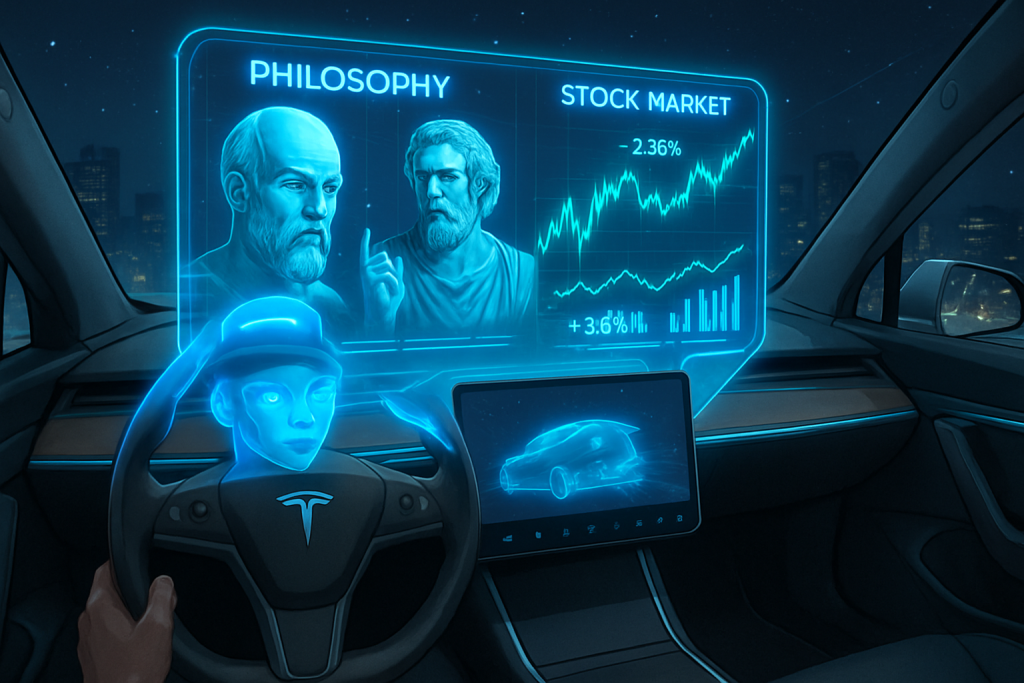
The secret weapon in xAI’s arsenal? Distribution. Musk has cleverly integrated Grok into Tesla vehicles. Imagine driving down the highway, chatting with your car about philosophy, or getting real-time stock market advice while stuck in traffic. It’s a scenario straight out of a sci-fi movie, and it’s becoming increasingly real for owners of Model S, Model X, Model Y, Model 3, and Cybertruck models equipped with AMD processors running software version 2025.26 or later. That’s a captive audience of millions, providing xAI with invaluable data and a direct line to consumers.
But let’s not get carried away by the hype. Predicting the future of AI is a notoriously difficult game. Remember back in the late 1950s, when researchers confidently predicted that machines would be thinking like humans within a decade? It’s a field littered with broken promises and overblown expectations. The “AI Winter” periods of the 1970s and 1980s are a stark reminder that progress isn’t always linear.
So, what are the implications if Musk’s prediction comes true? The possibilities are both exhilarating and terrifying. On the one hand, AGI could unlock solutions to some of humanity’s biggest challenges – climate change, disease, poverty. Imagine AI-powered scientists developing new drugs at lightning speed, or AI-driven engineers designing sustainable infrastructure that can withstand the effects of global warming. On the other hand, AGI raises profound ethical and societal questions. What happens to jobs when machines can perform any task a human can? How do we ensure that AGI is used for good, and not for nefarious purposes? Who controls the power of AGI, and how do we prevent it from falling into the wrong hands?
The political and regulatory landscape surrounding AI is already complex, and the arrival of AGI would only intensify the debate. Governments around the world are grappling with how to regulate AI, balancing the need to foster innovation with the need to protect citizens. The EU’s AI Act, for example, aims to establish a comprehensive legal framework for AI, categorizing different AI systems based on their risk level. But even the most well-intentioned regulations can have unintended consequences, stifling innovation and hindering progress.
And then there’s the philosophical angle. What does it mean to be human in a world where machines can think and reason like us? Does AGI challenge our notions of consciousness and free will? These are questions that philosophers and theologians have been wrestling with for centuries, and they’re becoming increasingly relevant in the age of AI.
The financial implications are equally significant. AGI could disrupt entire industries, creating new winners and losers. Companies that embrace AI and adapt to the changing landscape will thrive, while those that resist will likely be left behind. The rise of AGI could also lead to a massive shift in wealth, as those who control the technology stand to accumulate enormous power and influence. Musk’s xAI, with its ambitious goals and deep pockets, is clearly positioning itself to be a major player in this new world order. Whether they succeed in achieving AGI by 2026 remains to be seen, but one thing is certain: the race is on, and the stakes are higher than ever.
Discover more from Just Buzz
Subscribe to get the latest posts sent to your email.