
The ghost of Christmas Future just delivered a fascinating present, wrapped in the digital ribbon of OpenAI’s latest strategic pivot. On December 25, 2025, while most of us were digesting holiday feasts and battling rogue remote controls, OpenAI quietly announced a major course correction in their quest for Artificial General Intelligence (AGI). Forget solely chasing raw processing power; the new mantra is user adoption, practical application, and, crucially, understanding what happens when AI leaves the lab and enters the real world.
Think of it like this: OpenAI has built a Formula One car capable of ludicrous speeds. But instead of just making it faster and faster on a test track, they’re now saying, “Let’s see how it handles rush hour in Mumbai.”
This shift isn’t just a minor tweak; it’s a recognition that the road to AGI isn’t paved with algorithms alone. It needs the potholes, the detours, and the occasional traffic jam of real-world usage to truly understand the terrain.
The “Capability Overhang” and Why It Matters
At the heart of this change lies the concept of the “capability overhang.” OpenAI believes their current AI models, powerful as they are, possess untapped potential that, if unleashed without proper understanding and management, could lead to, shall we say, unforeseen consequences. Imagine giving a toddler a fully loaded bazooka. Sure, it *could* be used for good, but the odds are… not great.
To understand why this is such a big deal, let’s rewind a bit. OpenAI, a name synonymous with AI innovation, has consistently pushed the boundaries of what’s possible. From the groundbreaking GPT-3 that could write convincingly like a human, to its even more sophisticated successor GPT-4, their models have redefined natural language processing. The traditional approach to AGI has always been seen as a relentless pursuit of more computational power, more complex algorithms, and ever-increasing datasets. It was a race to build the most powerful AI brain possible.
But here’s the rub: power without context is, well, potentially dangerous. A super-intelligent AI that exists only in a simulated environment might excel at abstract problem-solving, but it lacks the grounding in reality necessary to truly understand human needs, values, and the messy complexities of the world. It’s like teaching a computer to play chess perfectly, but forgetting to explain the concept of sportsmanship.
From the Lab to the Living Room: A New Approach to AGI
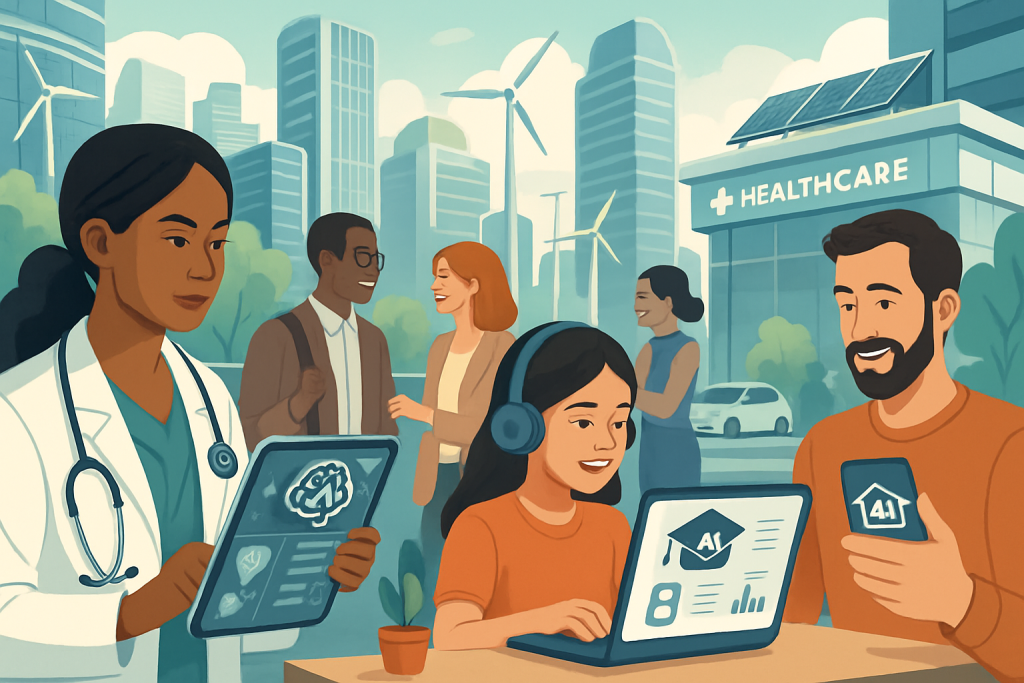
OpenAI’s new strategy is about getting AI out of the sterile laboratory and into the hands of everyday users. Think of AI-powered tools that help doctors diagnose diseases, AI assistants that personalize education, or AI systems that optimize energy consumption. By focusing on these practical applications, OpenAI hopes to gain invaluable insights into how AI interacts with the real world, how it can be used responsibly, and what challenges need to be addressed along the way.
This isn’t just altruism; it’s smart strategy. By fostering widespread adoption, OpenAI can collect massive amounts of data on how people are actually using AI, identify potential biases or unintended consequences, and refine their models accordingly. It’s a feedback loop on steroids.
Who Benefits (and Who Might Be Concerned)?
The immediate beneficiaries of this shift are likely to be users of AI-powered applications. More practical, user-friendly AI tools could revolutionize everything from healthcare to education to customer service. Businesses, too, stand to gain from increased efficiency and productivity. Imagine a world where AI handles all the tedious, repetitive tasks, freeing up human workers to focus on more creative and strategic endeavors.
But this also raises some important questions. As AI becomes more integrated into our lives, concerns about job displacement, algorithmic bias, and data privacy are likely to intensify. If AI is going to be truly beneficial, it needs to be developed and deployed in a way that is fair, transparent, and accountable.
The Ethical and Philosophical Implications
OpenAI’s change of heart also throws a spotlight on the ethical and philosophical dilemmas surrounding AGI. What does it mean to create a machine that is as intelligent as a human? What responsibilities do we have to ensure that AGI is aligned with our values? And what happens when AGI surpasses human intelligence?
These aren’t just abstract philosophical musings; they’re questions that we need to grapple with now, before AGI becomes a reality. The development of AGI is not just a technological challenge; it’s a societal one.
A Ripple Effect Across the AI Landscape
OpenAI’s decision is likely to have a ripple effect across the entire AI industry. Other organizations may feel pressure to adopt similar strategies, prioritizing real-world impact over purely technical achievements. This could lead to a more collaborative and user-centric approach to AI development, with a greater emphasis on responsible innovation.
In the long run, this could be a good thing for everyone. By focusing on practical applications and user engagement, we can ensure that AI is developed in a way that benefits humanity as a whole. It’s a shift from building a bigger hammer to figuring out what we actually need to build.
So, as we look ahead to a future increasingly shaped by AI, OpenAI’s Christmas Day declaration serves as a reminder that the journey to AGI is not just about building smarter machines; it’s about building a better world.
Discover more from Just Buzz
Subscribe to get the latest posts sent to your email.