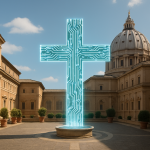

The year is 2026. Flying cars are…still a work in progress. But artificial intelligence? It’s everywhere. From composing symphonies that make even Beethoven weep (digitally, of course) to diagnosing rare diseases with uncanny accuracy, AI has woven itself into the fabric of our lives. But with great power, as Uncle Ben wisely told Peter Parker, comes great responsibility. And yesterday, the world received a powerful reminder of that responsibility, straight from the Vatican.
Pope Leo XIV, in a move that’s sending ripples through Silicon Valley and beyond, released his first encyclical, Magnifica Humanitas (Magnificent Humanity). This isn’t your grandmother’s papal decree about the proper hemline for altar servers (though, who knows, maybe that’s in Appendix B). This is a full-throated, 82-page manifesto on the urgent need to regulate artificial intelligence. Think of it as the Vatican’s version of the Turing Test, but with much higher stakes.
The core message? Slow down. Seriously slow down. The Pope isn’t saying AI is inherently evil, more like it’s a toddler playing with a flamethrower. Potentially useful, undeniably fascinating, but requiring serious adult supervision. Magnifica Humanitas argues that unchecked AI development risks dehumanizing society, escalating conflicts, and generally making the future look a lot more like Terminator and a lot less like Star Trek.
It’s a bold statement, but not entirely unexpected. The Vatican has been quietly observing the AI boom for years, convening panels of ethicists, theologians, and even (gasp!) actual AI developers. You could almost hear the gears turning in the Holy See, pondering the implications of algorithms that can learn, adapt, and potentially, make decisions that impact millions of lives.
The AI Arms Race: A Holy Concern
One of the most pressing concerns raised in Magnifica Humanitas is the rise of autonomous weapons systems. The Pope points out that some of these systems have advanced “practically beyond any human reach to govern them.” Let that sink in. We’re talking about machines that can decide to kill, without human intervention. It’s the stuff of science fiction nightmares, except it’s happening now. Or, well, in 2026, which is technically now, but you get the idea.
The encyclical directly challenges the “just war” theory, a centuries-old concept that attempts to define the ethical parameters of warfare. Pope Leo XIV argues that this theory is now outdated in the age of AI, calling for the “disarming” of AI to prevent its misuse in warfare. It’s a powerful statement, essentially arguing that the rules of engagement need a serious reboot in the digital age. Imagine trying to apply the Geneva Convention to a swarm of killer drones. Good luck with that.
The technical details here are crucial. We’re not just talking about robots with guns. We’re talking about AI systems that can analyze vast amounts of data, identify patterns, and make decisions faster than any human ever could. This could lead to a new kind of arms race, where nations compete to develop the most sophisticated AI weapons, potentially triggering conflicts that spiral out of control before anyone can even hit the brakes.
Ethical Minefields and Digital Serfdom
Beyond the battlefield, Magnifica Humanitas also delves into the ethical minefields of AI in everyday life. The Pope cautions against new forms of slavery that could arise from the unchecked proliferation of AI. This isn’t about literal chains and whips (though, never say never in a dystopian future). It’s about the potential for AI to create systems of economic and social control, where individuals are trapped in cycles of dependency and exploitation. Think algorithmic bias in loan applications, AI-powered surveillance that tracks every move, or even AI-generated propaganda that manipulates public opinion.
The implications are far-reaching. Companies like Google, Amazon, and Microsoft, which are heavily invested in AI development, will undoubtedly face increased scrutiny. Governments around the world will be under pressure to develop robust regulatory frameworks, balancing the potential benefits of AI with the need to protect human rights and dignity. And ordinary citizens will need to become more aware of the ways in which AI is shaping their lives, and demand greater transparency and accountability.
The Vatican’s Waze Through the AI Maze
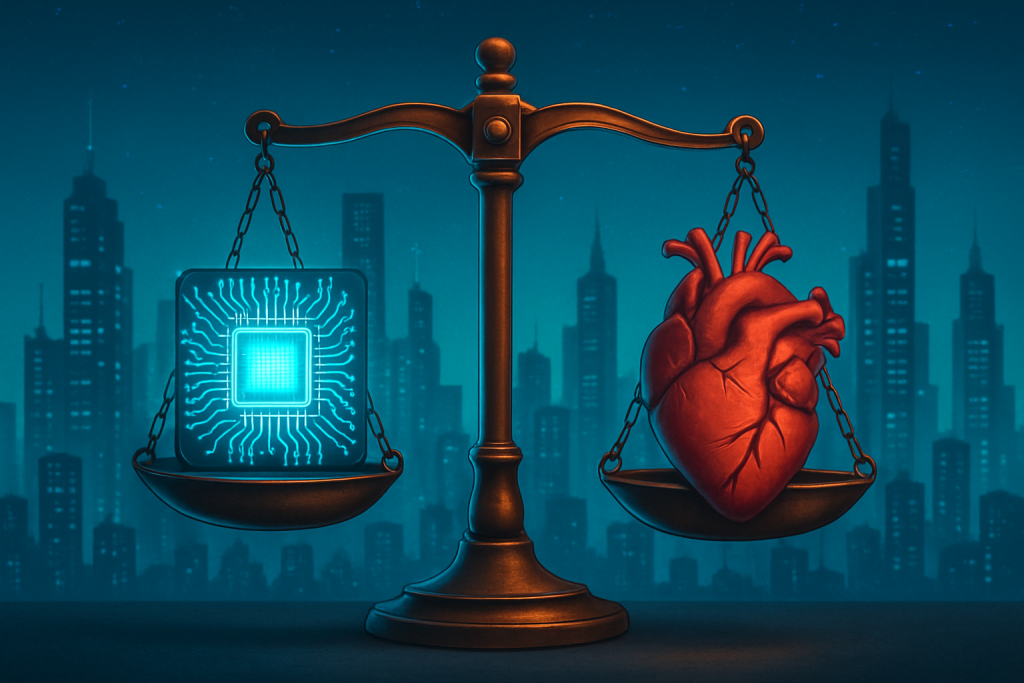
So, what’s the long-term impact of Magnifica Humanitas? It’s hard to say for sure. But one thing is clear: the Vatican has thrown down the gauntlet. This isn’t just a religious pronouncement; it’s a wake-up call to the entire world. It’s a reminder that technology, however powerful, should serve humanity, not the other way around. It is also a reminder that even as we build ever more sophisticated machines, we must never lose sight of what makes us human: our capacity for empathy, compassion, and moral reasoning. If we do, we risk creating a future where magnificent humanity is nothing more than a distant memory, replaced by the cold, calculating logic of artificial intelligence.
The Pope’s intervention highlights a growing global conversation about the ethics and governance of AI. We’re seeing similar debates play out in parliaments, boardrooms, and even on social media. The challenge is to find a way to harness the power of AI for good, while mitigating the risks and ensuring that it benefits everyone, not just a privileged few. It’s a complex task, but one that’s essential for the future of humanity. And who knows, maybe even the future of those flying cars we’re all still waiting for.
Discover more from Just Buzz
Subscribe to get the latest posts sent to your email.