
The year is 2026. Flying cars are still a pipe dream (thanks, Elon!), but artificial intelligence? That’s very, very real. Yesterday, April 10th, to be precise, the Kremlin became ground zero for a pivotal moment in the global AI race. President Vladimir Putin convened a high-stakes meeting, not about oil pipelines or geopolitical chess moves, but about something far more… algorithmic. The topic? The relentless march of artificial intelligence and Russia’s place in the new world order.
Forget the Cold War; we’re in the midst of the Code War, and Putin’s message was crystal clear: Russia intends to be a major player, not a spectator. He didn’t mince words, stating that Russia’s “sovereignty and future existence” hinges on its ability to keep pace with global technological changes, particularly in the realm of AI. It’s a sentiment that echoes the space race of the 1960s, only this time, instead of rockets to the moon, the prize is control of the algorithms that will shape our future. Think of it as Skynet, but with better vodka.
But why this sudden, laser-like focus on AI? To understand, we need to rewind a bit. For years, Russia has been playing catch-up in the tech arena, often relying on foreign technologies. This dependence, understandably, makes the Kremlin nervous. In a world increasingly defined by digital power, technological autonomy is paramount. Imagine a nation whose infrastructure, economy, and defense systems are all reliant on AI developed and controlled by someone else. It’s a geopolitical vulnerability of epic proportions. Putin’s meeting was, in essence, a declaration of digital independence.
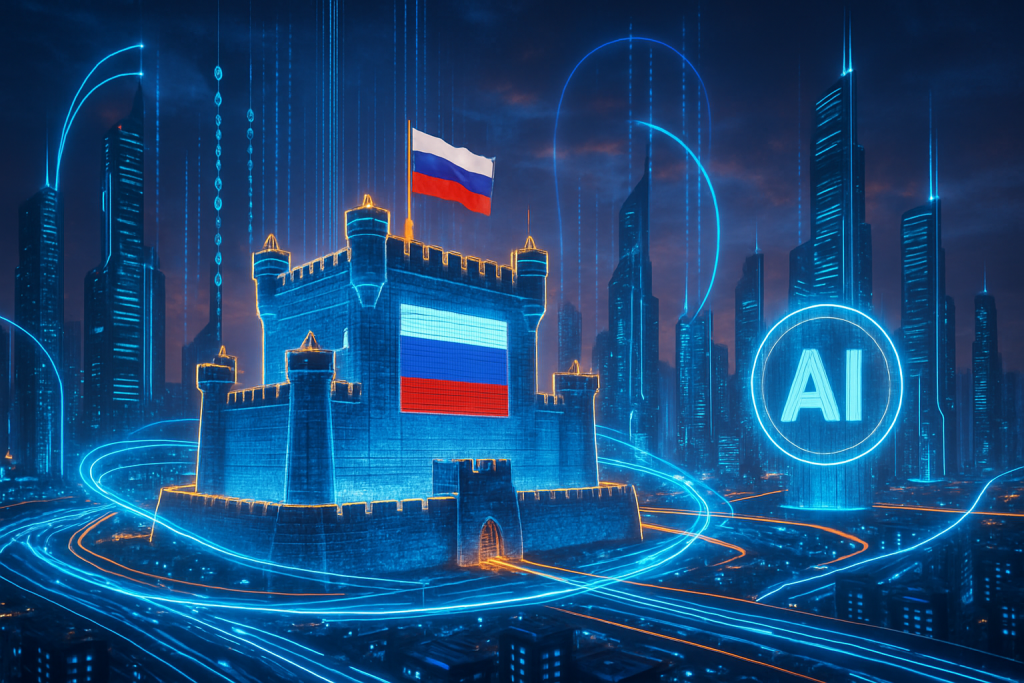
The implications of this meeting are far-reaching, and they ripple across multiple sectors. Let’s break down the key takeaways. First, and perhaps most significantly, Putin called for the creation of entirely domestic AI models. He emphasized that these models need to be globally competitive and, crucially, possess a “high degree of sovereignty.” This means that the entire development and training process must be managed by Russian companies. No outsourcing, no reliance on foreign code. This isn’t just about building better algorithms; it’s about building a technological fortress.
Think of it like this: if the internet is the Wild West, Russia wants to be the sheriff, controlling the flow of information and ensuring that its own AI models reign supreme. It’s a bold ambition, but one that reflects a growing global trend toward technological nationalism. We’ve seen similar moves in China and even rumblings in the EU, all driven by a desire to control their own digital destinies. The question, of course, is whether Russia can actually pull it off. Building cutting-edge AI requires massive investment, access to talent, and a thriving ecosystem of innovation. Can Russia create that from scratch?
The second major takeaway is the ambitious goal of integrating AI across every sector of the Russian economy by 2030. Manufacturing, logistics, energy, management, education- you name it, Putin wants it AI-ified. This isn’t just about automating tasks; it’s about fundamentally transforming how Russia operates. Imagine AI-powered factories churning out goods with unparalleled efficiency, AI-optimized logistics networks delivering goods across the vast expanse of Russia, and AI-driven healthcare systems providing personalized treatment to every citizen. It’s a vision of a hyper-efficient, technologically advanced Russia, but it also raises questions about job displacement and the potential for algorithmic bias.
And then there’s the elephant in the room: national defense and security. Putin made it abundantly clear that developing proprietary AI solutions for these sectors is a top priority. He wants Russia to possess the “most advanced technologies” and utilize “domestically developed products” to maintain its defense capabilities. This is where things get particularly interesting, and potentially concerning. Imagine AI-powered drones, autonomous weapons systems, and sophisticated surveillance technologies, all controlled by algorithms developed and deployed by the Russian military. It’s a scenario straight out of a Philip K. Dick novel, and it raises profound ethical questions about the future of warfare.
But it’s not all about internal development. Putin also advocated for the establishment of a system to promote Russian AI systems and services in international markets, particularly among partners in the Commonwealth of Independent States (CIS), Shanghai Cooperation Organization (SCO), and BRICS nations. This suggests a desire to export Russian AI technology and expand its influence on the global stage. Think of it as a digital Silk Road, with Russia at the center, exporting its AI expertise and building alliances with like-minded nations. This could have significant implications for the balance of power in the tech world, potentially creating a counterweight to the dominance of Silicon Valley.
The financial and economic impact of this initiative is also worth considering. Massive investment in AI research and development could stimulate the Russian economy, create new jobs, and boost its competitiveness. However, it also carries risks. If Russia fails to develop truly competitive AI models, it could end up wasting resources and falling further behind. Moreover, the focus on domestic development could stifle innovation by limiting access to foreign technologies and expertise.
From a societal perspective, the widespread adoption of AI could have both positive and negative consequences. On the one hand, it could improve efficiency, reduce costs, and enhance the quality of life. On the other hand, it could exacerbate inequality, displace workers, and raise concerns about privacy and surveillance. The key will be to ensure that AI is developed and deployed in a way that benefits all of society, not just a select few.
Putin’s AI push is more than just a technological initiative; it’s a geopolitical statement. It’s a signal that Russia intends to be a major player in the AI revolution, not just a follower. Whether it can achieve this ambitious goal remains to be seen, but one thing is clear: the Code War is heating up, and the stakes are higher than ever.
Discover more from Just Buzz
Subscribe to get the latest posts sent to your email.