
The year is 2026. Flying cars still haven’t quite taken off (pun intended), but artificial intelligence is everywhere- and I mean *everywhere*. From diagnosing diseases with uncanny accuracy to writing surprisingly decent rom-com scripts (though still no match for Nora Ephron, let’s be honest), AI has woven itself into the fabric of our lives. But with great power, as Uncle Ben wisely told Peter Parker, comes great responsibility. And that’s where today’s news drops like a perfectly timed plot twist: the United Nations has officially unveiled the International Panel on Artificial Intelligence, or IPAI, because apparently, even global organizations love a good acronym.
This isn’t just another committee; it’s a Big Deal. Think of it as the IPCC- but for algorithms instead of climate. The Secretary-General himself, António Guterres, made the announcement, calling the IPAI a “first-of-its-kind, one-of-a-kind, global, independent scientific body.” That’s a lot of adjectives, but the message is clear: the UN is taking AI governance seriously.
But why now? What’s the backstory? Well, the AI revolution hasn’t exactly been a smooth ride. We’ve seen AI used for everything from generating deepfakes that make Nicolas Cage appear in every movie ever made (okay, maybe that one’s just a fun thought experiment) to potentially biased algorithms impacting loan applications and even criminal justice. The promise of AI is immense, but so are the potential pitfalls. And let’s be real, the geopolitical landscape is…complicated. With rising tensions and conflicts flaring, the idea of unchecked AI development is, shall we say, less than comforting. It’s like giving a toddler a fully loaded bazooka- potentially disastrous.
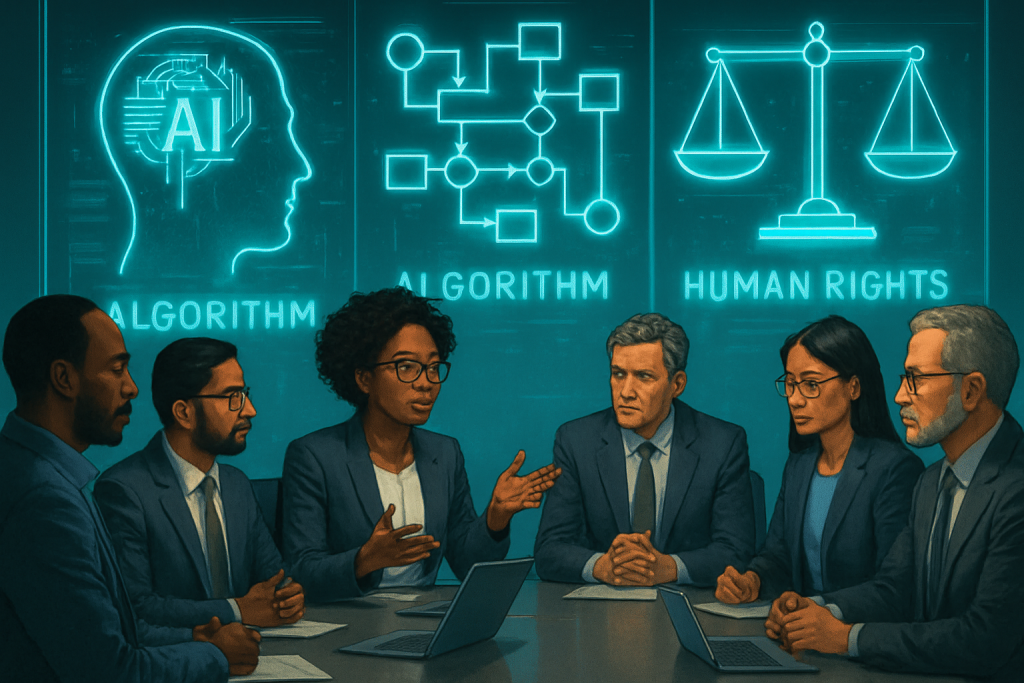
So, the UN is stepping in, not to stifle innovation, but to steer it in a direction that benefits everyone. The IPAI aims to provide evidence-based assessments and guidance to ensure AI development aligns with human rights and ethical standards. It’s like having a responsible adult in the room, making sure the AI party doesn’t get *too* out of hand.
Who’s in charge of this AI Avengers initiative? Glad you asked. The IPAI is co-chaired by two seriously impressive individuals. First, we have Maria Ressa, a Nobel Peace Prize laureate and journalist from the Philippines, known for her unwavering dedication to freedom of expression. Having her involved sends a strong message: AI ethics isn’t just about algorithms; it’s about protecting fundamental human rights in the digital age. The second co-chair is Yoshua Bengio, a Canadian professor at the Université de Montréal and a titan in the AI world. He’s a deep learning guru, the founder of Mila (the Quebec Artificial Intelligence Institute), and co-president of LawZero. Having Bengio on board provides the technical expertise needed to navigate the complex world of AI development. Together, Ressa and Bengio make a formidable duo, balancing ethical considerations with technical know-how.
What does this actually *mean* though? It’s not just about feel-good speeches and photo ops. The IPAI is tasked with providing credible scientific insights into the global conversation about AI. They’ll be setting priorities and establishing working methods to deliver substantive assessments. These assessments will then inform the first annual Global Dialogue on AI Governance, co-chaired by Ambassador López of El Salvador and Ambassador Tamssar of Estonia. Think of it as the AI equivalent of Davos, but with a focus on responsible development rather than just making deals.
The implications of the IPAI are far-reaching. For tech companies, it means increased scrutiny and a greater emphasis on ethical AI development. They can’t just throw algorithms at problems and hope for the best; they need to consider the potential societal impact. For governments, it means a framework for developing AI policies that are informed by scientific evidence and ethical considerations. For us, the users, it *should* mean a future where AI is used to solve problems and improve lives, rather than exacerbating existing inequalities or creating new ones.
Of course, there will be challenges. Getting global consensus on AI governance is like herding cats, especially with competing national interests and varying levels of technological development. There’s also the risk of the IPAI becoming just another bureaucratic institution, bogged down in red tape and unable to make a real impact. The panel’s independence and ability to attract top talent will be crucial to its success.
And let’s not forget the philosophical questions. What does it mean to be human in an age of increasingly intelligent machines? How do we ensure that AI remains a tool that serves humanity, rather than the other way around? These are not easy questions, and the IPAI will need to grapple with them as it navigates the complex landscape of AI development.
The financial impact is also significant. Companies that prioritize ethical AI development may gain a competitive advantage, as consumers become more aware of the potential risks and benefits of AI. Investing in AI safety research and responsible AI governance will also be crucial for long-term economic stability. Ignoring these issues could lead to costly mistakes and reputational damage.
In conclusion, the creation of the IPAI is a pivotal moment in the history of AI. It’s a recognition that AI is too important to be left to chance, that its development must be guided by ethical principles and scientific evidence. Whether the IPAI succeeds in its mission remains to be seen, but one thing is certain: the future of AI is now a global concern, and the world is finally starting to pay attention. Now, if you’ll excuse me, I’m going to go ask ChatGPT if it thinks the IPAI is a good idea. Just kidding… mostly.
Discover more from Just Buzz
Subscribe to get the latest posts sent to your email.