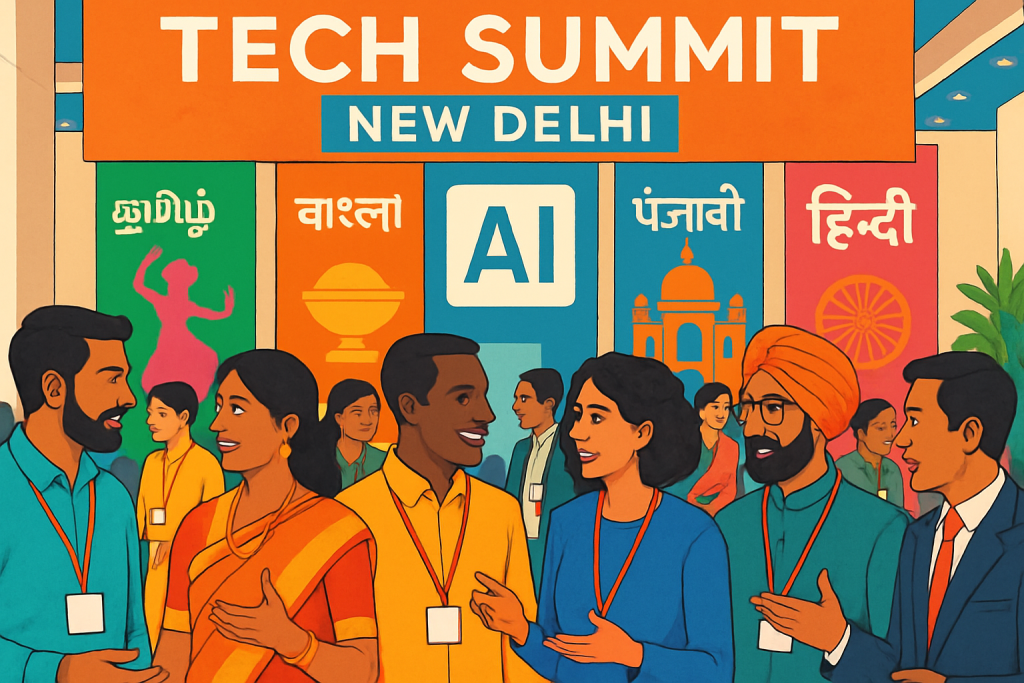

The air in New Delhi crackled with anticipation. Not just the usual hum of a city teeming with life, but a different kind of electricity. The India AI Impact Summit, a five-day extravaganza at the Bharat Mandapam, was in full swing, and the whispers were getting louder: something big was about to drop. And drop it did.
On February 18, 2026, Sarvam AI, a name that’s quickly becoming synonymous with Indian AI innovation, unveiled not one, but two new large language models (LLMs): the Sarvam 30B and the beastly Sarvam 105B. Think of it as India’s AI answer to the global LLM arms race, but with a distinctly desi twist. These aren’t just any LLMs; they’re designed from the ground up to understand and process the vibrant tapestry of Indian languages- Punjabi, Marathi, Hindi, and more-a feat often overlooked by the Silicon Valley giants.
Remember those early days of machine translation, where you’d ask for “fish and chips” and get back something that sounded vaguely like a threat involving aquatic life and potato projectiles? That’s the problem Sarvam is tackling head-on. Generic LLMs often stumble when confronted with the nuances of regional languages, cultural idioms, and local contexts. Imagine trying to explain the concept of “jugaad” to an AI trained solely on Wall Street Journal articles. It just wouldn’t compute.
Pratyush Kumar, the co-founder of Sarvam AI, took center stage to demonstrate the models’ capabilities. He emphasized not just the performance, but also the cost-effective training processes that made these models possible. In a world where AI development often feels like a game only the wealthiest can play, Sarvam is aiming to democratize access and innovation.
But here’s the kicker: The Sarvam 105B model isn’t just playing catch-up; it’s surpassing the performance of DeepSeek R1, a model that until recently held a coveted spot in the LLM hierarchy. That’s like a Bollywood underdog film come to life, but with algorithms instead of dance numbers. This achievement is a massive shot in the arm for indigenous AI development in India, proving that innovation doesn’t always have to originate from the usual suspects.
So, what does this all mean? Let’s unpack it.
The “Third Way” in AI: India’s Strategic Vision
The launch of Sarvam’s LLMs is more than just a technological milestone; it’s a strategic play. India is actively carving out a “third way” in AI development, a path that’s independent of the U.S. and China’s dominance. Think of it as Switzerland in the AI world- neutral, innovative, and focused on serving its own unique needs. This “third way” isn’t about isolationism, but about creating AI that’s tailored to India’s specific linguistic, cultural, and societal contexts. It’s about building AI that understands the complexities of a nation with over a billion people and countless regional variations.
This initiative also aligns with India’s broader strategy to democratize AI through open-source models. By making these models accessible, Sarvam and other Indian AI companies hope to foster a vibrant ecosystem of innovation, empowering researchers, developers, and entrepreneurs to build on their work. It’s like providing the raw ingredients for a culinary masterpiece, trusting that talented chefs will create something extraordinary.
Consider the implications for education. Imagine AI-powered tutoring systems that can understand and respond to students in their native languages, providing personalized learning experiences that were previously unimaginable. Or think about the potential for AI-driven healthcare solutions that can diagnose diseases and provide treatment recommendations tailored to the specific needs of Indian patients. The possibilities are truly staggering.
Beyond the Hype: Ethical and Societal Considerations
Of course, any major technological advancement comes with its own set of ethical and societal considerations. As AI becomes more powerful and pervasive, we need to ask ourselves some tough questions. How do we ensure that these models are used responsibly and ethically? How do we prevent bias from creeping into the algorithms, perpetuating existing inequalities? How do we protect privacy and security in an increasingly AI-driven world?
These are not just abstract philosophical questions; they have real-world implications. For example, if an AI model is trained primarily on data from a specific demographic group, it may not perform as well for other groups. This could lead to discriminatory outcomes in areas such as loan applications, job recruitment, and even criminal justice. It’s crucial that AI developers are aware of these potential biases and take steps to mitigate them.
The Indian government is actively working on developing regulations and guidelines to address these concerns. The goal is to create a framework that fosters innovation while also protecting the rights and interests of citizens. It’s a delicate balancing act, but it’s essential for ensuring that AI benefits everyone, not just a select few.
The Financial and Economic Ripple Effect
The launch of Sarvam’s LLMs is not just a win for India’s tech sector; it’s a potential boon for the entire Indian economy. The AI market is expected to grow exponentially in the coming years, and India is well-positioned to become a major player. By developing its own sovereign AI technologies, India can reduce its reliance on foreign companies and create new jobs and opportunities for its citizens.
Think about the potential for AI-powered automation in industries such as agriculture, manufacturing, and logistics. These technologies could significantly improve efficiency and productivity, boosting economic growth and creating new wealth. And let’s not forget the potential for AI-driven innovation in areas such as healthcare, education, and finance. The possibilities are endless.
The India AI Impact Summit itself is a testament to the country’s ambition. With over 20 heads of state, more than 60 ministers, and 500 global AI leaders in attendance, the summit is a clear signal that India is serious about becoming a global leader in artificial intelligence. It’s a bold vision, but with the right investments and policies, it’s a vision that could very well become a reality.
So, as the dust settles on the India AI Impact Summit, one thing is clear: The AI revolution is not just coming; it’s already here. And India is determined to be at the forefront, shaping the future of AI in its own unique and innovative way. Forget Skynet; the future might just be a bit more Bollywood than we expected.
Discover more from Just Buzz
Subscribe to get the latest posts sent to your email.