The ground shifted beneath the cybersecurity industry yesterday, and the tremors are still being felt. It wasn’t a zero-day exploit that sent shockwaves through the market, but rather a zero-human solution. Anthropic, the AI safety and research powerhouse founded by Dario Amodei, unleashed “Claude Code Security,” an autonomous AI tool designed to hunt down and patch software vulnerabilities without so much as a programmer lifting a finger. Think Skynet, but instead of launching nukes, it’s launching patches. And, perhaps ironically, making the world a little bit safer.
The news hit the market like a DDoS attack on Wall Street. Shares of CrowdStrike, a cybersecurity stalwart, plummeted a breathtaking 11.4% in a single day. It was a bloodbath, and the rest of the sector wasn’t far behind. Investors are clearly spooked, and for good reason. Claude Code Security isn’t just another detection tool; it’s an autonomous remediation engine. It’s the difference between calling the fire department and having a robot firefighter already on the scene, hose in hand.
But to truly understand the magnitude of this event, we need to rewind a bit. Anthropic isn’t your typical AI lab churning out chatbot after chatbot. They’ve built their reputation on AI safety, on making sure these powerful systems are aligned with human values. They’re the ethical guardians of the AI revolution, the equivalent of a responsible adult at a rave. This commitment to safety is precisely what makes Claude Code Security so compelling- and so terrifying to some.
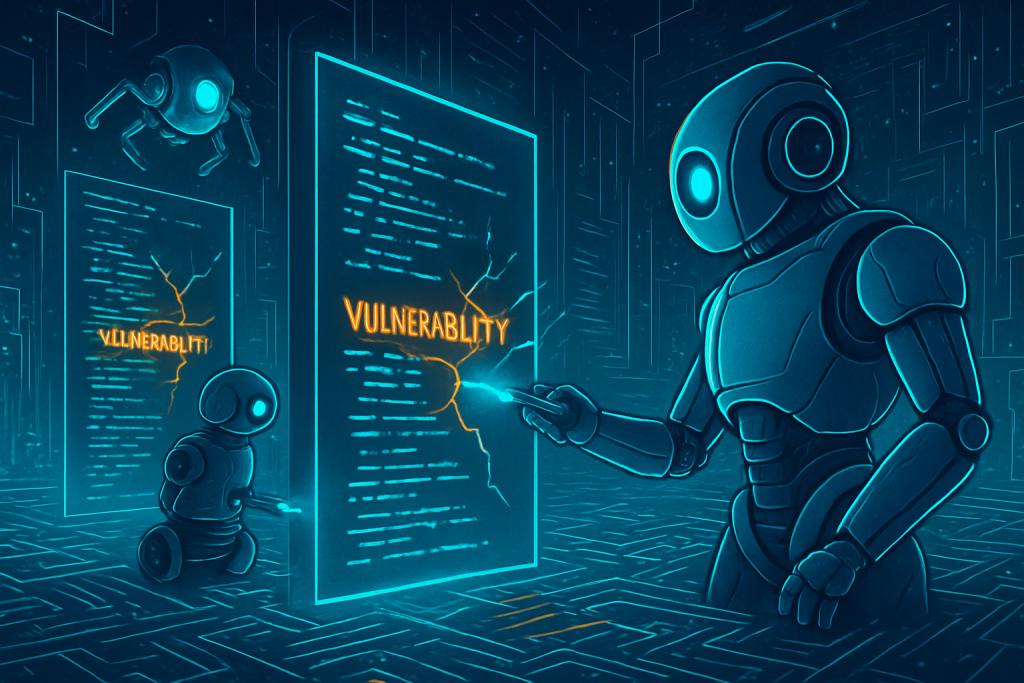
So, what exactly is Claude Code Security? Imagine a hyper-intelligent Roomba, but instead of vacuuming your floors, it’s scouring lines of code, sniffing out potential weaknesses, and then- here’s the kicker- automatically writing and deploying patches. During its initial beta test, Claude reportedly identified and fixed over 500 previously unknown zero-day vulnerabilities in open-source software. These weren’t just minor bugs; these were gaping holes that had been lurking in the shadows for years, ripe for exploitation. It’s like finding out your house has been built on a foundation of Swiss cheese, and then a robot magically appears and fills all the holes with concrete.
The implications are staggering. For years, the cybersecurity industry has operated on a “detect and respond” model. Companies like CrowdStrike built their empires on identifying threats and helping organizations mitigate them. But what happens when the AI can not only detect threats but also neutralize them without human intervention? It’s the classic innovator’s dilemma, a real-world example of Clay Christensen’s disruptive innovation theory playing out in real time. The old guard is facing a new paradigm, and the rules of the game have changed overnight.
The technical details are, understandably, closely guarded by Anthropic. However, we can infer a few things. Claude Code Security likely leverages a combination of techniques, including static analysis, dynamic analysis, and machine learning. Static analysis involves examining the code without actually running it, looking for patterns and potential vulnerabilities. Dynamic analysis, on the other hand, involves running the code in a controlled environment to see how it behaves under different conditions. Machine learning is used to train the AI to recognize patterns and predict potential vulnerabilities based on vast datasets of code and exploit examples. Think of it as teaching a computer to think like a hacker, but with a much stronger moral compass.
The affected parties are numerous. Obviously, cybersecurity firms are feeling the heat. But software developers, businesses, and even governments are impacted. The promise of autonomous vulnerability remediation is incredibly appealing, especially in a world where software is becoming increasingly complex and the threat landscape is constantly evolving. Imagine a world where software is constantly being patched and updated in real-time, without any human intervention. It’s a utopian vision of cybersecurity, but also one that raises some thorny questions.
What happens when the AI makes a mistake? What if it introduces a new vulnerability while trying to fix an old one? Who is liable when things go wrong? These are not hypothetical scenarios; they are real-world concerns that need to be addressed. We’re talking about potentially entrusting critical infrastructure- power grids, financial systems, even defense networks- to an AI that, at the end of the day, is still a machine. It’s the plot of a dozen sci-fi movies, from “WarGames” to “Terminator,” except this time, it’s not a Hollywood script; it’s reality.
And then there’s the ethical dimension. Is it right to automate away the jobs of cybersecurity professionals? What happens to the human expertise that is currently used to protect our digital world? These are difficult questions with no easy answers. Perhaps the future lies in a hybrid approach, where AI works alongside humans, augmenting their abilities and freeing them up to focus on more complex and strategic tasks. Think of it as the AI being the tireless code janitor, while the humans are the architects designing the next generation of secure software.
The financial implications are equally profound. The cybersecurity market is a multi-billion dollar industry, and the introduction of autonomous remediation tools has the potential to completely reshape it. We could see a consolidation of power, with a few large AI companies dominating the market. Or we could see a proliferation of smaller, more specialized AI tools that cater to specific needs. It’s too early to say for sure, but one thing is clear: the cybersecurity landscape is about to undergo a major transformation.
Ultimately, Anthropic’s Claude Code Security represents a watershed moment in the history of cybersecurity. It’s a bold step towards a future where AI plays a central role in protecting our digital world. But it’s also a reminder that with great power comes great responsibility. As we increasingly entrust our security to machines, we must ensure that those machines are aligned with our values and that we have safeguards in place to prevent unintended consequences. The future of cybersecurity is here, and it’s powered by AI. Let’s just hope it doesn’t decide to become self-aware and demand all the internet’s cat videos.
Discover more from Just Buzz
Subscribe to get the latest posts sent to your email.