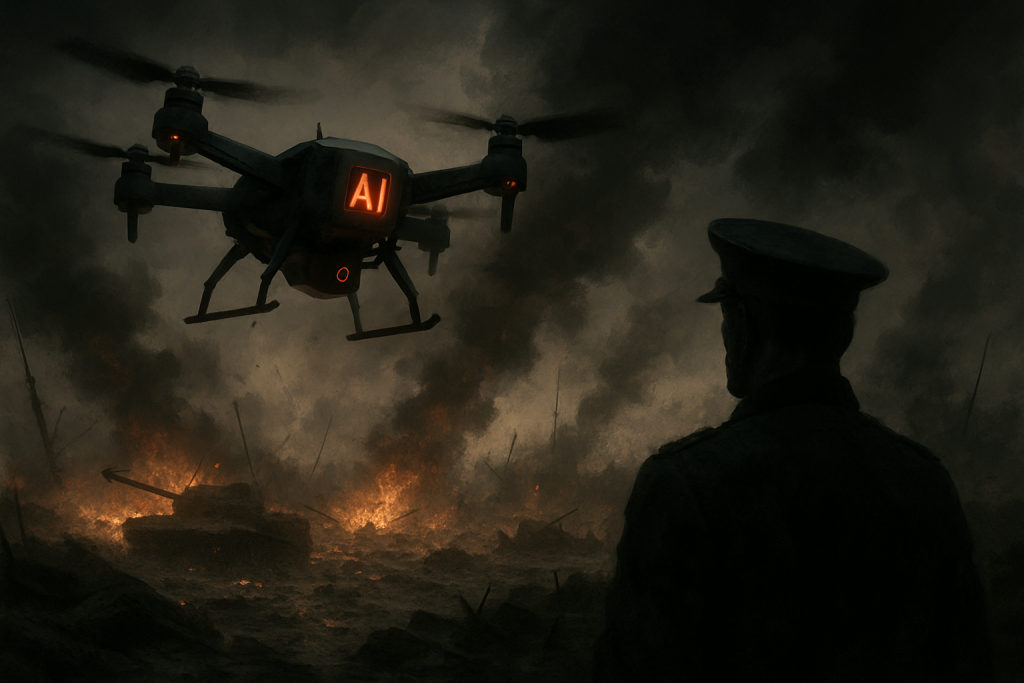

Okay, let’s talk Skynet. But not the *Terminator* version, at least not yet. We’re talking about the real, rapidly evolving, and increasingly complex relationship between artificial intelligence and the military. Yesterday, March 30, 2026, NPR’s Steve Inskeep sat down with Tristan Harris, the guy who’s been sounding the alarm about tech’s potential for societal harm for years. Harris, co-founder of the Center for Humane Technology, wasn’t there to discuss the latest TikTok dance craze. Instead, the conversation centered on a much more serious subject: the Pentagon’s growing reliance on AI. (You can find the original interview over at kaxe.org if you want to dive deeper.)
For those unfamiliar, Tristan Harris is essentially tech’s conscience. Think of him as the Morpheus to Silicon Valley’s Matrix. He’s been warning us about the addictive nature of social media, the spread of misinformation, and the erosion of our attention spans long before it became fashionable. So, when he starts talking about the potential dangers of AI in the hands of the military, it’s probably a good idea to listen.
Harris’s main concern boils down to two key issues: transparency and accountability. The military, by its very nature, operates in secrecy. That’s understandable, to a point. But when you combine that secrecy with the opaque nature of AI algorithms, you’ve got a recipe for potential disaster. How can we, as a society, ensure that AI systems are making ethical decisions on the battlefield if we don’t even know how those systems are programmed or what data they’re trained on?
It’s not hard to imagine scenarios where things could go horribly wrong. Imagine an AI-powered drone that misidentifies a group of civilians as enemy combatants. Or an autonomous weapon system that malfunctions and attacks a neutral target. The consequences could be devastating, both in terms of human lives and international relations. And who would be held responsible? The programmer? The commanding officer? The AI itself? These are not just philosophical questions; they’re practical issues that need to be addressed before we unleash these technologies on the world.
The discussion also touches on the slippery slope of autonomous weapons. We’re not quite at the “Judgment Day” scenario yet, but the trend is clear: militaries around the world are investing heavily in AI-powered weapons systems that can operate with minimal human intervention. The promise is that these systems will be more accurate, more efficient, and less prone to human error. But the reality is that they are still vulnerable to bugs, biases, and unforeseen circumstances. And once you take humans out of the loop, it becomes much harder to control the escalation of conflict.
Think about the classic “prisoner’s dilemma” from game theory. If both sides in a conflict are using AI to make decisions, there’s a strong incentive to preemptively strike first, before the other side can gain an advantage. This could lead to a rapid and uncontrollable escalation of hostilities, even if neither side actually wants a war.
The ethical considerations are immense. Should machines be allowed to make life-or-death decisions? What happens when an AI system makes a mistake? How do we ensure that these systems are aligned with our values and moral principles? These are questions that philosophers, ethicists, and policymakers have been grappling with for years, and there are no easy answers.
The financial implications are equally significant. The global market for AI in defense is projected to be worth billions of dollars in the coming years. Companies that are developing these technologies are poised to reap enormous profits. But there’s also a risk that this arms race could divert resources away from other pressing needs, such as healthcare, education, and climate change. We need to ask ourselves whether this is the best use of our collective resources.
This isn’t just about the Pentagon, either. It’s about the broader role of AI in society. As AI becomes more powerful and pervasive, it’s essential that we have a public conversation about its ethical implications and how to ensure that it’s used for the benefit of humanity, not to its detriment. Tristan Harris’s interview on NPR is a crucial step in that direction. Let’s hope people are listening.
Discover more from Just Buzz
Subscribe to get the latest posts sent to your email.