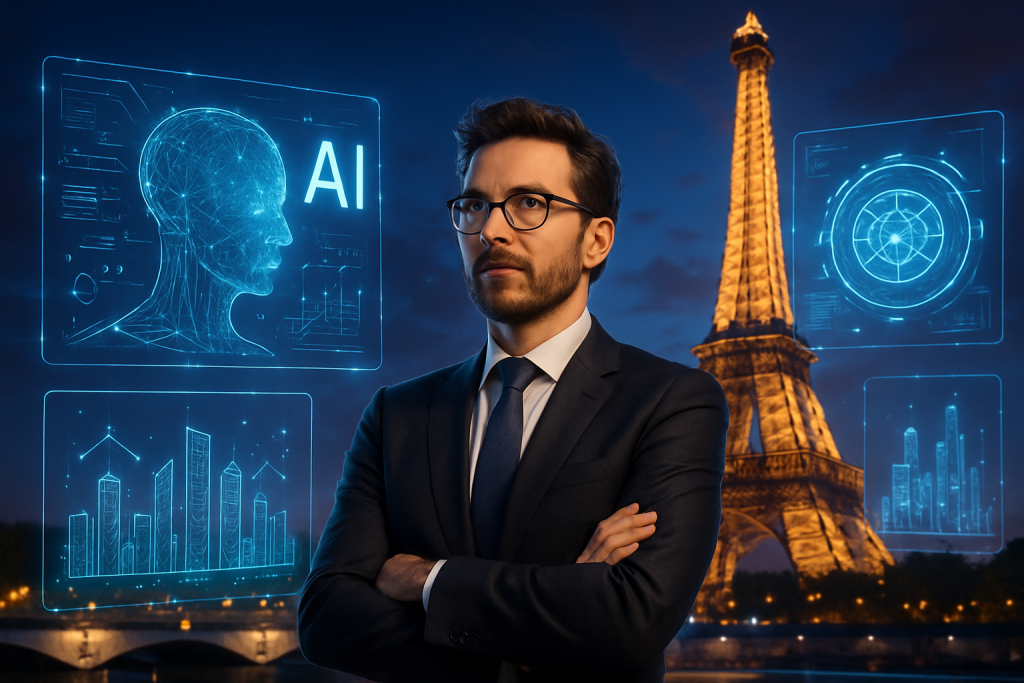

The air in Paris just got a whole lot more electric. Yann LeCun, the AI godfather who helped teach machines to see, has just announced he’s striking out on his own, leaving his post as Chief AI Scientist at Meta to launch a brand-new AI startup. And guess what? He’s planting his flag right in the heart of the City of Lights.
For those not completely steeped in the lore of AI, LeCun is, to put it mildly, a big deal. Think of him as one of the key architects of the deep learning revolution, the wizard behind convolutional neural networks, the tech that powers everything from your phone’s facial recognition to the image filters that make your brunch look Instagram-ready. He’s been at Meta (formerly Facebook) since 2013, leading their FAIR (Facebook AI Research) lab and pushing the boundaries of what AI can do. So, why the sudden Parisian escape?
Well, LeCun isn’t just looking for a change of scenery. He’s on a mission. A mission to build AI that actually understands the world, not just mimics it. He envisions “world models” – AI systems that can reason, predict, and interact with the physical realm in ways that today’s large language models (LLMs) can only dream of. Think less ChatGPT spitting out clever prose, and more a digital assistant that can anticipate your needs before you even realize them, or a robot that can navigate a bustling city street with the grace of a seasoned Parisian.
This isn’t just about tweaking algorithms; it’s about shifting the entire paradigm. As LeCun himself pointed out at the AI-Pulse conference organized by Scaleway, Silicon Valley’s current obsession with generative AI has, in his view, narrowed the field. He’s not saying generative AI is useless, far from it. It’s just that he believes there’s a whole universe of untapped potential waiting to be explored beyond the realm of chatbots and AI-generated art. Imagine HAL 9000, but, you know, less homicidal and actually helpful. That’s the kind of leap LeCun is aiming for.
The fact that he’s chosen Paris as his base of operations is significant. It’s a clear signal that the AI landscape is becoming increasingly decentralized, with innovation blossoming outside the traditional Silicon Valley ecosystem. Paris, with its rich history of scientific discovery and its burgeoning tech scene, is positioning itself as a major player in the global AI race. Plus, who wouldn’t want to code with a view of the Eiffel Tower? It’s the ultimate in tech chic.
Meta will be collaborating with LeCun’s new venture, but crucially, they won’t be holding an investment stake. This allows LeCun and his team the freedom to pursue their vision without being beholden to Meta’s specific strategic goals. It’s a bold move that suggests Meta recognizes the importance of exploring diverse avenues of AI research, even if those avenues diverge from their own current focus on, as some might call it, “superintelligence.”
So, what are the potential implications of this move? For starters, it could spark a new wave of innovation in areas like robotics, autonomous vehicles, and advanced manufacturing. Imagine AI-powered robots that can perform complex tasks in unpredictable environments, or self-driving cars that can truly understand the nuances of human behavior. The possibilities are endless.
But it also raises some important ethical questions. As AI systems become more capable of interacting with the real world, we need to ensure that they are aligned with human values and that they are used responsibly. LeCun, being the visionary that he is, is likely considering these factors as he builds his new venture. After all, with great power comes great responsibility, as Uncle Ben wisely told Peter Parker. It’s a lesson that applies just as much to AI development as it does to superheroics.
Financially, this could be a boon for the European tech scene. LeCun’s startup is likely to attract significant investment, creating jobs and fostering a vibrant ecosystem of AI talent in Paris. It could also put pressure on Silicon Valley to broaden its focus and explore new approaches to AI research. Competition, as they say, is good for innovation.
We’ll have to wait until January for more details about LeCun’s new company, but one thing is clear: this is a pivotal moment in the history of AI. The man who helped teach machines to see is now setting his sights on teaching them to understand. And that, my friends, is a vision worth getting excited about. It is a vision that may change the world as we know it.
Discover more from Just Buzz
Subscribe to get the latest posts sent to your email.