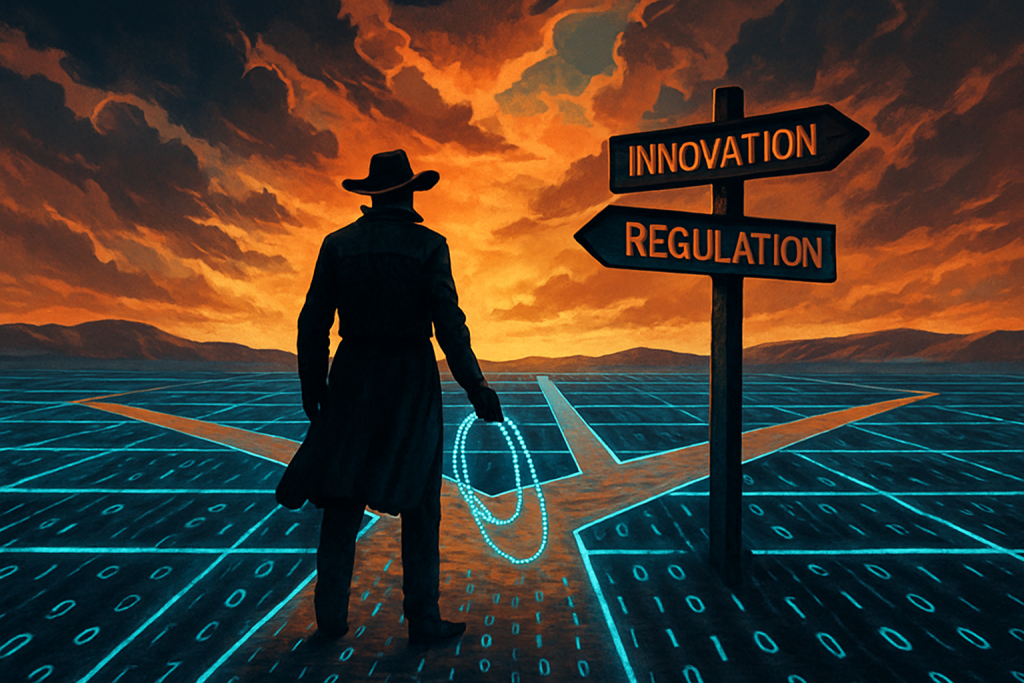

Remember the Wild West? Dusty plains, lone riders, and a whole lot of “shoot first, ask questions later” when it came to… well, just about everything? Fast forward a couple of centuries, and the new frontier isn’t the American West, it’s artificial intelligence. And just like in those old cowboy movies, everyone’s scrambling to stake their claim. But instead of gold, it’s data, algorithms, and the promise of a future sculpted by code.
Yesterday, December 8th, 2025, President Trump, never one to shy away from a showdown, announced his intent to lasso this digital frontier with an executive order designed to streamline the AI approval process across the nation. Think of it as a federal marshal riding into town to bring order to the algorithmic chaos. In his own inimitable style, shared via Truth Social, the President declared the necessity of “Only One Rulebook” for AI, lest American innovation become bogged down in a quagmire of “50 Approvals” every time a company wants to, well, do something. This is a big move, folks, potentially reshaping the entire landscape of AI development in the US.
But what led to this moment? It’s a long and winding road paved with Silicon Valley dreams, ethical quandaries, and the ever-present fear of being left behind in the global AI race. For years, the tech industry has been pleading for a unified national standard. Imagine trying to build a self-driving car that has to navigate a different set of rules in every state. It’s a regulatory nightmare, a compliance headache that could stifle innovation and send companies scurrying overseas where the playing field is, shall we say, a little less… bumpy.
The tech giants, from OpenAI to Google’s Alphabet, Meta Platforms, and even the venture capital powerhouse Andreessen Horowitz, have been vocal about their desire for a cohesive national framework. They argue that a patchwork of state laws is not only inefficient but also potentially crippling to the American AI industry. Think of it like trying to build a national highway system with each state deciding its own lane widths and speed limits. Chaos, right?
So, what does this executive order actually entail? Details remain shrouded in a bit of mystery, like a plot twist in a Christopher Nolan film. However, whispers suggest it might involve preempting state AI laws, either through legal challenges or by wielding the federal purse strings. Imagine the Feds telling states, “Nice regulations you’ve got there. Shame if something were to… happen to them,” followed by a subtle withholding of federal funding. It’s a classic power play, straight out of the political playbook.
Of course, this move isn’t without its detractors. State governments are already bracing for a fight, arguing that a one-size-fits-all approach to AI regulation simply won’t work. They contend that local oversight is crucial to address specific needs and to ensure that AI technologies don’t have unintended consequences on their communities. Imagine a rural state with a large agricultural sector worried about AI-powered drones taking over their farms. They might want stricter regulations than, say, a tech-heavy state like California. It’s all about local context, and states feel they’re best positioned to understand and address those nuances.
And that’s where the ethical tightrope walk begins. How do you balance the need for innovation with the imperative to protect citizens from potential harm? How do you foster a thriving AI industry while ensuring fairness, transparency, and accountability? These are the questions that keep ethicists and policymakers up at night, fueled by copious amounts of caffeine and the existential dread of creating a Skynet scenario. (Okay, maybe not Skynet, but you get the idea.)
The financial implications are equally significant. A streamlined approval process could unleash a wave of investment in AI, creating new jobs, driving economic growth, and solidifying America’s position as a global leader in the field. But it could also lead to a “race to the bottom,” where companies prioritize speed and profit over safety and ethical considerations. Imagine a scenario where AI-powered medical devices are rushed to market without proper testing, leading to unforeseen health risks. The potential for both immense good and significant harm is very real.
This executive order is more than just a piece of paper; it’s a symbol of the ongoing struggle to define the future of AI. It’s a battle between centralized control and local autonomy, between innovation and regulation, between the promise of progress and the fear of the unknown. As President Trump prepares to put pen to paper (or, more likely, tap his signature on a digital screen), the world watches with bated breath, wondering what this new chapter in the AI saga will hold. Will it be a tale of unprecedented technological advancement, or a cautionary story of unintended consequences? Only time will tell.
Discover more from Just Buzz
Subscribe to get the latest posts sent to your email.