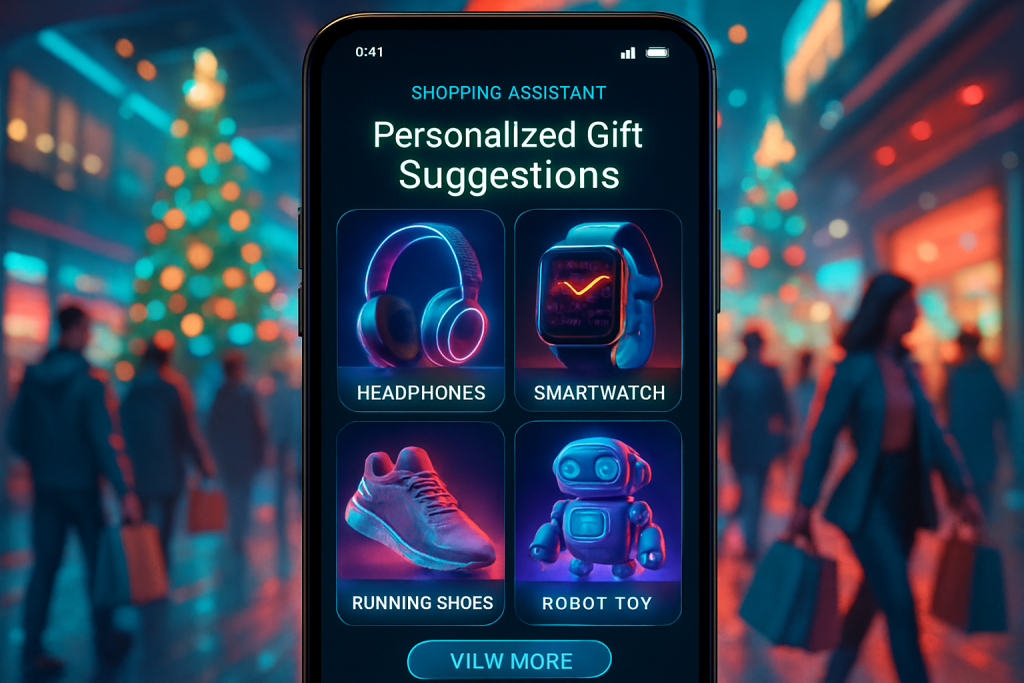

The year is 2025. Mariah Carey’s “All I Want for Christmas Is You” is already inescapable, pumpkin spice is a distant memory, and the holiday shopping frenzy is officially ON. But this year, there’s a new player in the game: AI. Not just any AI, mind you. We’re talking souped-up, generative AI-powered shopping assistants, courtesy of your friendly neighborhood retail giants. Target, Walmart, Amazon, Google, and Meta have all simultaneously dropped the ball, unleashing these digital elves on unsuspecting consumers just in time for the gift-giving gauntlet.
Think of it as having a perpetually helpful (and slightly unsettling) personal shopper living inside your phone, ready to guide you through the labyrinthine aisles of consumerism. Need a gift for your Aunt Mildred who knits sweaters for her cats? AI’s got you. Stressed about blowing your holiday budget? AI’s keeping tabs, offering alternatives that won’t leave you eating ramen until February. It’s like Clippy, but for capitalism. And hopefully less annoying.
But before we dive headfirst into this AI-powered winter wonderland, let’s rewind a bit. This isn’t some overnight miracle. The seeds of this retail revolution were sown years ago, with the rise of recommendation algorithms, personalized ads, and increasingly sophisticated data analytics. Remember when Amazon started suggesting things you didn’t even know you needed? That was just the warm-up act. Now, these companies are taking the lessons learned from years of tracking our every click and purchase, and injecting them into a conversational interface, powered by the same kind of tech that brought us surprisingly coherent chatbots.
From Chatbots to Shopping Bots: A Generative Leap
The technical details are crucial to understanding the scope of this shift. These AI assistants aren’t just glorified search engines. They’re built on generative AI models, similar to the ones that power those eerily realistic image generators and text-completion tools. This means they can generate original gift ideas based on your (or your recipient’s) preferences, understand complex queries like “a gift for my vegan brother who loves hiking and hates socks,” and even negotiate prices on your behalf (allegedly). They can also integrate with in-store navigation systems, turning your shopping trip into a personalized treasure hunt.
Imagine walking into a Target, telling your AI assistant you need a gift for your niece who’s obsessed with K-pop, and having it guide you directly to the perfect shelf, complete with reviews and price comparisons. No more wandering aimlessly, battling crowds, or relying on the dubious advice of seasonal employees. It’s a shopper’s dream, or a dystopian nightmare, depending on your perspective.
Who Wins, Who Loses? The Retail Reckoning
The immediate impact will be felt most acutely by, well, everyone. Consumers will experience a potentially smoother, more personalized shopping experience. Retailers hope to see increased sales, higher customer satisfaction, and a competitive edge in an increasingly crowded market. But there are also potential losers. Small businesses that can’t afford to invest in these technologies could be left behind. Human retail workers could face displacement as AI takes over some of their responsibilities. And our collective attention spans could shrink even further as we become increasingly reliant on AI to make even the simplest decisions.
And let’s not forget the data privacy implications. These AI assistants are hungry for data. The more they know about you, the better they can serve you (and the better they can target you with ads). Are we comfortable handing over even more of our personal information to these tech giants? Are we willing to trade privacy for convenience? These are questions we need to be asking ourselves, and demanding answers from the companies deploying these technologies.
Regulation, Reality, and the Robot Uprising (Maybe)
The political and regulatory landscape is still playing catch-up. While there’s growing awareness of the potential risks of AI, concrete regulations are lagging behind the pace of innovation. Expect increased scrutiny from lawmakers and consumer advocacy groups, particularly around data privacy, algorithmic bias, and the potential for manipulation. We might even see new laws requiring greater transparency about how these AI assistants work and what data they collect.
The philosophical and ethical considerations are even more profound. Are we outsourcing our decision-making abilities to machines? Are we losing our capacity for serendipitous discovery and spontaneous joy? Are we creating a world where everything is optimized and personalized, leaving no room for the unexpected? It’s a bit like living in a real-life version of “The Truman Show,” except instead of a benevolent director, we have a network of algorithms trying to sell us stuff.
Financially, the stakes are enormous. The companies that successfully deploy these AI shopping assistants stand to gain a significant competitive advantage, potentially reshaping the entire retail landscape. Expect to see increased investment in AI research and development, as well as a flurry of mergers and acquisitions as companies scramble to acquire the necessary expertise and technology. The long-term economic impact is harder to predict, but it’s safe to say that AI will continue to disrupt industries across the board, creating new opportunities and challenges in equal measure.
So, as you brave the holiday shopping season this year, remember that you’re not just battling crowds and hunting for deals. You’re also navigating a new era of AI-powered commerce. Be mindful of the data you’re sharing, question the recommendations you’re receiving, and don’t let the robots steal your Christmas spirit. And maybe, just maybe, consider buying a hand-knitted sweater from Aunt Mildred. She’ll appreciate it more than anything an algorithm could suggest.
Discover more from Just Buzz
Subscribe to get the latest posts sent to your email.