1,000 Jobs Gone: The New Math Behind AI-Driven Layoffs

1,000 Jobs Gone: The New Math Behind AI-Driven Layoffs

The year is 2026. Flying cars are still just a glimmer in Elon Musk’s eye (probably), but artificial intelligence? That’s very much here. And like any shiny new toy, some folks are using it responsibly, while others… well, let’s just say they’re using it more like a poorly aimed disruptor rifle in a crowded cantina. Yesterday, Jason Droege, the head honcho at Scale AI, dropped a truth bomb at the Semafor World Economy conference that’s been echoing around the tech world ever since: are some companies using AI as a smokescreen for good old-fashioned layoffs?

Droege’s not just some random dude shouting into the digital void. Scale AI is a major player, providing the crucial training data that fuels many of today’s AI models. He’s got a front-row seat to the AI revolution, and what he’s seeing isn’t all sunshine and algorithmic rainbows. He suggested that certain tech firms are conveniently hiding behind the AI banner to justify workforce reductions that might otherwise be seen as, shall we say, less than strategic. Or, you know, just plain old cost-cutting measures disguised as innovation.

Think about it. It’s a lot easier to tell shareholders, “We’re streamlining operations with cutting-edge AI!” than “We’re firing a bunch of people to boost our stock price.” It’s the corporate equivalent of blaming the dog for eating your homework.

And Droege didn’t stop there. He went on to emphasize that, despite all the hype, AI is still, let’s be honest, a bit of a klutz when it comes to critical decision-making. Replacing human judgment in areas like financial operations with algorithms that are still prone to errors? That’s like letting a Roomba pilot a 747. Sure, it might work, but are you really willing to bet your life (or your company’s future) on it?

This isn’t happening in a vacuum, of course. We’ve seen whispers of this trend for a while now, and Droege’s statement adds serious weight to the concerns. Remember that scene in “The Matrix” when Agent Smith says humanity is a virus? Well, some companies seem to be treating their employees the same way, viewing them as expendable code to be optimized out of the system. It’s a bleak outlook, straight out of a Philip K. Dick novel.

Snap’s Snap Decision

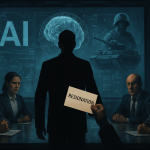
Consider Snap Inc. They recently announced they were axing roughly 1,000 employees. That’s 16% of their global workforce gone faster than a disappearing Snapchat message. The reason? A strategic pivot towards AI-driven operations, they claimed. Now, maybe Snap really is on the verge of some groundbreaking AI breakthroughs that require a leaner team. Or maybe, just maybe, they saw a chance to trim the fat and blame it on the robots.


The Ethical Tightrope

Droege’s comments have ignited a fiery debate about the ethical implications of AI adoption. It’s not just about whether AI can do the job, but whether we should let it, especially if it means throwing people out of work. Are we hurtling towards a dystopian future where humans are obsolete, replaced by emotionless algorithms that prioritize efficiency over empathy? It’s a question that’s been haunting science fiction writers for decades, and it’s now knocking on our reality.

The core issue here is transparency. Companies need to be upfront about their AI strategies and how those strategies impact their workforce. Are they genuinely trying to augment human capabilities, or are they simply looking for a convenient excuse to cut costs? The difference is crucial, and it demands a level of honesty that, frankly, is often lacking in the corporate world. We need less “trust me, I’m a robot” and more verifiable data.


The Need for a New Social Contract

This also raises some bigger questions about the future of work in an AI-driven world. Do we need to rethink our social safety nets? Should we be exploring universal basic income to cushion the blow of widespread automation? These aren’t just theoretical debates anymore; they’re practical questions that demand urgent attention. We can’t just sit back and hope that the free market will magically solve everything. That’s about as likely as finding a unicorn riding a hoverboard.

The Financial Fallout

Beyond the ethical considerations, there’s also the financial impact to consider. Layoffs might look good on a quarterly earnings report, but what about the long-term consequences? A demoralized workforce, a damaged reputation, and a loss of institutional knowledge can all come back to bite a company in the long run. Not to mention the potential for regulatory scrutiny. Governments are already starting to take a closer look at AI, and if they see companies abusing the technology to exploit workers, they’re likely to step in with new rules and regulations. Think GDPR, but for AI. It’s a headache no company wants.

Ultimately, Droege’s warning is a call for responsible innovation. AI has the potential to revolutionize our world, but only if we use it wisely. It’s a tool, not a weapon. It should be used to empower humans, not replace them. Otherwise, we risk creating a future that’s less “Star Trek” and more “Terminator.” And nobody wants that, except maybe Skynet.


Discover more from Just Buzz

Subscribe to get the latest posts sent to your email.