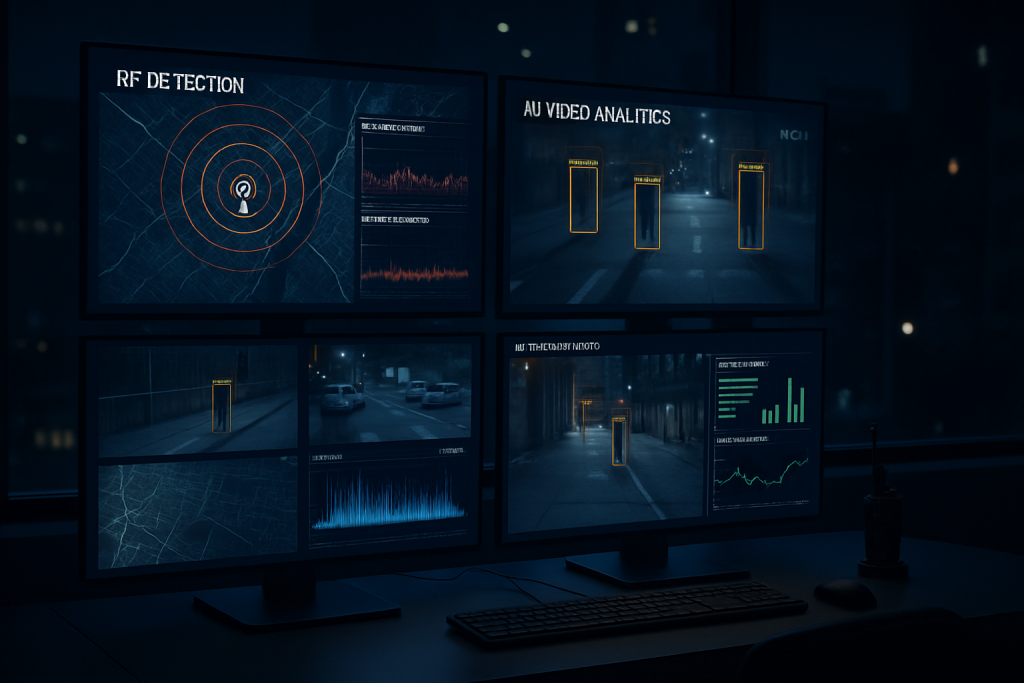

The year is 2026. Flying cars are still perpetually “just around the corner,” but something much more practical, and arguably more impactful, just landed: VisionWave Holdings Inc. dropped a surveillance bombshell. Forget grainy CCTV footage and the endless parade of false alarms; their new multi-sensor platform promises to be a game-changer, fusing radio frequency (RF) detection with the ever-watchful gaze of AI video analytics. Think of it as the technological equivalent of Batman upgrading from batarangs to a fully integrated sensor suite.
But why is this a big deal? To understand, we need to rewind a bit. For decades, the surveillance industry has been largely reliant on a single, flawed tool: the video camera. Now, cameras are great for, well, seeing things. But they’re notoriously bad at seeing in the dark, through fog, or past obstacles. This leads to a constant barrage of false alarms. Every stray cat, every gust of wind, every shadow flickering across a wall triggers a response, overwhelming security personnel and desensitizing them to genuine threats. It’s the boy who cried wolf, only the wolf is a particularly fluffy Persian.
VisionWave’s innovation seeks to solve this by bringing a second, more discerning set of eyes – or rather, ears – to the party. By incorporating RF detection, the system can “hear” movement and activity even when cameras can’t “see” it. Imagine a scenario where a potential intruder is attempting to bypass a perimeter fence under the cover of darkness. A traditional camera system might miss them entirely. But the RF sensors would detect their presence, alerting the AI which then directs the cameras to focus on that specific area. It’s like having a bloodhound guiding a hawk.
How Does It Actually Work?
Let’s break down the tech a bit. The RF-based detection works by emitting radio waves and analyzing their reflections. Any movement or disturbance in the environment will alter these reflections, allowing the system to pinpoint the source of the activity. This is particularly effective in environments where visual obstructions are common, such as warehouses, industrial sites, or even dense urban areas. Think of it like sonar for security, bouncing signals off objects to create a picture even in the absence of light.
But the real magic happens when this RF data is combined with AI-powered video analytics. The AI algorithms are trained to recognize specific objects and behaviors, such as people, vehicles, or unusual patterns of movement. By cross-referencing the RF data with the video feed, the system can filter out false alarms and focus on genuine threats. For instance, if the RF sensors detect movement near a fence, the AI can analyze the video feed to determine whether it’s a person attempting to climb over or simply a deer passing by. This drastically reduces the number of false positives, allowing security personnel to respond more effectively to actual emergencies. The AI isn’t just watching; it’s thinking, analyzing, and prioritizing.
Who Benefits?
The implications of this technology are far-reaching. The most immediate beneficiaries are likely to be sectors that rely heavily on surveillance, such as the military, defense, and critical infrastructure protection. Imagine securing a power plant, a military base, or a border crossing with a system that’s virtually immune to environmental factors and human error. The potential for enhanced security and reduced risk is enormous. Beyond these obvious applications, there are also possibilities in areas like law enforcement, transportation security, and even retail loss prevention. Think of airports, train stations, and shopping malls becoming significantly safer and more secure.
The Ethical Tightrope
Of course, with any powerful technology, there are ethical considerations to be addressed. The increased capabilities of surveillance systems raise concerns about privacy and potential for abuse. Who gets access to this data? How is it stored and protected? What safeguards are in place to prevent misuse? These are questions that society must grapple with as AI-powered surveillance becomes more prevalent. We’ve seen the debates surrounding facial recognition technology, and the integration of RF detection only amplifies the need for clear regulations and ethical guidelines. It’s a delicate balance between security and freedom, and we need to tread carefully to avoid creating a dystopian future straight out of “Minority Report.”
The Financial Angle
From a financial perspective, VisionWave’s announcement is likely to send ripples through the security industry. Companies that are slow to adopt AI-powered surveillance technologies risk being left behind. Expect to see a flurry of mergers, acquisitions, and partnerships as established players scramble to catch up. The market for multi-sensor surveillance systems is poised for explosive growth, creating opportunities for both established companies and innovative startups. Investors will be closely watching VisionWave’s performance, as its success could pave the way for a new generation of security solutions. The potential for profit is significant, but so is the risk of falling victim to the rapid pace of technological change.
In conclusion, VisionWave’s RF-powered AI video intelligence platform isn’t just another incremental improvement in surveillance technology. It’s a fundamental shift in how we approach security, offering a more robust, reliable, and intelligent solution for a wide range of applications. While ethical considerations must be carefully addressed, the potential benefits are undeniable. As we move further into the age of AI, expect to see more and more innovations that blur the lines between the physical and digital worlds, transforming the way we live, work, and protect ourselves. And who knows, maybe those flying cars will finally arrive too.
Discover more from Just Buzz
Subscribe to get the latest posts sent to your email.