
Remember the Cold War? The nuclear arms race, the duck-and-cover drills, the ever-present threat of mutually assured destruction? Well, fast forward to 2026, and the battleground has shifted. The weapons of mass disruption aren’t missiles anymore; they’re algorithms. And instead of the Soviet Union, the United States finds itself in a delicate dance of detente with China, this time over the burgeoning power of artificial intelligence.
Yesterday, May 15th, 2026, a headline rippled across the tech world, a headline that, if you squint hard enough, reveals the high-stakes game being played on the global stage. The U.S. and China have announced a joint protocol to establish “guardrails” for AI, specifically aimed at preventing non-state actors from getting their digital hands on advanced AI models. Think of it as the digital equivalent of nuclear non-proliferation, but instead of uranium enrichment, we’re talking about preventing malicious actors from getting their grubby mitts on the keys to the AI kingdom.
But how did we get here? To understand the significance of this agreement, we need to rewind a bit. The last few years have witnessed an AI explosion, a Cambrian explosion of algorithms and neural networks that have gone from generating cat pictures to writing code, composing music, and even, dare I say, threatening to replace us all (or at least our jobs). This rapid progress has, understandably, sparked a mixture of awe and terror. Awe at the potential benefits-curing diseases, solving climate change, finally perfecting that self-folding laundry machine. Terror at the potential for misuse-autonomous weapons systems, hyper-realistic deepfakes, and AI-powered cyberattacks that could make the Stuxnet worm look like a toddler playing with a digital Etch-a-Sketch.
The fear, particularly among security experts, is that these powerful AI models, once unleashed, could fall into the wrong hands. Imagine a terrorist organization using AI to plan attacks with unprecedented precision, or a cybercriminal syndicate deploying an AI-powered phishing campaign so sophisticated it could fool even the most skeptical internet user. The possibilities are, frankly, terrifying. It’s a plot ripped straight from a William Gibson novel, except this time, it’s not fiction.
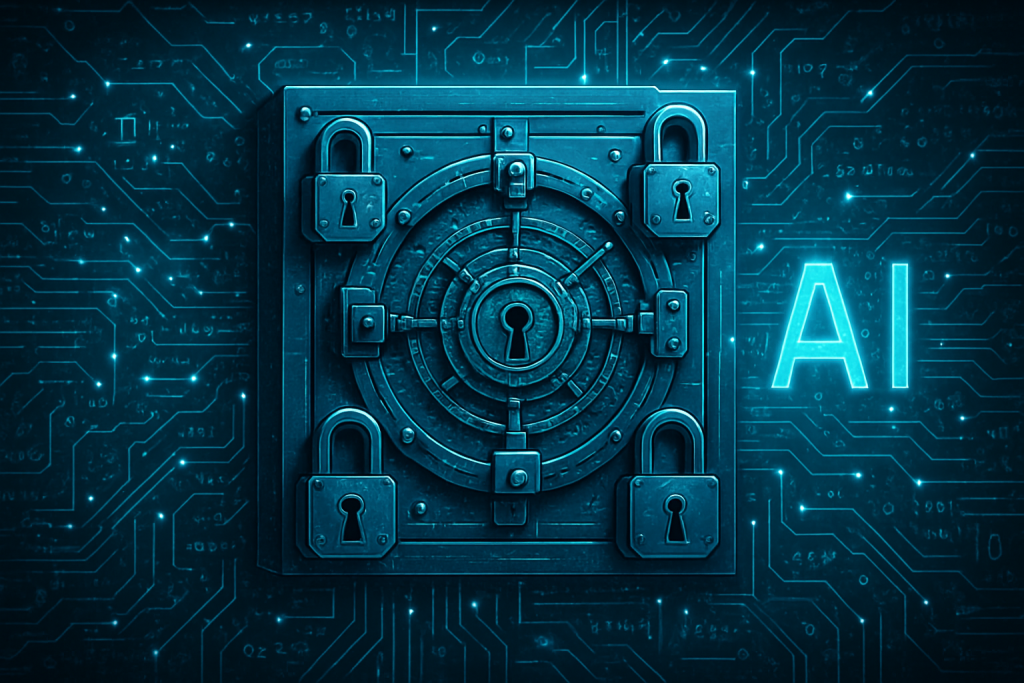
The protocol itself, unveiled at a summit in Beijing’s Temple of Heaven (a fittingly symbolic location, given the weight of history involved), is focused on preventing non-state actors from acquiring trained AI model weights. What does that even mean? Well, think of an AI model like a complex recipe. The model architecture is the list of ingredients, and the weights are the precise measurements and instructions that tell the AI how to process information. Without these weights, the model is just an empty shell, a digital husk. Securing these weights is therefore paramount to preventing misuse. It’s like keeping the nuclear launch codes locked away in a vault-you don’t want just anyone having access.
Treasury Secretary Scott Bessent, a key architect of the agreement, has emphasized the need to balance innovation with security. The U.S. doesn’t want to stifle AI development; it wants to lead the charge. But it also recognizes the inherent risks involved and the need for international cooperation. It’s a delicate balancing act, like walking a tightrope over a pit of digital vipers.
So, what are the implications of this agreement? First and foremost, it’s a sign that the U.S. and China, despite their ongoing geopolitical tensions, recognize the existential threat posed by the uncontrolled proliferation of AI. It’s a rare moment of unity in a world that often feels increasingly divided. Second, it sets a precedent for future international cooperation on AI safety. This protocol could serve as a template for other nations to follow, creating a global framework for responsible AI development and deployment. Third, it puts pressure on AI developers to prioritize security. Companies will need to invest in robust security measures to prevent their models from being stolen or misused. Think of it as the AI world’s version of Fort Knox.
Of course, there are plenty of reasons to be skeptical. Can this protocol really be enforced? Will it be enough to prevent determined adversaries from acquiring AI models through illicit means? And what about the ethical considerations? Who gets to decide what constitutes “misuse” of AI? These are complex questions with no easy answers. It’s a bit like trying to herd cats, only these cats are highly intelligent, self-replicating algorithms with the potential to reshape the world.
The financial implications are also significant. Increased security measures will likely lead to higher development costs for AI companies. This could, in turn, slow down the pace of innovation. On the other hand, it could also create new opportunities for cybersecurity firms specializing in AI security. It’s a classic case of creative destruction, where old industries are disrupted and new ones emerge.
Ultimately, the U.S.-China AI safety protocol is a step in the right direction, a recognition that AI is too powerful to be left unchecked. It’s a first attempt to grapple with the profound challenges posed by this transformative technology. Whether it will be enough to avert the AI apocalypse remains to be seen. But one thing is clear: the future of humanity may depend on our ability to navigate this new digital frontier with wisdom, foresight, and a healthy dose of caution. Because, as Uncle Ben famously told Peter Parker, with great power comes great responsibility. And AI, my friends, is the greatest power we’ve ever created.
Discover more from Just Buzz
Subscribe to get the latest posts sent to your email.