
Hold on to your hats, folks, because the future just dropped a data bomb, and it’s all about AI. The U.S. Census Bureau, not exactly known for topping the charts with viral content, just released the latest findings from its Business Trends and Outlook Survey (BTOS), and it’s a doozy. Think of it as the Nielsen ratings for artificial intelligence in the American business ecosystem. This isn’t just some academic white paper; it’s a snapshot of how AI is infiltrating, or trying to infiltrate, every nook and cranny of our economy.
Remember the early days of the internet? Dial-up modems screaming at each other, Netscape Navigator battling Internet Explorer in a browser war for the ages? This feels similar, but instead of connecting to the World Wide Web, businesses are now connecting to the AI web, and some are clearly surfing faster than others.
The BTOS, in case you’re unfamiliar, is like the economic weather report, constantly checking the temperature of business conditions, revenue forecasts, and employment projections. But between November 2025 and February 2026, it got a serious upgrade, adding specific questions about AI usage. The result? A treasure trove of data, ripe for analysis and speculation, released on April 23rd, 2026. The big question: is AI the rising tide that lifts all boats, or just another tool for the big guys to get bigger?
Let’s dive into the juicy bits.
The Industry Breakdown: Who’s In, Who’s Out?
Unsurprisingly, tech companies are leading the AI charge. They’re practically swimming in algorithms, using AI to fine-tune everything from search results to targeted ads. Finance is another big player, leveraging AI for fraud detection, algorithmic trading, and personalized financial advice. Think of it as Wall Street getting a serious upgrade, trading pinstripe suits for lines of code. And manufacturing? Forget the assembly line of the past; AI is optimizing production processes, predicting equipment failures, and even designing new products. It’s like Skynet, but hopefully less…judgmental.
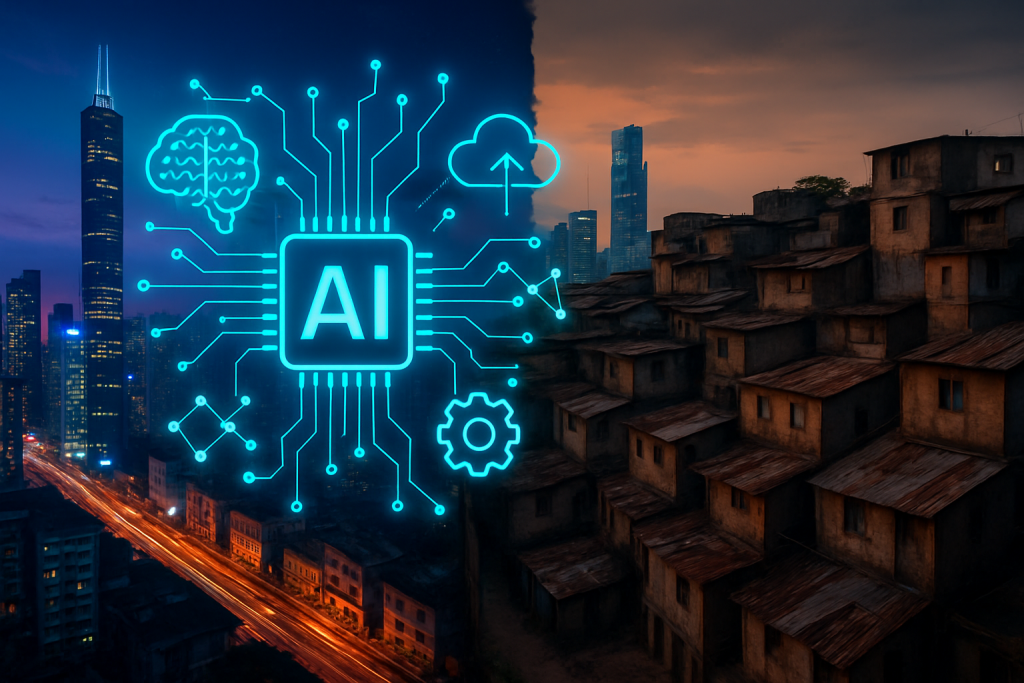
But here’s the rub. While these industries are embracing AI like a long-lost friend, others are lagging behind. It’s not that they’re Luddites, necessarily, but adoption rates are noticeably lower. Maybe they lack the resources, the expertise, or simply the understanding of how AI can benefit their specific operations. This creates a digital divide, a chasm between the AI haves and have-nots, and that’s a problem.
Location, Location, AI-Location
Just like real estate, AI adoption is all about location. Certain states and metropolitan areas are becoming AI hotspots, attracting investment, talent, and innovation. Think Silicon Valley 2.0, but spread across the country. These regions likely have established tech infrastructures, strong university partnerships, and a culture that fosters experimentation. But what about the rest of the country? Are they doomed to be left behind in the AI revolution? This geographic disparity raises concerns about economic inequality and the need for targeted policies to support AI adoption in underserved areas.
The Size Matters (Especially When It Comes to AI Budgets)
The BTOS data confirms what many suspected: larger firms are significantly more likely to implement AI solutions than small and medium-sized enterprises (SMEs). This isn’t exactly earth-shattering news, but it highlights a critical challenge. AI isn’t cheap. It requires investment in hardware, software, talent, and training. Large corporations have the resources to make those investments, while SMEs often struggle to compete. It’s like the difference between Iron Man building a suit in his Malibu mansion and a scrappy inventor tinkering in a garage. Both can create something amazing, but Iron Man has a clear advantage.
This disparity could exacerbate existing inequalities, concentrating economic power in the hands of a few large players. Policymakers need to consider how to level the playing field, providing SMEs with access to the resources and support they need to adopt AI and remain competitive.
AI in Action: From Customer Service to Cybersecurity
So, what are businesses actually *doing* with AI? The BTOS reveals a wide range of applications. Customer service automation is a big one, with chatbots and virtual assistants handling routine inquiries, freeing up human agents to focus on more complex issues. Predictive analytics is another key area, allowing businesses to forecast demand, optimize pricing, and identify potential risks. Supply chain optimization is also gaining traction, with AI helping to streamline logistics, reduce costs, and improve efficiency. And, of course, AI is playing an increasingly important role in cybersecurity, detecting and preventing cyberattacks in real-time.
Imagine a world where customer service is always helpful and efficient, where supply chains are perfectly optimized, and where cyberattacks are a thing of the past. That’s the promise of AI, but it’s important to remember that these applications also raise ethical concerns. Are chatbots truly serving customers, or are they just deflecting responsibility? Are predictive analytics reinforcing existing biases? And are AI-powered cybersecurity systems infringing on our privacy? These are questions we need to grapple with as AI becomes more pervasive.
The Road Ahead: Regulation, Responsibility, and the Future of Work
The BTOS data provides a valuable foundation for discussions about AI’s role in the economy, potential regulatory considerations, and the future of work. As AI becomes more integrated into our lives, it’s crucial to address the ethical, social, and economic implications. We need to ensure that AI is developed and deployed in a responsible and equitable manner, benefiting all of society, not just a select few. This means investing in education and training to prepare workers for the jobs of the future, developing ethical guidelines for AI development, and implementing regulations to protect consumers and prevent misuse.
The future is here, and it’s powered by AI. The BTOS data is a wake-up call, a reminder that we need to be proactive in shaping the future we want. It’s time to have a serious conversation about AI, its potential benefits, and its potential risks. Because if we don’t, we might just end up living in a world straight out of a dystopian sci-fi movie. And nobody wants that.
Discover more from Just Buzz
Subscribe to get the latest posts sent to your email.