When Reality Hits Harder Than a Sundance Premiere: The AI Hype Unmasked

When Reality Hits Harder Than a Sundance Premiere: The AI Hype Unmasked

The year is 2026. Flying cars? Not quite. Robot butlers? Still a ways off. But artificial intelligence? It’s *everywhere*. And just when we thought we had a handle on the hype, a documentary called “Ghost in the Machine” drops like a truth bomb at Sundance, courtesy of Valerie Veatch. Forget the sleek, optimistic visions of AI we’ve been spoon-fed; this film serves up a bracing dose of reality, a cinematic equivalent of Neo taking the red pill.

Veatch, the triple-threat writer, director, and producer behind the project, doesn’t just present a history of AI; she dissects it. She traces the lineage of our technological ambitions, showing how the seeds of today’s AI revolution were sown decades ago, in the fertile ground of human ingenuity and, perhaps, a touch of hubris. Think of it as “The Social Network” meets “2001: A Space Odyssey,” but instead of Mark Zuckerberg and HAL 9000, you have a chorus of voices grappling with the implications of a technology that’s rapidly reshaping our world.

And the critical reception? Let’s just say it’s been… intense. Chase Hutchinson of TheWrap didn’t mince words, calling it “a radical, necessary Molotov cocktail of a documentary that’s being thrown right into the heart of our nonsense, nightmarish world of overinflated AI hype.” Ouch. That’s not exactly a glowing endorsement; it’s more like a battle cry. Jason Gorber of Point of View echoed the sentiment, describing the film as “a perfect film of the age – messy, argumentative, grasping at answers in what feels to be a state of deep uncertainty.” It’s like everyone’s finally admitting they’re not quite sure what they’re doing with this whole AI thing, and Veatch’s film is holding up a mirror to our collective anxieties.
So, what’s all the fuss about? What makes “Ghost in the Machine” so provocative, so potentially disruptive to the carefully constructed narrative of AI as the savior of humanity? It boils down to a few key themes.

The Hype vs. Reality

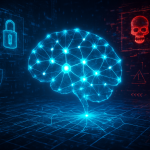
We’ve all seen the headlines: AI cures cancer! AI writes symphonies! AI orders pizza! (Okay, maybe that last one is just me.) But Veatch’s film pulls back the curtain on the often-exaggerated capabilities of current AI systems. Sure, they can perform impressive feats of pattern recognition and data analysis, but are they truly intelligent? Are they capable of creativity, empathy, or even basic common sense? “Ghost in the Machine” suggests that the answer is, at best, a resounding “maybe someday,” and at worst, a flat-out “no.” It tackles the black box problem head-on-how can we truly trust systems whose decision-making processes are opaque even to their creators?

The Ethical Minefield

This is where things get really interesting, and potentially uncomfortable. As AI becomes more integrated into our lives, it raises a host of ethical questions. Who is responsible when an autonomous vehicle causes an accident? How do we prevent AI-powered surveillance systems from infringing on our privacy? Can AI be used to perpetuate bias and discrimination? “Ghost in the Machine” doesn’t offer easy answers, but it does force us to confront these questions head-on. The film makes you question, are we accidentally building Skynet, but with better PR?

The Economic Disruption

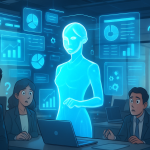
Let’s not forget the potential impact of AI on the job market. While some argue that AI will create new opportunities, others fear widespread job displacement. “Ghost in the Machine” explores this tension, highlighting the anxieties of workers who see their livelihoods threatened by automation. It’s a debate as old as the Luddites, but with a distinctly 21st-century twist. We’re not just talking about factory workers being replaced by robots; we’re talking about white-collar professionals, artists, and even writers (gulp) potentially being automated out of existence.
The Ghost in the Machine, Revisited

The title itself is a clever nod to Gilbert Ryle’s philosophical critique of Cartesian dualism, the idea that the mind and body are separate entities. Ryle argued that this separation was a “category mistake,” a fundamental misunderstanding of how the mind works. “Ghost in the Machine” suggests that we may be making a similar mistake with AI, attributing human-like qualities to systems that are, at their core, just complex algorithms. Are we projecting our own hopes and fears onto these machines, creating a phantom consciousness where none exists?

The premiere of “Ghost in the Machine” at Sundance is more than just a film festival event; it’s a cultural moment. It’s a sign that we’re finally starting to grapple with the complex realities of AI, beyond the hype and the headlines. It’s a reminder that technology is not a neutral force; it’s a reflection of our own values, our own biases, and our own aspirations. And it’s a challenge to all of us to think critically about the future we’re building, before the machines start thinking for us.


Discover more from Just Buzz

Subscribe to get the latest posts sent to your email.