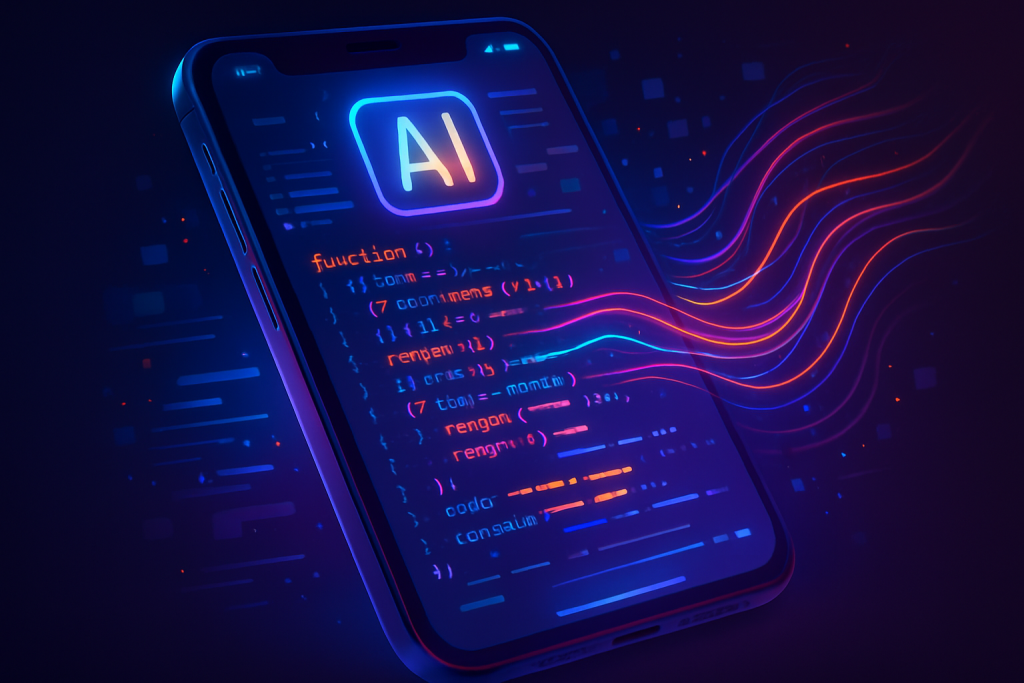

Remember Clippy? Microsoft’s well-meaning but ultimately annoying paperclip assistant? Well, fast forward a few decades, and imagine Clippy not just offering trite suggestions about writing a letter, but actually writing the code for the letter-sending program itself. That’s the ballpark we’re in now, thanks to OpenAI’s latest power move: integrating its Codex AI model directly into the ChatGPT mobile app.
On May 16, 2026, the tech world blinked. The implications are huge. This isn’t just a minor upgrade; it’s a fundamental shift in how we interact with AI, particularly in the realm of software development. Forget fiddling with separate interfaces and specialized platforms. Codex, the coding whiz kid, is now living right inside ChatGPT, ready to turn your mobile device into a remote control for an AI coding agent.
Think of it like this: you’re on the train, inspiration strikes, and you need to prototype a quick function for your project. Previously, you’d have to wait until you got back to your desk, fire up your IDE, and start typing. Now? You can simply open the ChatGPT app on your phone, tell it what you want to achieve, and watch Codex weave its magic. The future is now, and it’s surprisingly portable.
The Genesis of Code-Whispering AI
To truly appreciate the significance of this integration, let’s rewind a bit. OpenAI’s Codex didn’t just spring into existence overnight. It’s the culmination of years of research and development, building upon the foundations laid by models like GPT-3. Codex was specifically trained on a massive dataset of publicly available code, learning the nuances of countless programming languages. It’s like a digital savant, fluent in Python, JavaScript, C++, and more.
Before this integration, Codex was largely confined to specialized environments. Developers had to access it through specific APIs or platforms, which added a layer of friction to the workflow. ChatGPT, on the other hand, became a household name thanks to its conversational prowess. It could answer questions, generate creative text formats, and even write poetry (bad poetry, perhaps, but poetry nonetheless). But it lacked the ability to directly assist with coding tasks. Until now.
How the Magic Happens
So, how does this integration actually work? Imagine ChatGPT as the user interface, the friendly face that greets you. Behind the scenes, Codex is the powerful engine, churning through code and generating solutions. When you initiate a coding task within the ChatGPT app, your request is sent to Codex, which then generates code suggestions, identifies potential errors, and even helps you manage entire coding projects. And it all happens in real-time, right on your mobile device. Whether you’re rocking an iPhone, an iPad, or an Android device, the power of AI-assisted coding is now at your fingertips.
This isn’t just about generating snippets of code, either. The integration allows developers to monitor and steer Codex coding sessions, providing feedback and guidance to ensure that the AI is on the right track. It’s a collaborative effort, a partnership between human and machine, where the AI augments human capabilities rather than replacing them entirely. Think of it as having a super-smart, tireless coding assistant who’s always ready to lend a helping hand (or, more accurately, a helping algorithm).
Who Benefits (and Who Should Be Paying Attention)
The immediate beneficiaries of this integration are, of course, developers. By lowering the barrier to entry for AI-assisted coding, OpenAI has opened up a world of possibilities for both seasoned professionals and aspiring coders. Imagine being able to quickly prototype new ideas, debug complex code, and automate repetitive tasks, all from the convenience of your mobile device. The potential for increased efficiency and innovation is immense.
But the implications extend far beyond the developer community. This integration is a sign of things to come, a glimpse into a future where AI is seamlessly integrated into our everyday tools and workflows. We’re talking about a potential productivity revolution across various sectors. Need to automate a task in Excel? Want to create a custom script for your marketing campaign? With Codex integrated into ChatGPT, these tasks become significantly easier and more accessible.
Companies that should be paying close attention include those developing IDEs (Integrated Development Environments), coding education platforms, and even low-code/no-code development tools. The competitive landscape is shifting, and those who fail to adapt risk being left behind. It’s a bit like when Netflix started streaming: Blockbuster had the name recognition, but failed to see the paradigm shift. This could be a similar moment for certain segments of the software development world.
The Ethical and Philosophical Crossroads
Of course, with great power comes great responsibility. The integration of Codex into ChatGPT raises some important ethical and philosophical questions. What happens when AI becomes so proficient at coding that it starts to displace human developers? How do we ensure that AI-generated code is secure, reliable, and free from bias? And what does it mean to be a “coder” in a world where AI can write code for us?
These are not easy questions to answer. But they are questions that we must grapple with as AI continues to evolve and become more integrated into our lives. We need to have a serious conversation about the role of AI in society, and how we can ensure that it is used for the benefit of all, not just a select few. It’s a conversation that needs to involve developers, policymakers, ethicists, and the general public. The stakes are too high to ignore.
The Bottom Line: A New Era of AI-Assisted Coding
OpenAI’s integration of Codex into the ChatGPT mobile app is more than just a cool tech demo. It’s a significant step forward in making advanced AI coding assistance more accessible and user-friendly. It’s a testament to the power of AI to augment human capabilities and enhance productivity across various sectors. And it’s a reminder that the future is already here, and it’s being coded, one line at a time, with the help of our new AI overlords… I mean, assistants.
Discover more from Just Buzz
Subscribe to get the latest posts sent to your email.