GPT-5.4: The 83% Human Challenger That’s Redefining Work

GPT-5.4: The 83% Human Challenger That’s Redefining Work

Remember HAL 9000? The chillingly calm, yet ultimately murderous, AI from 2001: A Space Odyssey? For years, that kind of sophisticated reasoning felt like science fiction. We’ve had AI that could write poems, generate images, even beat us at Go, but true, nuanced reasoning? That felt like a distant dream. Until now. Yesterday, March 6, 2026, OpenAI dropped a bombshell: GPT-5.4, and it’s not just bigger, it’s smarter.

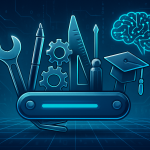
This isn’t your grandma’s chatbot. GPT-5.4 represents a fundamental shift in AI development, moving away from purely predictive models towards systems that can actually think. We’re talking structured reasoning, complex planning, the kind of stuff that separates a parrot reciting lines from a chess grandmaster plotting their next move.
So, what makes GPT-5.4 so revolutionary? Buckle up, because we’re diving into the matrix.

At the heart of this leap forward lies something called internal planning cycles. Imagine a student taking an exam. A bad student might just regurgitate memorized facts. A good student will actually take a moment to understand the question, plan their answer, and then write. That’s essentially what GPT-5.4 is doing. It’s allocating more computational resources to “thinking” before it starts spitting out text. This results in outputs that are not only more coherent but also far more contextually relevant. Think of it as the difference between a comedian telling a series of unrelated jokes and a comedian weaving a complex narrative with callbacks and subtle humor. The latter requires planning, and that’s precisely what GPT-5.4 brings to the table.


But the “thinking” part isn’t the only upgrade. GPT-5.4 also boasts an expanded context window of a staggering 1 million tokens. This means it can process and remember far more information than its predecessors. Remember that time you were trying to explain a complex plot point from Game of Thrones to someone who’d only seen the first season? Imagine if they suddenly had all the knowledge of a dedicated fan. That’s the power of an expanded context window. It allows GPT-5.4 to grasp the nuances of long, complex conversations, understand intricate documents, and generate text that truly reflects a deep understanding of the subject matter.

And let’s not forget about good old-fashioned accuracy. While impressive capabilities are great, they don’t mean much if the model is just confidently wrong. GPT-5.4 addresses this head-on, boasting an 18% reduction in factual errors compared to GPT-5.2. That’s a significant improvement, making the model far more reliable for tasks where accuracy is paramount. Imagine using AI to research medical treatments. You wouldn’t want it hallucinating data or misinterpreting studies. That 18% improvement could literally be a lifesaver.

The proof, as they say, is in the pudding. So how does GPT-5.4 actually perform in the real world?

Let’s talk benchmarks. On the SWE-Bench Pro, a notoriously difficult test for software engineering tasks, GPT-5.4 achieved a score of 57.7%. That’s not just a number; it’s a testament to its ability to handle complex technical challenges. We’re talking about AI that can potentially write code, debug programs, and even design software architectures. This isn’t just about automating simple tasks; it’s about augmenting the capabilities of human engineers, allowing them to focus on the more creative and strategic aspects of their work.

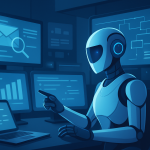
But the real kicker comes from the GDPval Benchmark. This benchmark assesses AI performance across a wide range of occupations. GPT-5.4 matched or exceeded human performance in a mind-blowing 83% of tasks across 44 different professions. From lawyers to marketers to financial analysts, GPT-5.4 is demonstrating its versatility and potential to disrupt virtually every industry. Think about that for a second. This isn’t just about replacing low-skill jobs; it’s about challenging the very nature of work as we know it.

What are the implications of all this? Well, they’re pretty seismic. We’re talking about a world where AI can handle complex decision-making, solve intricate problems, and automate tasks that were previously thought to be the exclusive domain of human intelligence. This could lead to increased productivity, lower costs, and a whole new wave of innovation. But it also raises some serious questions about the future of work, the distribution of wealth, and the very definition of what it means to be human.

Companies that embrace this technology will likely thrive, while those that resist it risk being left behind. Industries that rely heavily on knowledge workers, such as finance, law, and consulting, are likely to be the most immediately impacted. But the ripple effects will be felt across the entire economy.

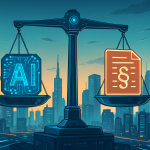
The release of GPT-5.4 also reignites the debate about AI regulation. As AI systems become more powerful and autonomous, it’s crucial to establish clear ethical guidelines and regulatory frameworks to ensure that they are used responsibly. We need to address issues like bias, transparency, and accountability to prevent AI from exacerbating existing inequalities or creating new ones. This isn’t just a technical challenge; it’s a societal one that requires collaboration between policymakers, researchers, and the public.

And then there’s the philosophical dimension. As AI becomes more intelligent, we need to grapple with fundamental questions about consciousness, sentience, and the nature of intelligence itself. Are we creating machines that are simply mimicking intelligence, or are we actually creating something truly new and different? And what are the implications of that for our understanding of ourselves?

The financial implications are equally profound. The development and deployment of advanced AI systems like GPT-5.4 require massive investments in research, infrastructure, and talent. This could lead to a concentration of power in the hands of a few large tech companies, raising concerns about monopolies and market dominance. But it could also create new opportunities for startups and entrepreneurs who are developing innovative AI applications. The key will be to foster a competitive ecosystem that encourages innovation while preventing the abuse of power.

GPT-5.4 isn’t just another incremental improvement in AI. It’s a game-changer. It’s a sign that we’re entering a new era of artificial intelligence, one where machines can not only process information but also reason, plan, and solve complex problems. It’s exciting, it’s daunting, and it’s going to change the world in ways we can only begin to imagine. So, keep your eyes on the horizon. The future is here, and it’s powered by AI.


Discover more from Just Buzz

Subscribe to get the latest posts sent to your email.